Since the opening session did not begin until 10 a.m., I decided to take a walk to the grocery store to pick up some things that would provide quick meals for lunch and supper today since I will have less than an hour to eat both times. I had noticed a Market Basket only a few blocks from the Radisson as I was riding the shuttle from the airport yesterday. It's a very nice grocery store, and they have quite a few pre-made sandwiches available as well as fruits and bakery goods.
When I got back to the hotel, I had time to meet a few Facebook and blogging friends in the hotel lobby that I only knew by their photos. It was great to finally meet Heather, Marian, Sue, and several others.
The speaker for the main session was Sandy Clunies. She told about the mills in nearby Lowell and Lawrence, Massachusetts and told the stories of some of families who worked there -- two were her own ancestors; another was a friend's ancestor that she had researched.
We are currently on a very short lunch break since the first session begins at 12:15. I'm really not sure why they didn't give us a bit longer of a break since it's hard for 900 people to be served lunch in such a short time. I'm just thankful that I went to the grocery store this morning so that I would not have to deal with long lunch lines and could escape to the room for a few minutes. It also gives me an opportunity to see if I need to update anything on my presentation before tomorrow. You know all those thoughts you have--Did I include this resource? Did I update that image after the site changed appearance? Etc.
Thursday, April 18, 2013


Monday, April 08, 2013
Brush with Death by Karen MacInerney

MacInerney, Karen. Brush with Death. New York: Midnight Ink, 2013.
Release Date: 8 May 2013
Review: It is always a joy to visit with Natalie Barnes at the Gray Whale Inn and the various persons who inhabit Cranberry Island off the coast of Maine. In this installment, Natalie's niece Gwen is about to get her first exhibition. The gallery owner wants her to work in oils instead of the watercolors in which she excels. A renowned New York artist is visiting the island with her manager. Gwen's mentor turns up dead. At first glance it appears to be suicide, but Gwen and others are convinced that it is murder. Evidence is found which causes the police to reopen the case. There are several suspects with varying motives. The solution is not difficult to figure out for experienced mystery readers, but it is a very pleasant visit with likeable characters for readers. It's a great vacation read or book to read when needing a break from books with heavier themes. This review is based on an advance electronic galley provided by the publisher through NetGalley with the expectation that a review would be written.
Tuesday, April 02, 2013
Cooking with Herbs

Alley, Lynn. Cooking with Herbs: 50 Simple Recipes for Fresh Flavor. Photography by Dhanraj Emanuel. Kansas City, MO: Andrews McMeel, 2013.
I love using fresh herbs in my dishes, and Lynn Alley has written a cookbook that provides tips for growing and using herbs as well as recipes utilizing them. Perhaps the most valuable part of the book is the portion dealing with growing and caring for your herbs. She covers everything from soils to growing them in containers. The recipes include soups, salads, main dishes, breads, condiments, and desserts. She also includes a couple of pages on using herbs in making tea. While a few of the dishes are pictured, it is a minority. The book could have used more individually labeled photos of herbs for those new to herbs who may not be familiar with what each looks like. The dishes did not seem to cover a wide range of foods. For example, most of the soups were bean-based. There also seemed to be a large number of pasta or polenta based main dishes. I find that is relatively easy for most people to incorporate fresh herbs in those dishes with little or no assistance of a cookbook or recipe. This book is probably most useful to those who have little or no experience with incorporating fresh herbs in their cooking. This review is based on an advance electronic galley provided by the publisher through NetGalley.
Sorry I Barfed on Your Bed

Greenberg, Jeremy. Sorry I Barfed on Your Bed (And Other Heartwarming Letters from Kitty). Kansas City, MO: Andrews McMeel, 2013.
Greenberg has written a cute collection of letters with accompanying cat photographs written from the cats to humans. The name and age of each cat is posted along with the photo. It's an entertaining and humorous look at cat habits from their perspective that cat lovers will enjoy. This review is based on an advance electronic galley provided by the publisher through NetGalley.
Friday, March 29, 2013
Colonial Days

King, David C. Colonial Days: Discover the Past with Fun Projects, Games, Activities, and Recipes. (American Kids in History) San Francisco: Jossey-Bass, 1998.
If you are looking for fun games, activities, and crafts that will correspond with early American history, this book is filled with ideas. From recipes for the kitchen to gardening ideas, from weaving potholders to making a sundial, from playing jacks to stenciling artwork, this book has plenty of activities to make history come alive and be fun for youngsters. (3.5 stars)
Tuesday, March 26, 2013
The Golden Egg by Donna Leon
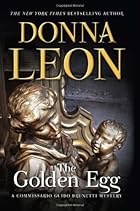
Leon, Donna. The Golden Egg. New York: Atlantic Monthly Press, 2013.
Brunetti is put on an insignificant case regarding vending laws, but his wife Paola has a request for Brunetti. She learned that a deaf handicapped boy who had worked at the dry cleaners has died from an overdose of sleeping pills. She thinks it strange that no one has taken notice. Brunetti begins looking into the boy's past and discovers that there is no record of his having ever been born and that there are none of the usual records to even show he exists. When his mother is questioned, she claims the papers were stolen in a burglary. Brunetti systematically works through his discoveries until he understands how the boy and his mother were able to survive with what appeared to be no source of income. I found this an interesting read, but it wasn't totally absorbing, and I wouldn't really classify it as a mystery in the traditional sense of the word. I prefer Brunetti when he's investigating a murder and traveling around the canals of Venice. I received an electronic galley of this book for review purposes from NetGalley.
The Burgess Boys
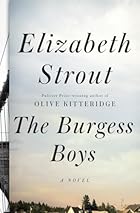
Strout, Elizabeth. The Burgess Boys. New York: Random House, 2013.
This is the story of the Burgess family. The two sons, Jim and Bob, are attorneys in New York. Their sister Susan still resides in Shirley Falls, Maine, their hometown. They are haunted by an accident which occurred when they were children, leaving their father dead. Bob has always felt inferior to his brother, partly as a repercussion to the traumatic event from childhood. The family comes together to defend Susan's son who is charged with a hate crime against the Somalis in the area. The characters are well-drawn, and the book is well-written. I should have loved it more than I did. I simply failed to connect with the characters. The author used some mild profanity in a few places. The biggest problem for me was that instead of using the word and moving on, she seemed to make sure that the reader noticed she was using the curse words and repeated them multiple times in rapid succession. I read an advanced electronic galley provided by the publisher through NetGalley. (3.5 stars)
Friday, March 22, 2013
Pioneer Farm Cooking

Gunderson, Mary. Pioneer Farm Cooking. (Exploring History Through Simple Recipes.) Mankato, Minn.: Blue Earth Books, 2000.
This short book gives a general idea of what farm life might have been like in the Midwestern United States as those states were being settled by early pioneers. The book discusses some of the chores that would have been involved and gives a few recipes which have been somewhat modernized. There's a recipe for apple butter that looks really easy to make and should be quite tasty that I may have to try. The book could be used to describe typical life on a farm during that period.
This is part of the Friday series on children's literature and genealogy.
Friday, March 15, 2013
The Doctor

Marsico, Katie. The Doctor. (Colonial People.) New York: Marshall Cavendish, 2012.
There is a great deal of information on the practice of medicine in the Colonial Period of United States history in this small book. It contrasts the preparation for the profession in this country mostly by apprenticeship with the more formal training provided in Europe. It discusses the distrust of Native American remedies by the medical profession but the popularity of them with the general population. The book is probably most appropriate for a middle school audience contentwise, although the layout and typefaces suggest that the book was intended for a younger audience. This would be a useful book for youngsters who have Colonial ancestors who were doctors or barbers or for those whose ancestors may have had a documented illness where they were treated by doctors or using folk remedies.
This is part of the Friday series on children's literature and genealogy.
Thursday, March 14, 2013
Lotions, Potions, and Deadly Elixirs

Bethard, Wayne. Lotions, Potions, and Deadly Elixirs: Frontier Medicine in the American West. 1st paperback ed. Lanham, MD: Roberts Rinehart, 2013.
Bethard, a Texas pharmacist, has penned a book dealing with medicines used on the frontier up through modern times. The first two sections are a hodge-podge of information on from the types of medicines used and the effects various treatments had. The third part is an alphabetical listing of medicines with brief entries describing the history of their use and dates used medically. Next comes a chronology of frontier medicine that is not strictly limited to medicine. There are entries such as "Lewis and Clark begin expedition." Before the bibliography is a glossary of old medical terms. The author employs humor in his narrative. Many of the examples come from Texas, which may be a bit of a weakness in drawing widespread appeal. I believe its chief use will come from consulting the material in section three although many readers will have to look beyond these brief entries for additional information. Still, this is a good resource for persons who have an interest in medicines available in America's earlier days. This review is based on a copy received through LibraryThing's Early Reviewer program with the expectation that a review would be written.
Tuesday, March 12, 2013
Yokohama Yankee by Leslie Helm

Helm, Leslie. Yokohama Yankee: My Family's Five Generations As Outsiders in Japan. Seattle: Chin Music Press, 2013.
Journalist Leslie Helm explores his family's past. It began when a German ancestor immigrated to Japan. Even though his family is now part Japanese, part German, and part American, they have difficulty fitting in any culture. While the narrative does not follow chronological order, it is fairly smooth and workable transition for the reader. Leslie and his wife adopt Japanese children and are faced with some challenges from this as well. I would have liked to have seen more documentation (in the form of citations) in the book although I know that was not the best. The book included many photographs but the subjects and context were not identified. It is hoped this was remedied in the final version. I also caught a few typographical errors and even one instance of the wrong city being named (which was obviously incorrect because of the context). Hopefully, the editors caught these. This is a good introduction to what Japanese culture was like for outsiders throughout the 19th and 20th centuries in Japan. Persons with an interest in Japan will want to read this one. This book was received through LibraryThing Early Reviewers with the expectation that a review would be written.
Friday, March 08, 2013
The Miller

Petersen, Christine. The Miller. (Colonial People.) New York: Marshall Cavendish, 2012.
There is a wealth of information contained in this book about the milling profession during the colonial period. Much of the information is too advanced for the elementary school student, yet the larger print will probably put off middle school readers. This would be useful to gain an understanding of this occupation if one's ancestor was engaged in it.
This is part of the Friday series on children's literature and genealogy.
Monday, March 04, 2013
Thinking back . . .
I've been sitting here pondering what it must have been like for those who researched their family history in the days before computers and databases. It really hasn't been that long. It must have been a monumental task to keep everything organized if one wanted to present that research in any semblance of order and to provide documentation. (I'm sure some never recorded their sources, but others probably simply couldn't locate the piece of paper with that information on it.)
Computers and databases were in operation when I began my own research. I believe I started on Windows 3.1 with a genealogical database that contained fields for things like births, marriages, and deaths, but not much more. One had a total of 10 lines in which to write any notes or track sources. Let's just say that it was somewhat impossible to have a properly documented database.
I'm quite grateful for databases of today like RootsMagic and Legacy Family Tree which provide us plenty of space for note-taking as well as the ability to create citations that meet standards. If we can't locate that piece of paper with that specific information, we can at least know what our source was so we can locate it again!
I have no idea why I began thinking of this this morning, but I hope I'll be a bit more forgiving of the people who compiled genealogies in the days before computers without properly documenting the sources to current standards which didn't even exist back then.
Computers and databases were in operation when I began my own research. I believe I started on Windows 3.1 with a genealogical database that contained fields for things like births, marriages, and deaths, but not much more. One had a total of 10 lines in which to write any notes or track sources. Let's just say that it was somewhat impossible to have a properly documented database.
I'm quite grateful for databases of today like RootsMagic and Legacy Family Tree which provide us plenty of space for note-taking as well as the ability to create citations that meet standards. If we can't locate that piece of paper with that specific information, we can at least know what our source was so we can locate it again!
I have no idea why I began thinking of this this morning, but I hope I'll be a bit more forgiving of the people who compiled genealogies in the days before computers without properly documenting the sources to current standards which didn't even exist back then.
Friday, March 01, 2013
The Cats on Ben Yehuda Street

Stampler, Ann Redisch. The Cats on Ben Yehuda Street. Ill. by Francesca Carabelli. Minneapolis, Minn.: Kar-Ben/Lerner Publishing Group, 2013.
This is a charming book that shows the bonds between cats and the persons they own. The illustrations are cute, and the book shows how cats adopt their pet humans. Any child or adult who is owned by a cat will love this one! This review is based on an advance reader's e-galley provided by the publisher through NetGalley.
The Log Cabin Church

Howard, Ellen; ill. by Ronald Himler. The Log Cabin Church. New York: Holiday House, 2002.
Elvirey moved to the Michigan frontier from the Carolinas with her father and grandmother after the death of her mother. The women of the community all want a church. Elvirey doesn't really remember church. The Carolinas to Michigan is not a migration pattern one would typically anticipate; however, I checked the 1850 census for Michigan via Ancestry.com and found 808 persons born in North Carolina residing in Michigan and 188 persons born in South Carolina there. While the numbers aren't great, they do support some migration from that part of the South to the upper midwest. The story line did not grab me like I thought it might, and the illustrations fell a little flat. The book, however, does illustrate the fact that churches usually came along after a group of settlers arrived and banded together to have one established.
This is part of the Friday series on children's literature and genealogy.
Sunday, February 24, 2013
Is Jesus in the Old Testament?
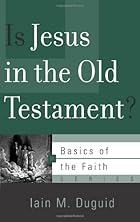
Duguid, Iain M. Is Jesus in the Old Testament? (Basics of the Faith) Louisville: P & R Publishing, 2013.
Duguid offers a short introduction to the topic of Christ in the Old Testament. Instead of focusing on specific Old Testament passages which are about Christ or show His presence in the Old Testament, he approaches it from a more overview approach and cites numerous New Testament Scriptures to make his points. Our pastor is currently in the midst of a series which is an overview of every book in the Bible. In each Old Testament book we have covered, he has had a section to show Christ in that particular book and points us to specific passages. I think I prefer our pastor's approach to the topic. This is a good introduction, but a book of 40 pages is just not going to be able to adequately address the topic. This review is based on an electronic galley provided by the publisher through NetGalley.
Friday, February 22, 2013
Civil War Cooking
Today we will look at a pair of books on foods of Civil War soldiers.

Dosier, Susan. Civil War Cooking: The Confederacy. Mankato, Minn.: Blue Earth Books, 2000.
A look at the Civil War and foods that Confederate soldiers might have eaten. All recipes have been modernized for today's readers, using appliances such as microwaves. Still, I think that having children try their hands at making dishes such as hardtack, peanut brittle, and hoppin' john could be a good experience for budding genealogists as they try to understand what the Civil War might have been like for their Confederate ancestor.

Dosier, Susan. Civil War Cooking: The Union. Mankato, Minn.: Blue Earth Books, 2000.
A look at the Civil War and foods that Union soldiers might have eaten. All recipes have been modernized for today's readers, using appliances such as microwaves. Having children try their hands at making dishes such as johnnycakes, Navy bean soup, and gingerbread cookies will enable them to understand the types of foods that their Union soldier may have encountered during his service. The author probably painted too rosy of a picture of the Union soldiers as she seemed to lead her readers to believe that the Union soldiers never took food (plant or animal) from farms without purchasing it.
This is part of the Friday series on children's literature and genealogy.

Dosier, Susan. Civil War Cooking: The Confederacy. Mankato, Minn.: Blue Earth Books, 2000.
A look at the Civil War and foods that Confederate soldiers might have eaten. All recipes have been modernized for today's readers, using appliances such as microwaves. Still, I think that having children try their hands at making dishes such as hardtack, peanut brittle, and hoppin' john could be a good experience for budding genealogists as they try to understand what the Civil War might have been like for their Confederate ancestor.
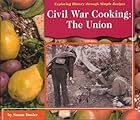
Dosier, Susan. Civil War Cooking: The Union. Mankato, Minn.: Blue Earth Books, 2000.
A look at the Civil War and foods that Union soldiers might have eaten. All recipes have been modernized for today's readers, using appliances such as microwaves. Having children try their hands at making dishes such as johnnycakes, Navy bean soup, and gingerbread cookies will enable them to understand the types of foods that their Union soldier may have encountered during his service. The author probably painted too rosy of a picture of the Union soldiers as she seemed to lead her readers to believe that the Union soldiers never took food (plant or animal) from farms without purchasing it.
This is part of the Friday series on children's literature and genealogy.
Friday, February 15, 2013
Sod Houses on the Great Plains
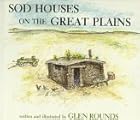
Rounds, Glen. Sod Houses on the Great Plains. New York: Holiday House, 1995.
A very brief look at the sod house that was often the first home for many pioneer families on the frontier of the Great Plains. The author has included some useful information, but the illustrations are not captivating and the ending seemed a bit abrupt. Still, this book has some value in showing a child whose ancestor may have lived in such a house what the home would have been like.
This is part of the Friday series on children's literature and genealogy.
Friday, February 08, 2013
Apples to Oregon

Hopkinson, Deborah; ill. by Nancy Carpenter. Apples to Oregon: Being the (Slightly) True Narrative of How a Brave Pioneer Father Brought Apples, Peaches, Pears, Plums, Grapes, and Cherries (And Children) Across the Plains. New York: Atheneum, 2004.
This well-illustrated story of a girl named Delicious whose family travels from Iowa to Oregon taking along their beloved fruit trees. While the story does mention some of the hardships faced on the trail such as river crossings and mountains, the main focus of the book is on getting the trees across rather than the family. I think my greatest problem with the book is that the father seemingly placed a greater importance on his beloved fruit trees than upon his own family. This would be a good read for a young reader whose ancestors traveled the Oregon Trail, but I'd want to tell the child that his own family cared about the fate of the children making the venture than upon the possessions. The story itself is based in part upon a family that did take trees from their former home to Oregon.
This is part of the Friday series on children's literature and genealogy.
Friday, February 01, 2013
The General Store by Bobbie Kalman
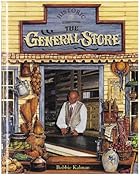
Kalman, Bobbie. The General Store. (Historic Communities.) New York: Crabtree, 1997.
An informative look at 19th century general store and the work of the store owner and his family. The book contains a glossary at the end. Some of the illustrations were drawings; others were photographs. The quality of them varied. As a genealogist who had an ancestor who ran a general store, I found it fairly accurate according to what my mom told me about her father's stories about his father. The author pointed out that many of the store owners also served as postmasters, and this was accurate in my own ancestor's case.
This is part of the Friday series on children's literature and genealogy.
Subscribe to:
Posts (Atom)