Showing posts with label DNA. Show all posts

Tuesday, November 10, 2020

Ancestry Quest


Sammons, Mary Beth. Ancestry Quest: How Stories from the Past Can Heal the Future. n.p.: Viva Editions, 2020.

Journalist Mary Beth Sammons looks at the popularity of genealogy providing insights on how it can bring a sense of completion and healing to those undertaking the quest. She cautions researchers about the high percentage of persons finding unexpected results when incorporating DNA testing into their research. Sammons interviewed several genealogists, some of them very well-known, about things they found in their research. One storyteller appears to be related to me through her Quaker Thornton line. Sammons consulted genetic genealogist Diahan Southard for insights into the field. Although the book contains a few citations, it will not win any awards for documentation, particularly since blind endnotes were utilized. The stories should make this popular as a general interest book. The inclusion of well-known genealogists' stories adds to the appeal. I received an advance review copy from the publisher through Edelweiss. Although not required, reviews are appreciated.

Tuesday, January 15, 2019

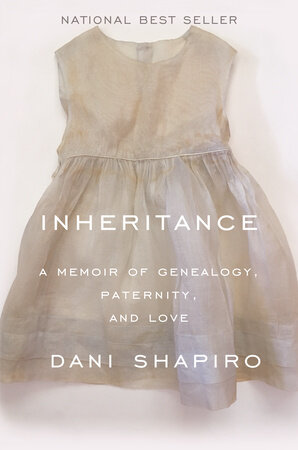
Inheritance


Shapiro, Dani. Inheritance: A Memoir of Genealogy, Paternity, and Love. New York: Alfred A. Knopf, 2019.

Dani Shapiro took a DNA test. The man she believed to be her biological father was not. She discovered her parents difficult conceiving a child led them to a clinic where her mother was artificially inseminated not with her father's sperm but with that of a young doctor. A first cousin match led to the man's identity. Correspondence between Shapiro and her biological father took place. The eventually met. While I enjoyed the DNA story, the publication of the memoir revealing the man's identity appears to be a violation of genetic genealogy ethics, particularly when she continually voiced the man's concern for privacy. I received an advance electronic copy of the book from the publisher through NetGalley in exchange for an honest review. I hope the final version includes her biological father's consent to be named.

Tuesday, August 07, 2018

The Adoptee's Guide to DNA Testing


Weinberg, Tamar. The Adoptee's Guide to DNA Testing: How to Use Genetic Genealogy to Discover Your Long-Lost Family. Cincinnati, Ohio: Family Tree Books, 2018.

Weinberg's useful guide intended to assist adoptees in their quest to identify birth families is beneficial to anyone wanting to gain a better understanding of genetic genealogy. She explains the types of tests offered, the testing companies offering each, and a bit about the differences in the results. She then offers information on how to reach out to matches, how to make use of GEDmatch's tools, and using other third party tools. She closes with several case studies designed to inspire those seeking their families. Appendices include frequently asked questions and worksheets which could be adapted to Excel spreadsheets to help keep track of genetic genealogy research. The book contains an index. Any book on genetic genealogy will likely be out-of-date on at least one or two points by the time it is printed. Her frequently asked questions poses a question about the safety of testing results. It is clear the section was written before the announcement concerning the Golden State Killer's discovery through using genetic genealogy databases. Several more arrests were made using the databases after this. I suspect the next edition will include a "caution" statement although it won't discourage the use of the databases for most individuals. I wish she had covered more third party tools, although I'm certain the editors were trying to keep the book a manageable size. The illustrations help the reader visualize the information presented. This book belongs in most libraries and private genealogy collections along with Blaine Bettinger and Debbie Parker Wayne's Practical Genetic Genealogy and Blaine Bettinger's The Family Tree Guide to DNA Testing and Genetic Genealogy. Leading genetic genealogists found problems with early iterations of the book. We are not sure if those were corrected in the edition I read and reviewed or if I just failed to catch the things because I don't work with it at the same level they do. This review is based on an electronic advance copy received through NetGalley with the expectation an honest review would be written.

Saturday, June 24, 2017

Thoughts on Private Trees

Tree image used courtesy of ClipArt Panda.
Private trees generate much discussion in the genealogical community, particularly when it comes to DNA. Those with private trees provide a number of reasons for making their trees unavailable to others--adoptions and non-paternal events, work in progress, plagiarism or unauthorized use of their data and images in books or publications by others, the way they use their tree (such as to sort out multiple persons with the same name), and an admission of the tree's messiness.

I agree with the right to keep one's tree private, but I also believe many with private trees who took or manage DNA tests could benefit from a stripped-down public tree which would provide useful information for their matches. I used this option when I realized I wanted to use Ancestry to  review of older genealogical data and expand my tree. My main tree is private. I plan to make it public at some point, but not until I am far enough back in my review to make it useful.

Adoptees and persons with non-paternal events have valid reasons for keeping their trees private. It is absolutely the right thing to do when the situation demands privacy because of sensitive information regarding living individuals which might be revealed because their identity might be deduced through those who are no longer living.

All trees are a work in progress. If you are uncertain about a conclusion, find a work-around. Add notes and comments. I often do this in one of the viewable options such as the birth field. For instance, I might want to include a note to let others know the parents of an ancestor is a built case rather than one relying on documentation. Although no evidence located to date overturns the conclusion, it is a case which needs to be reviewed in light of DNA evidence. It is a conclusion I feel needs to be strengthened. A note in the birth field for the ancestor and a note somewhere on his parents' individual pages asking other descendants to contact me might actually be helpful.

Many persons are concerned with other individuals copying their work or using their images in books, blog posts, and other works. The typical reply to those persons is, "If you do not want your work or images used by others, do not post it online." For those of us who began our genealogical quest before the days of the Internet, we remember this was a concern even in the days of print media. Some persons who sent information to cousins always found "their work" showing up in other publications, usually without attribution. It even happened to me a few times. In the digital age, it is easier to do. If we make information available online, other people will look at it, and use it. Some will cite it; others will not. Is making the tree private the solution? I personally do not think so. I grew more discerning when others requested information. I simply did not offer to send "everything" to individuals. I asked what information they were seeking, offering an answer to their specific need. I might be able to help them through a brick wall so they could continue their own research. In fact, I sometimes asked them if they had looked at a specific set of records where I uncovered the answer rather than giving it to them. To me, the Ancestry default view is a presentation of facts. Facts must be documented and correlated. It is difficult to steal facts. Adding images from personal collections is completely optional. If a person posts these and makes the images publicly available, other people can and will benefit. I suspect all of us use scanned images of records others provided on their trees, particularly when a visit to a particular repository would be required to obtain them. Most of us just attach them to our own trees without downloading them since Ancestry offers the option, but some people download them. When downloading, it is good practice to add a citation to the image in your photo-editing software so you know the provenance of the image. If you are still concerned with plagiarim or with others using your work, utilize the private option, but also create a stripped-down public version of the the tree.

I often run across trees where identities of two or more persons with the same name are merged into one individual. In this morning's discussion, one person admitted to placing information on seven men of the same name and approximate same name in the same location in one individual to sort it out. While I think better tools for sorting exist, some researchers feel this works for them. I usually use Excel spreadsheets or Word tables, which are color-coded as I assign information to one of the individuals. The old-fashioned note card method also works. Why not have a second public tree which contains only proven information on direct lines?

If your tree is messy, would it be easier to begin a second tree containing only proven information and document it as you go rather than trying to sort through the mess? Would a third tree containing only proven direct line ancestors with stripped-down information help you and your DNA matches in the meantime?

I mentioned a stripped-down public version of a tree in several places. This tree needs to contain the full name of the person along with any nicknames. (For example, Salome Olive "Ollie" Lantz.) It also needs to include birth/marriage/death dates and locations. Sometimes geography is the key to locating the match or the line from which the match is likely to come. My stripped down tree only contains direct-line ancestors. I do, however, build out the tree to other relatives who tested so I can get by with only a single tree. I even build their direct lines back a few generations.

You have a right to keep your tree private, but please consider offering a stripped-down public version of your tree for DNA matching purposes.


Wednesday, May 31, 2017

The Foundling


Fronczak, Paul Joseph with Alex Tresniowski. The Foundling: The True Story of a Kidnapping, a Faily Secret, and My Search for the Real Me. New York: Howard Books, 2017.

This is a fascinating story, solved in part by DNA. Paul Fronczak was kidnapped in a Chicago hospital shortly after his birth by a one pretending to be a nurse. About two years later, a child was left in front of a McCrory's store in Atlantic City, New Jersey. Police wondered if it might be Fronczak. He was put in a home with a family who often cared for children in such circumstance. The family formed a special bond with the child, but he was ultimately destined to live as Paul Fronczak. Years later, Paul wanted to determine if he was the Fronczak child, and if not, who he was -- and what happened to the real Paul. DNA tests confirmed his suspicions he wasn't the real Paul, but that's just the beginning of the story. It's an interesting, although sometimes repetitive story, which could have used better editing. "Paul" needed a better balance between his own family life and his quest for his identity. I think he probably tries too hard to convince himself it was "in his genes" instead of owning up to his familial responsibilites. Still, it is a captivating story of abandonment, but I would be remiss if I didn't warn people parts of the story are not pretty. "Paul" was fortunate to have a team of  genetic genealogists and DNA testing companies assisting in the search for his identity. It's not something most adoptees will have as they approach their quest. Still "Search Angels" and "DNA Detectives" are out there to help many adoptees uncover their true identities. It is unfortunate a list of resources was not included at the end of the book to help persons who might wish to pursue it.

Monday, June 27, 2016

Case Studies Demonstrating the Use of Mitochondrial DNA in Genealogical Research

This past weekend a researcher using a Facebook group asked a question about which DNA test to take. One person quickly chimed in that Ancestry DNA was the best. I came back and qualified it by asking for what goal the person hoped to achieve through testing. I explained that if it was a patrilineal question, a Y-DNA test might work better and that FamilyTreeDNA was the only American company currently offering such a test. I said Ancestry DNA and FamilyTreeDNA both provide good results, but suggested taking the Ancestry DNA test and then transferring the results to FamilyTreeDNA for $39. I also mentioned GEDmatch's usefulness.

Then I made a comment that in some very specific situations a mitochondrial DNA test might be useful. The other commenter thought mitochondrial DNA tests were a total waste of time. I reiterated that it is quite useful under very specific circumstance. I did, of course, mention my own reason for doing a mitochondrial test. Initially I wanted to learn the mitochondrial haplogroup to put to rest one of those full-blooded Indian rumors in my line. The haplogroup came back Western European so my goal was achieved. I also hoped it would help identify my 3g-grandmother's mother. That result is currently on hold as I need to work much more with the results to achieve it.

However, the discussion made me realize I needed some good examples of how mitochondrial DNA solved genealogical problems. My mind immediately went to Elizabeth Shown Mills' great article, "Testing the FAN Principle Against DNA: Zilphy (Watts) Price Cooksey Cooksey of Georgia and Mississippi," which first appeared in National Genealogical Society Quarterly in June 2014 and is now available on the author's Historic Pathways site. This case used all types of DNA, providing genealogists a great model for DNA research. I am sure I saw another published case study demonstrating mitochondrial DNA as a genealogical tool, but I could not remember it.

However, I did find a blog post by Roberta Estes, "Mitochondrial -- the Maligned DNA," which shows how mitochondrial DNA was used to resolve of which wife of a male ancestor the tester was a descendant.

I also found a somewhat technical but useful post by Blaine Bettinger, "An mtDNA Journey -- Discovering My mtDNA in a Research Paper," describing some of the surprises discovered in his own mitochondrial DNA and how he discovered his mtDNA in a research study defining his haplogroup.

I thought I'd toss the question out for others. Do you know of another example of a published case study involving mitochondrial DNA in DNA research? Has mitochondrial DNA been useful in your own line?

Bibliography

Bettinger, Blaine. "An mtDNA Journey -- Discovering My mtDNA in a Research Paper," The Genetic Genealogist, 30 July 2015 (http://thegeneticgenealogist.com/2015/07/30/a-mtdna-journey-discovering-my-mtdna-in-a-research-paper/ : accessed 25 June 2016).


Estes, Roberta. "Mitochondrial -- the Maligned DNA," DNAeXplained - Genetic Genealogy, 29 March 2014 (https://dna-explained.com/2014/03/29/mitochondrial-the-maligned-dna/ : accessed 25 June 2016).


Mills, Elizabeth Shown. "Testing the FAN Principle Against DNA: Zilphy (Watts) Price Cooksey Cooksey of Georgia and Mississippi." National Genealogical Society Quarterly 102 (June 2014): 129-152; image copy, Historic Pathways (https://www.historicpathways.com/download/ZilphyArticle072915.pdf : accessed 25 June 2016).

Tuesday, May 31, 2016

Reunited

Pardon me if I borrow the title of a song from my high school years, but it seems to fit the topic of today's post. I just returned from my high school reunion. I was a bit disappointed in the turnout. Of course, I expected the turnout to be low. We really did not receive notification of the date until 3 months ago. Pricing and details only came to us in April. I suspect many of my friends had already planned other things for a holiday weekend. Others probably could not arrange to get off work on such notice when others in their places of employment had already requested days around the long weekend.

In spite of the low turnout, those of us who attended enjoyed visiting and reminiscing. I suspect most of us could have done without the DJ and the music that was mostly just interrupting our conversations. A few did dance, but there was little floor space available at our venue. I'd love to post a photo but I have not obtained permission to post one of the group shots some of my friends' spouses' took.

I'm really probably more excited about things that took place earlier in the day. I met with some cousins on my grandmother's paternal line at lunch. We then went out to where they were camping by the gravel pits around Bigbee to get a Y37 plus Family Finder sample. This will be in tomorrow's mail so the waiting begins. We already know where the autosomal DNA is pointing, but it will be interesting to see if we can identify a more specific line with the Y-DNA, perhaps through a mutation. We are showing matches to two branches with differing migration patterns. Persons from both of these areas migrated to the areas in Alabama and Mississippi where our ancestors resided. Hopefully we'll be able to bridge the gap.

After that, I went to my dad's first cousin's house where we attempted to identify all the people not previously identified in the 1984 reunion photograph. We managed to identify some of them. Most of those not identified were the younger children. We enjoyed visiting until it was time for her to go to her granddaughter's birthday party and for me to go to my reunion. We'd love to have another family reunion, but there are fewer and fewer first cousins, and the younger generations don't seem to care as much about getting together. Many of the older ones are unable to travel on their own.

Wednesday, May 25, 2016

Great Excitement Quickly Turns to Sadness

Recently I found one of those really exciting matches at Ancestry -- one where the person matches you through a single ancestor rather than a couple. The match was on a great-great-grandmother. I descended through her first husband; the DNA match descended through her second. An opportunity to focus on a single line!

The problem, of course, is Ancestry DNA lacks a chromosome browser. I contacted the matching kit manager to see if she had uploaded the raw data to GEDmatch.com. She had not. After explaining what it was and did, she was not interested in uploading at this time.

When I looked at the "shared matches" on Ancestry, I was only able to identify one of the two. That person matched my fourth great grandparents on my two great grandmother's maternal side. The other person shows no known connection to that surname. I'm not currently able to make a connection to the tree although perhaps I will be able to do so in the future to make a triangulation . . . but I'd really love to know on which segment the match is located . . . and whether persons who tested at other companies also match the segment.

I hope the kit manager attends some sessions on working with autosomal DNA and learns the benefit of GEDmatch and discovers whats she is missing by not uploading. I did, at least, provide her with a link to a video by Angie Bush that I hope she'll watch.


Tuesday, May 10, 2016

Comparing Admixtures of Siblings and of Parent and Child(ren)

Recently Judy Russell demonstrated for her blog followers why ethnicity estimates provided by testing companies could not be trusted in her post "Those Percentages, Revisited." I knew problems in my family's admixture results were present in the results, but until Judy posted the table, I never thought of creating one for my own family.

Using the results from the same company Judy used, I created a table.

CountryMeBrother1Brother2DadNiece
British Isles69%67%27%84%
Scandinavia19%6%
Southern Europe3%7%
Western and Central Europe18%100%73%15%
Asia Minor9%2%
West Africa1%

Let me make a quick note. The niece is the daughter of "Brother2." Is it not interesting that he is 100% of Western and Central European ancestry, but that she only has 15% rather than the expected 50%? She has rather strong British Isles ancestry.

I seem to have missed out on the Western and Central European ancestry, but I have a high percentage of "Asia Minor." I have a rather high percentage of Scandinavian ancestry according to this estimate, but only one brother shares any of that with me, and it apparently came from my mother's side of the family.

I decided to compare the admixtures at another site, but unfortunately I cannot include Brother2 in these admixture results as he only tested at the one company.

CountryMeBrother1 DadNiece
Great Britain 70% 48% 52% 85%
Ireland 11% 27% 31% 9%
Italy/Greece 8% 10% 6%
Europe East 4% < 1%
European Jewish 4%
Finland/Northwest Russia 1% 2% 1% 4%
Scandinavia < 1%1% 5% <1%
Europe West < 1% 9%
Iberian Peninsula 2%
Caucasus 2% 2% 2%
Benin/Togo < 1%
African Southeastern Bantu 1%
Mali < 1%
Africa North < 1%

Overall these results seem to be a little less erratic than the earlier ones, but differences still exist. I find the differences between testing companies fascinating. I'm the only one who has tested with 23 and Me so I cannot determine how different admixtures are between siblings and/or parents.

Admixture remains the least reliable part of the DNA test. It's fun to see, but one should not rely too much on the results returned.


Thursday, April 28, 2016

Thou Shalt Not Accept Shaky Leaf Hints Without Reviewing Them

In the last week or so, I began reviewing additional shaky leaf hints at Ancestry for some of my more recent ancestors. I was appalled when I looked at the family trees that included my ancestor James M. Thornton.

Let's look at some of the erroneous information I found.

Erroneous information: James M. was born in Georgia. 
Fact: James M's Civil War (Union) pension file gave his birthplace as Jefferson County, Alabama. Censuses consistently listed James M.'s birthplace as Alabama.

Erroneous information: James M. was in the 1880 Lincoln County, Tennessee census.
Fact: James M. was enumerated in Franklin County, Alabama in 1880. [See 1880 United States Federal Census, Franklin County, Alabama, population schedule, Newburgh, Beat 8, SD 1, ED 95, p. 627B, family 35, lines 9-15, Jas. M. Thornton family; digital image, Family Search (https://familysearch.org/ark:/61903/1:1:M4JJ-N64 : accessed 23 Apr 2016); citing National Archives microfilm publication T9, roll 13.] Those who accepted the Lincoln County, Tennessee census are likely accepting it because James M.'s first wife's name was Lucinda. However, she died in childbirth in 1855, and their son Cape was reared by his maternal grandparents. The James enumerated in Lincoln County was born in Virginia instead of Alabama.

Erroneous information: James M. Thornton descends from the Dozier/Mark/Luke Thornton line of Virginia. These trees list James M.'s paternal grandparents as William Thornton and Clarissa Vice.
Fact: Y-DNA testing of descendants shows James M. Thornton's descendants are from the South Carolina E group whose common ancestors appear to be Thomas Thornton and Martha Boykin of North Carolina. (Dozier is part of the Virginia A group.)

Other mistakes were also found. For example, one person said he died in the Armory in Splunge, Mississippi. As a native of Monroe County, I got a big chuckle out of that one. Splunge does not and has never had an armory. The person obviously meant the town of Amory which is in that part of the county. However, James M. lived in the community of Splunge which was really a bit of a distance from Amory. Persons living in Splunge would have traveled to Amory when they needed to travel by railroad or when they needed items they could not get in the local community.

I never accept the tree hints. I do, however, review them for hints AFTER I've worked through the hints given and made certain I have all the census records and checked other sources for key pieces that might be missing such as marriage records, birth and death records, cemetery records, etc. I then take any hints I find to see if those can be documented. Most of the time my own research and documentation has already uncovered the hints, or I can easily disregard hints because someone has added something that is very obviously erroneous, such as the parents being born after the child.

Always check shaky leaf record hints also to make sure they apply to your ancestor. Recently I was reviewing shaky leafs on a different line on which I was working. I got 3 hints on this particular person. None of the hints were records for the individual on whom I was working. I searched and found the right records rather than accepting the ones given. In fact, I had to switch from Ancestry to Family Search to give me two critical records proved my own research was on the right track.


Tuesday, November 10, 2015

Super Genes


Chopra, Deepak and Tanzi, Rudolph E. Super Genes: Unlock the Astonishing Power of Your DNA for Optimum Health and Well-Being. New York: Harmony Books, 2015.

Genetics is a rapidly evolving field of study with so many discoveries that one must be dilligent to keep up. The authors have shown that they are well-versed in recent discoveries, even reporting on the recent epigenetics discovery that one's ancestors memories may be etched in our DNA. The first section with its focus on the science behind DNA and epigenetics is by far the most interesting. The authors attempt to apply the research to lifestyle choices in the second part. Unfortunately the authors seemed to be guided by and promoting New Age philosophies in this section and in the third section which focused on evolution. I would prefer to read a book on genetics that was a bit more neutral and did not promote Eastern religions and philosophies. The appendices were more interesting than the last two parts of the book. This review is based on on Advanced Review e-galley provided by the publisher through NetGalley for review purposes.

Saturday, November 07, 2015

Comparing Shared Centimorgans

Thursday Angie Bush posted on Facebook's ISOGG group that Ancestry DNA was now reporting the total shared centimorgans. Everyone was excited about this development, but people began to notice discrepancies which were being attributed to algorithms.

I decided to take a match for a known second cousin once removed and compare the totals reported for Ancestry and GEDmatch, using default settings. For privacy reasons, I'm not including the match's name or GEDmatch kit number.


Ancestry reported 96 cM across 6 segments. GEDmatch returned 6 segments. If you look at the bottom, it shows that the total of segments > 7 cm was 98.3 cM. This is pretty close. While I'd love to know which 2.3 cM Ancestry DNA did not find valid, it is not something over which I will lose sleep. Yes, I'd love for Ancestry to give me the segment data. I tell them I want a chromosome browser every chance I get.

Friday, November 06, 2015

Thoughts on DNA.LAND

I uploaded my raw data from Ancestry (only one of the three companies with which I've tested) to DNA.LAND. I knew that many people had no matches and that most only had a couple. I was lucky. I had 5 relative matches. Most of those were persons with whom I'm already in contact. At least one is someone who may be hiding under another name but that I did not immediately recognize as a match at any of the companies with which I've tested. As the database grows, the number of matches should increase.

I like the way the match is represented on the chromosome browser from the match screen. I like that we have segment information that is predicted to be recent or ancient in a table which can be unhidden. Most early adopters also comment about liking this.

I found the Ancestry report, predicting my ethnic or regional origins, to be very similar to the original ones produced by Ancestry before they introduced an algorithm which broke the report into more specific areas. The admixture tends to be the least reliable part of a DNA report, yet it is why many people test. I'm still seeking the alleged Ashkenazi/Levantine (or Eastern European Jewish) ancestor.

How useful is it? Not very useful at the present.

Does it have the potential to be useful? That depends on what features they introduce. (Part of an answer to a question in the "Help" section states, "We will be adding other features to the website that you don't get with other sites. This is just the beginning. Early adopters will help us to validate our approach and to continue our efforts.")

Saturday, August 08, 2009

Choosing a Y-DNA Testing Company

Many of you know that I've recently assumed the role as administrator of the Thornton Y-DNA Project. In the short time in which I've been administrator, I've already encountered several people who have regretted their choice of DNA testing companies. Why? Because they chose what they thought was a good deal on a DNA test.

I'm going to let you in on a little secret. You need to consider what your goals are when selecting a Y-DNA testing company. If your goal is to find matches with others having your same surname, then you need to find out which company that project is using.

The Thornton Y-DNA project uses FamilyTreeDNA. This decision was made years ago. Since that time, many other companies have come onto the scene. It's tempting to test with one of those when the price looks better. The problem is that by testing with another company, you have missed out on joining the surname DNA project and having your results in a common database for comparison. There are some options out there like Y-Search which allow persons who have tested with other companies to compare results and upload GEDCOMS, but it still does not make one a member of a surname project. FamilyTreeDNA will not put the results from other testing companies in the surname project databases for quality assurance reasons. (They, of course, have provided Y-Search as a comparison tool, but they still encourage persons who tested with other companies to have tests redone at a discounted rate. The link is available at Y-Search.) I would be remiss if I did not point out that FamilyTreeDNA does offer a Genographic Project conversion option which allows one to join a surname project in the process of transferring data.

Most of the DNA testing companies run specials from time to time. Be on the lookout for one of these great deals. Many of the project administrators will post this information to their project web sites (so keep checking those sites). Some will also post to messages boards or mailing lists if they are allowed to do so. (It's probably a little difficult to promote a FamilyTreeDNA test on a message board or mailing list hosted at competitor Ancestry, so you might want to check GenForum for those notifications.)

If you plan to join a surname project, get your Y-DNA testing done by the company they have selected. Don't make the mistake others have made by going with what outwardly appears to be a good deal but might not provide the desired outcome of your testing.

Monday, June 08, 2009

FamilyTreeDNA Special

I recently assumed duties as administrator of the Thornton DNA project. Today I received a notice that between June 9 and June 24 that FamilyTreeDNA will be offering a special pricing for new participants to the project. For only $119, persons will receive the 37 marker Y-DNA test AND the mtDNA testing! That's less than half price! If you've been thinking about joining one of the surname projects, now is the time to join!

Saturday, April 18, 2009

Speaking in Jonesborough April 25

I want to apologize to everyone for my lack of blogging of late. I wish I could say that I'll be resuming my regular blogging schedule now, but I've got something on my schedule every night next week and am speaking next Saturday April 25 in Jonesborough, Tennessee for the Jonesborough Genealogical Society. The fun starts at 10 a.m. at the public library in Jonesborough. My topic is "The Basics of DNA for the Family Historian." This is a new lecture for me, and I will have had only slightly more than 3 weeks to prepare for it from the time they contacted me. After that event, I have a few more deadlines to meet by May 1. I've also got a big genealogical report to write before the research gets too stale; however, I'll try to take a break and blog some while I'm doing that!

Friday, January 04, 2008

Genetic Genealogist Offers Contest

Blaine Bettinger is celebrating his one year blog-iversary with a contest. The recipient will receive a free genetic genealogy testing kit. Blaine blogs about all sorts of stories that touch on the theme of DNA testing and genealogy. His blog is a great way for persons interested in genetic testing and how it pertains to genealogy to learn more about the subject. I have to confess that there is a "family story" that makes me want to have my mtDNA tested. It is quite possible that this legend can be proven or disproven by testing because the story concerns my mother's mother's mother's mother's mother. Even if it can't really be proven, we might know if there is any possibility of truth to the legend. Complete contest rules can be found at this post.

Saturday, October 27, 2007

DNA and Genealogy

The 35th edition of the Carnival of Genealogy is being hosted by the Genetic Genealogist who is offering to analyze various genealogical mysteries which we think may be solved by DNA testing. The complete call for submissions is at the end of the 34th carnival.

As one who has had her brother's DNA tested in hopes of getting through a brick wall and instead of finding a common ancestor finding three more lines brickwalled in the same general location, I'm hesitant now to say that it is always going to be useful; however, I can see several things that might help us on researching that Thornton line if the right persons were tested. For example, we've always wondered if the David Thornton line of Fayette County, Alabama is related to the Richard Thornton line of Fayette and Walker Counties. If a male Thornton from David's line were to be tested, we would have a little more than similar naming patterns and an obvious economic disparity from which to make our observations. One researcher has tried to connect us with another group of Thorntons in the Tuscaloosa County area. This is a nearby county and certainly a good case could be made, but it is all circumstantial, and one can equally make a case against this scenario. The problem: I don't know a male Thornton who descends from these lines. All my contacts on these lines have been with females with other surnames and with whom I've lost contact because of e-mail address changes over the years. In the meantime, I'm working on documenting these other three lines back to the Carolinas where we are all stuck in hopes that I'll make a discovery that will get us past the brickwall.

I really am more intrigued right now with a mtDNA analysis. It's my understanding that this can tell you something about one's mother's mother's mother's mother and her ethnicity. This person for my mother (who is still living) would be Betsy Murry who is rumored to have Native American heritage. I can definitely place her husband in Indian lands in Georgia. My question for the Genetic Genealogist is whether I should convince my again mother to be tested or whether I could do the test. I would also want to know how likely I would be to determine that there is or is not Native American heritage in the matrilineal line with the mtDNA tests. There are different levels of mtDNA tests offered by Family Tree DNA. Which of these would be adequate to offer the information I desire and which would be best?

Sunday, June 24, 2007

DNA & the Amish

Thanks to the Meme going around, I've discovered a wonderful post by The Genetic Genealogist about the Amish and DNA. There is an interesting summary of results for the Yoder project. My Yoder line is 25126 in the numbering system utilized by the Yoder Newsletter. This is derived from the book Amish and Amish-Mennonite Genealogies by Hugh F. Gingerich and Rachel W. Kreider. This is one of the must-have books for those of us with Amish ancestry. Thanks, Randy, for choosing The Genetic Genealogist as one of your five thinking bloggers.

Wednesday, February 21, 2007

Fascinating Iowa Case

There's an interesting 19th century missing persons case with a link to recent DNA studies that is just absolutely fascinating at IAGenWeb.