Showing posts with label genetic genealogy. Show all posts

Tuesday, November 10, 2020

Ancestry Quest


Sammons, Mary Beth. Ancestry Quest: How Stories from the Past Can Heal the Future. n.p.: Viva Editions, 2020.

Journalist Mary Beth Sammons looks at the popularity of genealogy providing insights on how it can bring a sense of completion and healing to those undertaking the quest. She cautions researchers about the high percentage of persons finding unexpected results when incorporating DNA testing into their research. Sammons interviewed several genealogists, some of them very well-known, about things they found in their research. One storyteller appears to be related to me through her Quaker Thornton line. Sammons consulted genetic genealogist Diahan Southard for insights into the field. Although the book contains a few citations, it will not win any awards for documentation, particularly since blind endnotes were utilized. The stories should make this popular as a general interest book. The inclusion of well-known genealogists' stories adds to the appeal. I received an advance review copy from the publisher through Edelweiss. Although not required, reviews are appreciated.

Tuesday, January 15, 2019

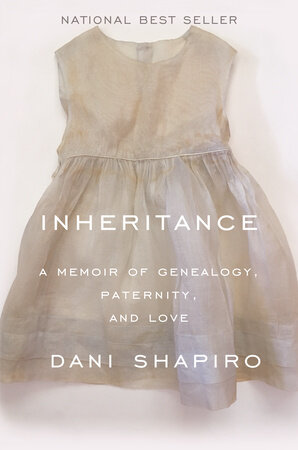
Inheritance


Shapiro, Dani. Inheritance: A Memoir of Genealogy, Paternity, and Love. New York: Alfred A. Knopf, 2019.

Dani Shapiro took a DNA test. The man she believed to be her biological father was not. She discovered her parents difficult conceiving a child led them to a clinic where her mother was artificially inseminated not with her father's sperm but with that of a young doctor. A first cousin match led to the man's identity. Correspondence between Shapiro and her biological father took place. The eventually met. While I enjoyed the DNA story, the publication of the memoir revealing the man's identity appears to be a violation of genetic genealogy ethics, particularly when she continually voiced the man's concern for privacy. I received an advance electronic copy of the book from the publisher through NetGalley in exchange for an honest review. I hope the final version includes her biological father's consent to be named.

Tuesday, November 06, 2018

The Latecomers


Ross, Helen Klein. The Latecomers. New York: Little, Brown, and Company, 2018.

Bridey and Thom leave Ireland for America, planning to wed once they arrive. Thom dies aboard ship, and Bridey arrives in America pregnant. She considers returning to her family in Ireland, but remains. A young woman who helps Bridey helps her place the child with a Catholic charity and provides Bridey with a job. When the woman's own child dies in birth, she adopts from the charity with Bridey still working for the family. The bond between Bridey and Vincent is strong. Bridey returns to Ireland when the family's patriarch dies. The story follows several more generations in a somewhat chaotic matter. The flow between the older generation and the newer ones does not work well for the reader. Genetic genealogists will love the epilogue. The author provides historical notes and a good bibliography, features unusual for a novel. I really enjoyed Bridey and Thom's story, the story of Bridey's first days in America, and giving up the child for adoption. I even enjoyed some of Bridey's story after that point. Unfortunately, the more the story began to focus on the Hollingworth family, the less interested I became in the story being read. The character development that took place in the early generations did not extend to the later ones. Those generations felt rushed. What started as a good read became just a mediocre one for me. I received an electronic copy from the publishers through NetGalley with the expectation of an honest review.

Tuesday, August 07, 2018

The Adoptee's Guide to DNA Testing


Weinberg, Tamar. The Adoptee's Guide to DNA Testing: How to Use Genetic Genealogy to Discover Your Long-Lost Family. Cincinnati, Ohio: Family Tree Books, 2018.

Weinberg's useful guide intended to assist adoptees in their quest to identify birth families is beneficial to anyone wanting to gain a better understanding of genetic genealogy. She explains the types of tests offered, the testing companies offering each, and a bit about the differences in the results. She then offers information on how to reach out to matches, how to make use of GEDmatch's tools, and using other third party tools. She closes with several case studies designed to inspire those seeking their families. Appendices include frequently asked questions and worksheets which could be adapted to Excel spreadsheets to help keep track of genetic genealogy research. The book contains an index. Any book on genetic genealogy will likely be out-of-date on at least one or two points by the time it is printed. Her frequently asked questions poses a question about the safety of testing results. It is clear the section was written before the announcement concerning the Golden State Killer's discovery through using genetic genealogy databases. Several more arrests were made using the databases after this. I suspect the next edition will include a "caution" statement although it won't discourage the use of the databases for most individuals. I wish she had covered more third party tools, although I'm certain the editors were trying to keep the book a manageable size. The illustrations help the reader visualize the information presented. This book belongs in most libraries and private genealogy collections along with Blaine Bettinger and Debbie Parker Wayne's Practical Genetic Genealogy and Blaine Bettinger's The Family Tree Guide to DNA Testing and Genetic Genealogy. Leading genetic genealogists found problems with early iterations of the book. We are not sure if those were corrected in the edition I read and reviewed or if I just failed to catch the things because I don't work with it at the same level they do. This review is based on an electronic advance copy received through NetGalley with the expectation an honest review would be written.

Monday, June 27, 2016

Case Studies Demonstrating the Use of Mitochondrial DNA in Genealogical Research

This past weekend a researcher using a Facebook group asked a question about which DNA test to take. One person quickly chimed in that Ancestry DNA was the best. I came back and qualified it by asking for what goal the person hoped to achieve through testing. I explained that if it was a patrilineal question, a Y-DNA test might work better and that FamilyTreeDNA was the only American company currently offering such a test. I said Ancestry DNA and FamilyTreeDNA both provide good results, but suggested taking the Ancestry DNA test and then transferring the results to FamilyTreeDNA for $39. I also mentioned GEDmatch's usefulness.

Then I made a comment that in some very specific situations a mitochondrial DNA test might be useful. The other commenter thought mitochondrial DNA tests were a total waste of time. I reiterated that it is quite useful under very specific circumstance. I did, of course, mention my own reason for doing a mitochondrial test. Initially I wanted to learn the mitochondrial haplogroup to put to rest one of those full-blooded Indian rumors in my line. The haplogroup came back Western European so my goal was achieved. I also hoped it would help identify my 3g-grandmother's mother. That result is currently on hold as I need to work much more with the results to achieve it.

However, the discussion made me realize I needed some good examples of how mitochondrial DNA solved genealogical problems. My mind immediately went to Elizabeth Shown Mills' great article, "Testing the FAN Principle Against DNA: Zilphy (Watts) Price Cooksey Cooksey of Georgia and Mississippi," which first appeared in National Genealogical Society Quarterly in June 2014 and is now available on the author's Historic Pathways site. This case used all types of DNA, providing genealogists a great model for DNA research. I am sure I saw another published case study demonstrating mitochondrial DNA as a genealogical tool, but I could not remember it.

However, I did find a blog post by Roberta Estes, "Mitochondrial -- the Maligned DNA," which shows how mitochondrial DNA was used to resolve of which wife of a male ancestor the tester was a descendant.

I also found a somewhat technical but useful post by Blaine Bettinger, "An mtDNA Journey -- Discovering My mtDNA in a Research Paper," describing some of the surprises discovered in his own mitochondrial DNA and how he discovered his mtDNA in a research study defining his haplogroup.

I thought I'd toss the question out for others. Do you know of another example of a published case study involving mitochondrial DNA in DNA research? Has mitochondrial DNA been useful in your own line?

Bibliography

Bettinger, Blaine. "An mtDNA Journey -- Discovering My mtDNA in a Research Paper," The Genetic Genealogist, 30 July 2015 (http://thegeneticgenealogist.com/2015/07/30/a-mtdna-journey-discovering-my-mtdna-in-a-research-paper/ : accessed 25 June 2016).


Estes, Roberta. "Mitochondrial -- the Maligned DNA," DNAeXplained - Genetic Genealogy, 29 March 2014 (https://dna-explained.com/2014/03/29/mitochondrial-the-maligned-dna/ : accessed 25 June 2016).


Mills, Elizabeth Shown. "Testing the FAN Principle Against DNA: Zilphy (Watts) Price Cooksey Cooksey of Georgia and Mississippi." National Genealogical Society Quarterly 102 (June 2014): 129-152; image copy, Historic Pathways (https://www.historicpathways.com/download/ZilphyArticle072915.pdf : accessed 25 June 2016).

Tuesday, May 10, 2016

Comparing Admixtures of Siblings and of Parent and Child(ren)

Recently Judy Russell demonstrated for her blog followers why ethnicity estimates provided by testing companies could not be trusted in her post "Those Percentages, Revisited." I knew problems in my family's admixture results were present in the results, but until Judy posted the table, I never thought of creating one for my own family.

Using the results from the same company Judy used, I created a table.

CountryMeBrother1Brother2DadNiece
British Isles69%67%27%84%
Scandinavia19%6%
Southern Europe3%7%
Western and Central Europe18%100%73%15%
Asia Minor9%2%
West Africa1%

Let me make a quick note. The niece is the daughter of "Brother2." Is it not interesting that he is 100% of Western and Central European ancestry, but that she only has 15% rather than the expected 50%? She has rather strong British Isles ancestry.

I seem to have missed out on the Western and Central European ancestry, but I have a high percentage of "Asia Minor." I have a rather high percentage of Scandinavian ancestry according to this estimate, but only one brother shares any of that with me, and it apparently came from my mother's side of the family.

I decided to compare the admixtures at another site, but unfortunately I cannot include Brother2 in these admixture results as he only tested at the one company.

CountryMeBrother1 DadNiece
Great Britain 70% 48% 52% 85%
Ireland 11% 27% 31% 9%
Italy/Greece 8% 10% 6%
Europe East 4% < 1%
European Jewish 4%
Finland/Northwest Russia 1% 2% 1% 4%
Scandinavia < 1%1% 5% <1%
Europe West < 1% 9%
Iberian Peninsula 2%
Caucasus 2% 2% 2%
Benin/Togo < 1%
African Southeastern Bantu 1%
Mali < 1%
Africa North < 1%

Overall these results seem to be a little less erratic than the earlier ones, but differences still exist. I find the differences between testing companies fascinating. I'm the only one who has tested with 23 and Me so I cannot determine how different admixtures are between siblings and/or parents.

Admixture remains the least reliable part of the DNA test. It's fun to see, but one should not rely too much on the results returned.