Showing posts with label genealogy. Show all posts

Tuesday, November 10, 2020

Ancestry Quest


Sammons, Mary Beth. Ancestry Quest: How Stories from the Past Can Heal the Future. n.p.: Viva Editions, 2020.

Journalist Mary Beth Sammons looks at the popularity of genealogy providing insights on how it can bring a sense of completion and healing to those undertaking the quest. She cautions researchers about the high percentage of persons finding unexpected results when incorporating DNA testing into their research. Sammons interviewed several genealogists, some of them very well-known, about things they found in their research. One storyteller appears to be related to me through her Quaker Thornton line. Sammons consulted genetic genealogist Diahan Southard for insights into the field. Although the book contains a few citations, it will not win any awards for documentation, particularly since blind endnotes were utilized. The stories should make this popular as a general interest book. The inclusion of well-known genealogists' stories adds to the appeal. I received an advance review copy from the publisher through Edelweiss. Although not required, reviews are appreciated.

Friday, November 01, 2019

Hampton, New Hampshire, in Poem

Bill West created the Great Genealogy Poetry Challenge. The challenge now in its eleventh year asks participants to blog a poem about a region where an ancestor resided and to tell how it relates to the ancestor.

This poem mentions my ancestor Rev. Stephen Bachiler as "Father Bachiler." His Puritan-leaning teachings led to his arrival in Boston in 1632. He pastored in Saugus (now Lynn) and Newbury before helping establish the town of Hampton. He returned to England in 1653 and died near London in 1656.1

The poem lacks historical accuracy. The actual wreck mentioned in this poem occurred in the autumn, rather than summer, of 1657, after Bachiler's return to England and death.2 Goody Cole, also mentioned in the poem, was imprisoned in 1656.3 While the poem does not report the number aboard the vessel, Joseph Dow's town history reports the deaths of eight Hampton residents in the disaster.4

The Wreck of Rivermouth
by John Greenleaf Whittier

Rivermouth Rocks are fair to see,
By dawn or sunset shone across,
When the ebb of the sea has left them free,
To dry their fringes of gold-green moss
For there the river comes winding down,
From salt sea-meadows and uplands brown,
And waves on the outer rocks afoam
Shout to its waters, "Welcome home!"

And fair are the sunny isles in view
East of the grisly Head of the Boar,
And Agamenticus lifts its blue
Disk of a cloud the woodlands o'er;
And southerly, when the tide is down,
'Twixt white sea-waves and sand-hills brown,
The beach-birds dance and the gray gulls wheel
Over a floor of burnished steel.

Once, in the old Colonial days,
Two hundred years ago and more,
A boat sailed down through the winding ways
Of Hampton River to that low shore,
Full of a goodly company
Sailing out on the summer sea,
Veering to catch the land-breeze light,
With the Boar to left and the Rocks to right.

In Hampton meadows, where mowers laid
Their scythes to the swaths of salted grass,
"Ah, well-a-day! our hay must be made!"
A young man sighed, who saw them pass.
Loud laughed his fellows to see him stand
Whetting his scythe with a listless hand,
Hearing a voice in a far-off song,
Watching a white hand beckoning long.

"Fie on the witch!" cried a merry girl,
As they rounded the point where Goody Cole
Sat by her door with her wheel atwirl,
A bent and blear-eyed poor old soul.
"Oho!" she muttered, "ye 're brave to-day!
But I hear the little waves laugh and say,
'The broth will be cold that waits at home;
For it 's one to go, but another to come!'"

"She's cursed," said the skipper; "speak her fair:
I'm scary always to see her shake
Her wicked head, with its wild gray hair,
And nose like a hawk, and eyes like a snake."
But merrily still, with laugh and shout,
From Hampton River the boat sailed out,
Till the huts and the flakes on Star seemed nigh,
And they lost the scent of the pines of Rye.

They dropped their lines in the lazy tide,
Drawing up haddock and mottled cod;
They saw not the Shadow that walked beside,
They heard not the feet with silence shod.
But thicker and thicker a hot mist grew,
Shot by the lightnings through and through;
And muffled growls, like the growl of a beast,
Ran along the sky from west to east.

Then the skipper looked from the darkening sea
Up to the dimmed and wading sun;
But he spake like a brave man cheerily,
"Yet there is time for our homeward run."
Veering and tacking, they backward wore;
And just as a breath-from the woods ashore
Blew out to whisper of danger past,
The wrath of the storm came down at last!

The skipper hauled at the heavy sail
"God be our help!" he only cried,
As the roaring gale, like the stroke of a flail,
Smote the boat on its starboard side.
The Shoalsmen looked, but saw alone
Dark films of rain-cloud slantwise blown,
Wild rocks lit up by the lightning's glare,
The strife and torment of sea and air.

Goody Cole looked out from her door
The Isles of Shoals were drowned and gone,
Scarcely she saw the Head of the Boar
Toss the foam from tusks of stone.
She clasped her hands with a grip of pain,
The tear on her cheek was not of rain
"They are lost," she muttered, "boat and crew!
Lord, forgive me! my words were true!"

Suddenly seaward swept the squall;
The low sun smote through cloudy rack;
The Shoals stood clear in the light, and all
The trend of the coast lay hard and black.
But far and wide as eye could reach,
No life was seen upon wave or beach;
The boat that went out at morning never
Sailed back again into Hampton River.

O mower, lean on thy bended snath,
Look from the meadows green and low
The wind of the sea is a waft of death,
The waves are singing a song of woe!
By silent river, by moaning sea,
Long and vain shall thy watching be
Never again shall the sweet voice call,
Never the white hand rise and fall!

O Rivermouth Rocks, how sad a sight
Ye saw in the light of breaking day
Dead faces looking up cold and white
From sand and seaweed where they lay.
The mad old witch-wife wailed and wept,
And cursed the tide as it backward crept
"Crawl back, crawl back, blue water-snake
Leave your dead for the hearts that break!"

Solemn it was in that old day
In Hampton town and its log-built church,
Where side by side the coffins lay
And the mourners stood in aisle and porch.
In the singing-seats young eyes were dim,
The voices faltered that raised the hymn,
And Father Dalton, grave and stern,
Sobbed through his prayer and wept in turn.

But his ancient colleague did not pray;
Under the weight of his fourscore years
He stood apart with the iron-gray
Of his strong brows knitted to hide his tears;
And a fair-faced woman of doubtful fame,
Linking her own with his honored name,
Subtle as sin, at his side withstood
The felt reproach of her neighborhood.

Apart with them, like them forbid,
Old Goody Cole looked drearily round,
As, two by two, with their faces hid,
The mourners walked to the burying-ground.
She let the staff from her clasped hands fall
"Lord, forgive us! we're sinners all!"
And the voice of the old man answered her
"Amen!" said Father Bachiler.

So, as I sat upon Appledore
In the calm of a closing summer day,
And the broken lines of Hampton shore
In purple mist of cloudland lay,
The Rivermouth Rocks their story told;
And waves aglow with sunset gold,
Rising and breaking in steady chime,
Beat the rhythm and kept the time.

And the sunset paled, and warmed once more
With a softer, tenderer after-glow;
In the east was moon-rise, with boats off-shore
And sails in the distance drifting slow.
The beacon glimmered from Portsmouth bar,
The White Isle kindled its great red star;
And life and death in my old-time lay
Mingled in peace like the night and day!5


1 “Stephen Bachiler,” Wikipedia (https://en.wikipedia.org/wiki/Stephen_Bachiler : accessed 1 November 2019).
2 Joseph Dow, History of the Town of Hampton, New Hampshire: From Its Settlement in 1638, to the Autumn of 1892 (Salem, Massachusetts: Salem Press, 1894), 1:57; Internet Archive (https://archive.org/details/historyoftownofh00dowj/ : accessed 1 November 2019.
3 Dow, History of the Town of Hampton, New Hampshire, 1:54.
4 Joseph Dow, History of the Town of Hampton, New Hampshire, 1:57.
5 John Greenleaf Whittier, The Complete Poetical Works of John Greenleaf Whittier (Boston: Houghton Mifflin, 1894), 245-247.

Wednesday, October 30, 2019

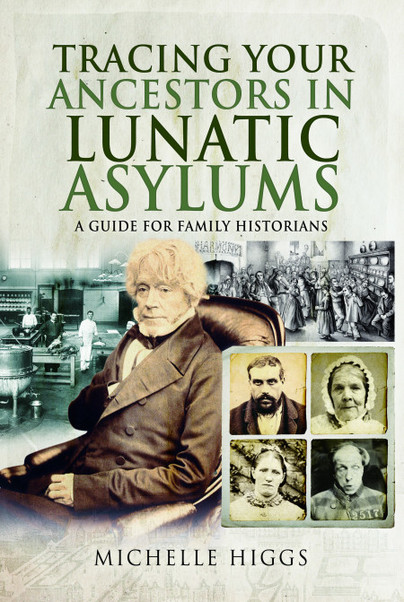
Tracing Your Ancestors in Lunatic Asylums


Higgs, Michelle. Tracing Your Ancestors in Lunatic Asylums: A Guide for Family Historians. Barnsley: Pen & Sword Family History, 2019.

Higgs provides a highly readable discussion on the institutionalization of British Isles persons suffering from a variety of mental disorders.The majority of institutions discussed are in England, Scotland, or Wales. Higgs shows how attitudes toward the mentally ill evolved over time. The narrative includes several case studies of individuals, providing a list of sources used in each sketch. Near the end she discusses record availability, providing a few examples. As a genealogist, I wish this section had been expanded to include additional record images. Genealogists with family members spending time in an asylum in the United Kingdom will find this book helpful to their research. This review is based on an advance review copy provided through NetGalley with the expectation of an honest review.

Wednesday, October 02, 2019

Women and the Law

In my library-related work, I often run across books potentially useful to genealogists. One such book is Women and the Law: The Unfinished Revolution by Leo Kanowitz. It was published by the University of New Mexico Press in 1969. Chapter two which talks about coverture and married women's property rights especially appear useful.


Tuesday, March 19, 2019

The Family Tree Problem Solver (3rd edition)


Rising, Marsha Hoffman. The Family Tree Problem Solver: Tried-and-True Tactics for Tracing Elusive Ancestors. 3rd edition. Cincinnati: Family Tree Books, 2019.

This review applies to the 3rd edition (2019) of the book. Marsha Hoffman Rising's [The Family Tree Problem Solver] inspired many genealogists to move beyond basic ancestral searches to more meaningful research which meets the genealogical proof standard. Marsha died in 2010, so I was curious why a third edition bearing her name alone was being released. Although it is obvious someone edited the original work to include website addresses and even information about the FamilySearch Wiki and other resources which did not exist during Marsha's lifetime, no one takes credit for these revisions. A chapter about "tree hints" was added by Sunny Morton, a well-known popular press genealogical author, and a chapter on using DNA was written by Diahan Southard, a well-regarded genealogical DNA lecturer. Neither of these chapters lives up to the standards the original author set, weakening the overall book. While care was taken to include web addresses and resources, references to Everton's Genealogical Helper and to the censuses on CD-ROM illustrate a problem in the new edition's editing. Everton's Genealogical Helper suspended operations years ago. While a person might find a clue about someone who researched an individual or family in the past, the contact information, if the query submitter remains alive, may be dated. While a few of us still own some of those CD-ROMs, very few use them. Ancestry, FamilySearch, and other online databases provide the access we need to the censuses. The book needed to be edited more thoroughly, and someone needed to take credit for their editing and revision role with an added author. The chapter on "tree hints" just does not fit the nature of the book. It is too basic of a topic. It remains at the "search" level described by Rising rather than the "research" one. While I appreciated Diahan Southard's comments when she talked about researching specific families, the chapter did not adequately demonstrate using DNA as evidence. Also missing from the chapter was a bibliography of published case studies demonstrating how to use DNA, which Rising would have provided if she were alive. The content originally written by Rising remains valuable although researchers may need to discover resources current researchers use in place of some of those no longer available. This review is based on an advance electronic copy provided by the publisher through NetGalley with expectations of an honest review.

Friday, November 02, 2018

LoGenWriMo #2: Dock Hans Hester (1851-1922)

George W. Hester (1857-1937), left, and Dock Hans Hester (1851-1922), right.
Photo from collection of the late Sue Berryhill Brown of Amory, Mississippi.

Dock Hans Hester was born, according to family sources, 4 March 1851 in Monroe or Itawamba County, Mississippi to John H. and Nancy (Cockrell) Hester.[1] Family tradition through one of his brother’s lines states he was named Dock Hans Duggar Hester in honor of the doctor who delivered him.[2] The Hesters resided in the lost corner of Monroe County, Mississippi, resulting in census enumerators’ failure to count them in both 1860 and 1870. To enter the area by road, one most go into Itawamba County, and then re-enter Monroe County. When enumerators on what is now State Highway 371 and State Highway 25 reached the county line, they considered their work done. They probably did not know about the area, and the Hesters probably liked residing in such a secluded area because of their reputation for consuming alcoholic beverages.


Dock married Mary Ann Harris, the daughter of Walton A. and Margaret (Mosely) Harris, 20 November 1877 in Lee County, Mississippi.[3] They lived in Boyds Precinct, Monroe County, Mississippi in 1880 where Dock farmed.[4] Their home remained in Boyds Precinct, located in Beat 5, east of the Aberdeen and Richmond Public Road in 1900.[5] He lived along the Cotton Gin and Fulton Road in Boyds Precinct in 1910.[6] They lived along the Nettleton and Amory Road in Boyds Precinct, County Beat 5, in 1920.[7] Because of interstitial nephritis with an enlarged prostate gland and retention of urine, he died 21 August 1922 in Monroe County.[8]

Dock and Mary Ann were parents of:
  1. Georgia Ann Hester (1878-1914)
  2. Mattie Lou Hester (1880-1946)
  3. Charles Anderson “Buddy” Hester (1883-1964)
  4. Boyd H. Hester (1886-1887)
  5. Freddie W. Hester (1888-1899)
  6. Hattie Pearl Hester (1892-1930)
  7. Ellie Beldon Hester (1894-1909)
  8. Gillie Mae Hester (1897-1993; twin)
  9. Lillie Faye Hester (1897-1897; twin, aged 9 months at death)
  10. “Little Baby” Hester (unknown dates)


Note: Dock Hans Hester is my great-grandfather. This is the second LoGenWriMo entry.


[1] Gillie Mae Hester Lantz (Amory Manor Nursing Home, Amory, Mississippi), conversation with Lori Thornton, about 1990; notes made from the conversation no longer extant. The tombstone at Hester Cemetery provides support for the year. Hester Cemetery (Monroe County, Mississippi; Clay Hill Road off Highway 371), D. H. Hester marker, photograph by Lori Thornton, about 1990. Gillie’s husband Irving was the informant on the death certificate, providing an alternative year of 1853. Although a specific date was not recorded, his age was recorded as 69 years, 4 months, and 8 days, making the alternative date 13 April 1853. This date provided by an in-law who provided “don’t know” to several questions seems unlikely. The 1880 census suggests a date between June 2, 1853 and June 1, 1854. The 1900 census states March 1857. The 1910 census suggests a date between April 16, 1855 and April 15, 1856. The 1920 census suggests he was born between January 2, 1856 and January 1, 1857. He likely was born in March, but the lack of early censuses for Dock makes it almost impossible to nail down an exact year of birth. A March 1855 date is unlikely since his brother Pink was born in December 1855. The March 1856 date is impossible because of Pink’s birth date. His brother George W. “Bud” was born in July 1857, making the March 1857 date impossible. It, therefore, seems most likely he was born in either 1851 or 1853. I selected 1851 based on his daughter’s recollection and the tombstone.
[2] I first encountered this when comparing notes with Sue Berryhill Brown, a descendant of Dock’s brother Mitch in the late 1990s. The 1900 census calls him “Dock D.” which may lend some support to the addition of “Duggar” to his name. Alexander Duggar and James Duggar lived in Itawamba County and are the only adult Duggars in the Itawamba-Monroe County area where the family lived. Alexander was employed as a farmer and James as a shoemaker. Broadening my census search failed to return additional prospects. This family tradition cannot be verified at this time.
[3] Lee County, Mississippi, Marriage Book 3: 516, D. H. Hester and Miss M. A. Harris, 1877; Circuit Clerk’s Office, Tupelo; photocopy in my possession.
[4] 1880 U.S. Census, Monroe County, Mississippi, population schedule, Boyds Precinct, Supervisors District (SD) 1, enumeration district (ED) 139, page 294 (stamped), dwelling/family 115, Dock Hester family; digital image, Ancestry (https://www.ancestry.com : accessed 2 November 2018); citing National Archives microfilm publication T9, roll 658.
[5] 1900 U.S. Census, Monroe County, Mississippi, population schedule, Boyds Precinct, Supervisors District (SD) 1, enumeration district (ED) 81, page 268B (stamped), dwelling/family 14, Dock D. Hester family; digital image, Ancestry (https://www.ancestry.com : accessed 2 November 2018); citing National Archives microfilm publication T623, roll 821.
[6] 1910 U.S. Census, Monroe County, Mississippi, population schedule, Boyds Precinct, Supervisors District (SD) 1, enumeration district (ED) 124, page 72 (stamped), dwelling/family 1, Dock H. Hester family; digital image, Ancestry (https://www.ancestry.com : accessed 2 November 2018); citing National Archives microfilm publication T624, roll 752.
[7] 1920 U.S. Census, Monroe County, Mississippi, population schedule, Boyds Precinct, Supervisors District (SD) 5, enumeration district (ED) 78, page 257B (stamped), dwelling73, family 81, Dock H. Hester family; digital image, Ancestry (https://www.ancestry.com : accessed 2 November 2018); citing National Archives microfilm publication T625, roll 887.
[8] Mississippi State Board of Health, Bureau of Vital Statistics, death certificate no. 13341, Dock Hans Hester (1922); microfilm, Mississippi Department of Archives & History, Jackson.

Thursday, August 16, 2018

An American Author Challenge Discovery

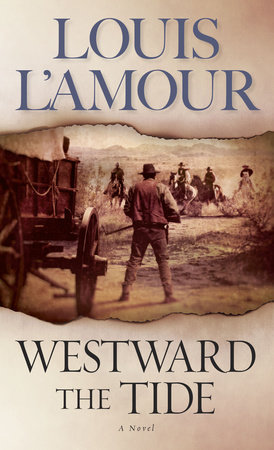
This month's American Author Challenge is devoted to books by Louis L'Amour. For some reason I decided to look him up at Wikipedia, discovering his middle name is "Dearborn." Since Dearborn is one of my family lines, going back to New England, I immediately suspected we might be related.

Using his WikiTree profile I traced his line back to our common ancestors:

Louis Dearborn LaMoore/LaMour/L'Amour (1908-1988)
Emily Lavisa Dearborn (1870-1954)
Abraham Truman Dearborn (b. 1835)
William S. Dearborn (1803-abt 1852)
Levi Dearborn (1769-1857)
Reuben Dearborn (b. 1738)
Reuben Dearborn (1707-1790)
Samuel Dearborn (1676-1748)
Thomas Dearborn (1632-1710) and Hannah Colcord (1643-1720)

My line:
Lori Thornton (Me)
Dorothy Ann Lantz (1924-2010)
Irving Lee Lantz (1885-1971)
Laura Lucy Taylor (1854-1922)
Betsey Dearborn (1818-1899)
Nathan Dearborn (1785-1847)
Samuel Dearborn (1745-1833)
Benjamin Dearborn (b. 1713)
Ebenezer Dearborn (b. 1679)
Thomas Dearborn (ca 1634-1710) and Hannah Colcord (d. 1720)

I left the differences in dates in the WikiTree data and my own research, but it's similar enough one can tell it is the same person.

This makes us 7th cousins once removed.

Of course, I need to verify the information in WikiTree, and I'm not placing all the documentation for my own line in this post--and some of the older stuff probably needs some "shoring up."

However, the kinship to this month's author was an unexpected discovery for me I wished to share. I chose to read Westward the Tide, much of which is set in the Big Horn Mountains.


Monday, August 13, 2018

Rest Area Find


On the way back from Florida, I stopped at the South Carolina Welcome Center on I-95 to use the facilities and stretch a bit. As I glanced over the travel brochures, I spotted this one. It's filled with repositories and resources for researching the counties in South Carolina's "Olde English District." When I posted it to Facebook, others wanted a copy. I wish I'd picked up additional copies.

I looked at the website listed on the back of the brochure and discovered, they have this brochure and several others of historic interest posted. Check out the Vacation Guides page.

The seven counties in the region include Chester, Chesterfield, Fairfield, Kershaw, Lancaster, Union, and York. One brochure contains information on the Revolutionary War in the area and includes a very useful timeline. Others include African American historical sites and Civil War sites

Wednesday, August 01, 2018

A Strange Courthouse Visit

Yesterday I visited a courthouse in another county. I'll avoid mentioning the exact location because it could easily be one of many, and it is probably best to protect the officials from angry genealogists. I was seeking early probate records, and in reality, the main purpose was to check information published in a narrative family tree and obtain a citation for the information beyond "according to a record in the ___ county courthouse." It really should have been an easy lookup. I knew the name and date from the record as well as the information it allegedly contained. What should have been easy turned out to be a nightmare.

According to online information, the county clerk's office held the needed record. I began there. They told me they didn't have it, sending me to another office. That office stated their records began in the 1970s and that probate matters used to be handled by the county judge so they were probably in his office. I went to the county judge's office. They didn't house any records; however, they were the most helpful office. They took me back down to the county clerk's office where they took me to the records room. I noticed no file cabinets, so I inquired about loose records. The employee did not even know what a loose record was. "Everything we have is in this room." (Of course, the deeds and mineral rights books were in a separate room, but that's okay.) I began examining the room. I knew the courthouse suffered a fire in 1930, but the fact someone supposedly examined the record in order to write about it made me keep seeking it.

A thorough examination of the room revealed no estate records at all except for a few guardianships and administrations from the 20th century. I found a handful of 19th century records, but they were few and far between. The records remaining were an odd mix. I did create myself a guide to earliest available records so I will know what they have if I need to research in the county again. FamilySearch contained more records than the county did.

Several comments made while I was getting the "run around" made me realize few, if any, genealogists visit that courthouse. One person mentioned hearing a recent county clerk threw away some old records once. Another person in the office then commented, "That sounds like something ___ ____ would do."

I ended up calling several other researchers to ask them if they had researched in that county and if they had seen estate records. Based on the responses I received from these researchers and the state archives employees, I am confident I made a thorough effort and did not miss records on site with the possible exception of a few which were available through FamilySearch. It is possible these were discarded after they were filmed. Certainly none of the offices admitted to owning these volumes which included early will books. It would be nice to know where they might be hiding if they still exist in hard copy.

I doubt I will forget my visit to that courthouse anytime soon. I hope more genealogists will visit it so they begin to understand what we do and so they understand the importance of maintaining old records. The fire in that county was devastating. I hope record neglect does not worsen it.

Monday, July 30, 2018

Writing Reports to Yourself

How many of us regular write research reports to ourselves? Elizabeth Shown Mills' reports, normally available on her web site which is offline at the moment, are legendary! Other genealogists such as Elissa Scalise Powell champion "writing as you go."

Writing the research as I go made me a better genealogist. I immediately spot the facts that need better evidence or which are missing. I can include these "problems" in my "Suggestions for further research" section until I can seek the needed document or address the problem some other way. If I send for a document, I can make a note of that and follow up in the future, if needed.

It is easy to create your own research report template in a word processing program. You'll find examples of research report formats at the Board for Certification of Genealogists web site. Templates are also available for purchase from Brent Chadwick that include macros for commonly used citations.

Last night I looked at an Ancestry DNA autosomal match who had a tree with names for himself and his father but no dates and no other persons. As I looked at the "shared matches," it was apparent he was matching on my paternal father's line. As I began doing "quick and dirty" work on his tree to see if I could identify the match, I found his ancestors living next to persons with the surname I suspected was the match. Both my match's surname's lines and the surname of interest seemed to follow the same migration trail. I also noted another name in close proximity which could explain something I've seen in my DNA matches--where the match appears to be on my maternal grandmother's line, but that it matches my Dad also, even though GEDmatch says my parents are not related. The matches are probably cousins to Dad but Dad is matching them on his paternal father's line rather than on the name from my maternal grandmother's line.


I immediately knew I needed to document all that quick and dirty research and work my way back to the point where we may connect. There are some hints which may lead me to connect a dot or two to reach the ancestor we are fairly certain is ours from Y-DNA matching. Today I began writing that report. I didn't have a lot of time to do so because I had a couple of appointments that took up part of my day. However, the report is now twelve pages long and documents a couple of generations pretty well. I made one note for further research, but I was able to document most births, marriages, divorces, and deaths. I included censuses for the older generations. Much of the research I performed today was on living individuals and as such cannot be shared. I may work a little more this evening, but I'm happy with what I achieved for the day.

I'm conscious of my goals and research questions as I'm writing it. The report format helps me stay focused on my goal instead of following tangents. As I write each individual's paragraph(s), I ask myself what documents are missing or which things need better evidence.

The missing document I sought today was a birth certificate. I have plenty of other evidence of the birth date with no conflicting evidence, but the birth certificate would be a better source.

Friday, July 27, 2018

GRIP 2018

Today is the last day of the Genealogical Research Institute of Pittsburgh session for which I enrolled. I took the Fundamentals of Forensic Genealogy course. I really enjoyed the course with Catherine Desmarais, CG, Kelvin Meyer, Michael Ramage JD, CG, Judy Russell JD, CG, CGL, CeCe Moore, and Amber Goodpaster Tauscher. I gained a better understanding of the work of forensic genealogists and how I might prepare for supplementing my income with forensic cases in retirement should I choose to pursue this line of work.


My advice for persons attending GRIP in the future is to stay in the Fairfield Inn or Homewood Suites nearby rather than the dorms. The beds were not comfortable, and we had to bring a lot of extra things (extra towels and wash cloths, mattress pad, extra quilt, wireless router which was advised but not needed, lamp, hair dryer, etc.) I did not enjoy the foods. They tended to put at least one ingredient in things which ruined dishes for me. For example, they ruined a perfectly good pork loin with mustard. They ruined other dishes by adding mushrooms (fungus).

If you are used to the breaks at IGHR (Institute for Genealogical and Historical Research), these do not compare favorably. The same foods were out every day at break. Because I had a temporary crown, I was unable to eat any of them because they were all hard. Break food consisted of animal crackers, pretzels, M & Ms, and trail mix.

However, the course itself was excellent, and that's why I attended. We'll receive our certificates before lunch, load the cars, and leave for home. I'm looking forward to seeing my cats!


Monday, July 23, 2018

A Few Thoughts on Albion's Seed


Fischer, David Hackett. Albion's Seed: Four British Folkways in America. New York: Oxford University Press, 1991.

This is not a formal review of the classic work Albion's Seed. It's more a few comments and reflections from reading it.

Why did I wait so long to read the entire book? I lived in Cincinnati when the book was published. The public library there was wonderful. They had a copy, but like most books of a genealogical nature, it didn't circulate. I used it several times in the library, but I would only read a small bit each time. I see they own additional copies which circulate now. If they owned them at the time, they were always checked out or in the closed stacks, and I just didn't ask for them. I really should have purchased my own copy. I suspect it was because I didn't want to spend the time it would take to get through a 972 page book packed with information. Fortunately a study group organized by Miriam Robbins was just the thing to make me take the plunge. We'll be concluding our discussion this Saturday evening.

With which culture do I most identify? That's a tough question. There are certain elements of each with which I identify, but I think the Cavalier Culture wins overall. I descend from all four cultures. Surprisingly, although I live in the "Backcountry South", I identify more with the Puritans, Cavaliers, and Quakers. I see some of the Backcountry spirit in some ancestors, but I do not strongly identify with it. I was also surprised at not understanding about half the expressions used in the section. I understood far more Cavalier and Quaker expressions. I even recognized more Puritan expressions than Backcountry ones. Isn't that strange? I'll be happy to sample foods from all four cultures, but there are good things and disgusting ones in each!

My reading list just grew immensely. Fischer's footnotes always included works that captivated my attention. I want to read many of those now.

I don't really enjoy reading about politics that much, but Fischer's conclusion included quite a bit about the ancestors of the United States presidents, the regional cultures from which they came, and how that influenced the president. I found it quite interesting. I know politics played a role in our ancestor's lives. The treatment of politics in a cultural setting is much more appealing than reading about elections and politicians without the context.

One more thing . . . if you haven't read this book, don't delay! Order a new or used copy or check one out from your library and begin reading it! You will not regret the decision. You may choose to read it quickly, but you'll probably want to take your time to digest what you are reading. Obviously if you own your own copy, you will be able to take more time than if you rely on the library's copy.


Wednesday, July 04, 2018

Why I Dislike "Smart Matches"

My Heritage trees offer users "Smart Matches" when matching persons are found. It is designed to help improve or fill in gaps in your tree. A recent match for me yielded some additional information about my ancestor Martha Horn (d. abt. 1761). (I am not citing the specific tree it matched because I do not wish to call out the person who placed the information online.)

The tree owner provided a middle name for Martha in her tree. Martha was born before middle names were common. The person also provided the middle name of "Asbury" for Martha's husband. Since Francis Asbury was not born until after my ancestor William, this seems rather unlikely unless William's maternal grandfather, or possibly a great-grandparent, bore the surname "Asbury." However, men born during William's time only possessed a single given name. I definitely do not want to add either middle name to my tree without good documentation.

The next reason I do not like to add smart matches relates to place name information provided. The individual provided a birth date for Martha of 1719. (I lack a birth date, but it seems a likely date since the youngest known child was born about 1740. I need better documentation before I add a qualifier such as "abt" or "est" to the date.) However, the birthplace given is Bertie County, North Carolina, United States. The last time I checked my American history books, North Carolina was a colony at the time, the Revolution had not been fought, and the United States had not been birthed in 1719. Bertie County (or Precinct) was divided from Chowan in 1722, so even the birth location is incorrect. The tree owner also places "USA" at the end of the death date, which occurred before the birth of the United States.

The tree owner provides parents for Martha. I do not wish to add those until I establish the fact through my own research.

I want to be fully in control of the data entered on my tree, and "Smart Matches" do not provide that opportunity. The default is that all new or improved information is added. While I like the idea of connecting with others researching an individual through some sort of confirmation, I do not want to be forced to accept their data in order to do so. Until accepting data becomes optional, I simply peruse the smart matches for clues, avoiding acceptance of questionable data. Of course, my tree at My Heritage is simply skeletal for DNA matching purposes in the first place. I like being able to see matching trees Ancestry without being forced to accept their data. I always ignore the trees, but I can still see those ignored hints if I click on hints. With MyHeritage, I want to be able to consult the tree but the only options on the review page are to confirm the match or reject it. At least by not confirming or rejecting the matches, I can still view the matching trees by looking at the pending smart matches.

Tuesday, June 26, 2018

Murder at the Mansion


Connolly, Sheila. Murder at the Mansion. (Victorian Village Mystery; 1) New York: Minotaur Books, 2018.

This promising start to a new "Victorian Village" series by Sheila Connolly features Kate who returns to Asheboro after the hotel for which she works sells to new ownership who release Kate and her boss from their positions with nice severance packages. Kate's mission to see how the town can make a turnaround may be impossible, but the key lies in an old mansion now owned by the town. Its previous owner Henry Barton left a generous trust fund to maintain the property. Kate's nemesis, a councilwoman, was murdered. Kate finds herself assisting in the investigation as she examines some important letters she becomes certain the woman found. I loved the mystery but guessed the murderer's identity fairly early. A lot of questions remain unanswered for the readers, indicating the author intends to reveal more solutions to those questions in future installments. While genealogical research was done, the author included few details. Hopefully more will unfold as the series progresses. The series shows promise and should provide mystery-loving genealogists with a few hours pleasure as each book is published.  I received an advance electronic copy from the publisher through NetGalley in exchange for an honest review.

Wednesday, June 06, 2018

Unofficial Guide to Ancestry.com


Hendrickson, Nancy. Unofficial Guide to Ancestry.com: How to Find Your Family History on the #1 Genealogy Website. Revised and updated ed. Cincinnati: Family Tree Books, 2018.

Author Nancy Hendrickson describes using the Ancestry.com site. The book, aimed at new researchers more than experienced ones, contains good comment, but often comes up a bit short. For example, although she cautions new users about accepting information from trees if it appears wrong, she really fails to tell them they should never add the tree as a source but instead should verify the information and add it manually after it is verified. While she is correct that uploading information from a GEDcom file is quicker, she fails to mention reasons for not doing so--and many exist. In the chapters on using AncestryDNA, she fails to mention some of the tips leading genetic genealogists suggest. For example, she tells readers to email those who do not have a tree without telling them how they may be able to find an unattached tree by checking the match's profile or how the connection may be determined by looking at "shared matches." In fact, she never mentions "shared matches." She also failed to mention and caution users about some of the weaker databases such as some of the public records collections lacking dates and some of the collections drawn from older user-submitted sources which contain errors. Of course, the author could not anticipate the problems tree sync users currently experience due to some data migration issues. She could not anticipate the problems with the Rootsweb portions of the site which resulted in long outages for some resources and continuing outages for others. Most supplemental resources suggested appear to be mostly sources from the book's publisher rather than using the "best sources" for acquiring additional subject information. Recommended only for true beginners, but with the caution to supplement with additional resources and webinars to gain a better picture of the power of Ancestry and to understand the genealogical proof standard which did not appear to be a consideration of the author. I received an electronic copy for review purposes from the publisher through NetGalley with the expectation of an honest review.

Friday, June 01, 2018

What is a "stave dealer"?

Background: Today's post was going to be about a research breakthrough, but I ran into something needing resolution before the intended post can be published. I worked many hours on the problem, but it may require more resources than available online. I'll keep working on it, and hopefully its resolution will be found.

An alternate post needed creation. While researching the problem, I came across an occupation called "stave dealer." I looked up the definition of the word "stave," finding it is a piece of wood used in making barrels. An entry for the occupation "Cooper" in a mid-nineteenth century British publication explained:

The business of a Cooper is to make vessels for the safe keeping of liquids. Those vessels are made of different kinds of wood, oak being generally used for the larger vessels where the staves are required to be of great length and thickness. They are cut before they are imported into England from the Baltic, and are sold to the Cooper by the stave-merchant who imports them. Staves are sent here cut to the lengths required for various sorts of vessels, and are sold under the following designations: viz. pipe staves, five feet, six inches in length, two inches thick, and six inches wide; hogshead staves, four feet long; barrel staves, three feet, six inches; there are also long and short headings of various sizes. The stave-merchant sorts them for the Cooper, according to the quality required calling them best and seconds. There are a vast quantity of staves imported from Canada; but though they are finer in the grain and make up better to the eye than the staves of the north of Europe, they are not found to be so durable.*

Other online sources indicate the stave industry thrived in the United States as well. The stave dealer I found worked in Illinois.

___

* N. Whitlock, J. Bennett, J. Badcock, C. Newton, et al. The Complete Book of Trades, or the Parent's Guide and Youth's Instructor in the Choice of a Trade or Profession . . . London: Thomas Tegg, 1842, pp. 160-161.

Monday, May 28, 2018

Why I Became a Genealogist

In the mid-1980s and from 1989-1999, I lived in Cincinnati. At that time the Public Library of Cincinnati and Hamilton County's collection often appeared in top ten lists of genealogy research facilities in the United States. I always loved history and often saw lots of people researching their family histories as I used the main library.

On one visit home to Mississippi, my mother and grandmother (Nanny) discussed a trip they made to try to find out more about more about Nanny's grandfather Walton (or Walter) Harris. Nanny believed he came from Clinton, Kentucky, or at least that relatives resided there. The family story states he drove cattle to somewhere around Starkville, Mississippi. He stopped to water his horse and the cattle at the Mosely farm in Giles County, Tennessee where he met the woman who became his wife. She and a couple of female friends or relatives sunbathed in view of the men. After the cattle drive, he returned to the farm, taking her as his bride, never returning to Kentucky. I decided to try researching the story, hoping to locate Walton's parents in Kentucky.

Driving cattle from Hickman County, Kentucky, home of the town of Clinton, to Starkville, Mississippi by way of Giles County, Tennessee did not seem a likely route, and early efforts to find a family there which fit known data about his family from other censuses failed. I spotted Clinton County, Kentucky and wondered if Nanny confused the town and county. Clinton County was established in 1835, more than a couple decades after Walton's birth. However, its parent counties held relevant records. I built a case for his parents, based largely on naming patterns. I know I was a newbie researcher and that my case did not meet the Genealogical Proof Standard. I occasionally work on that line, trying to poke holes in my theory, but so far the conclusion reached remains viable.

It appears I inherited more DNA from Walton's wife than from him, but other cousins whose kits I manage hold valuable clues. My matches indicate a connection to the family, but those of cousins hold more matches showing a relation. I look forward to a day of research at Kentucky Department of Archives and History in a couple weeks when I look for additional things to incorporate in my proof argument.

The search for Walton's family ignited an enduring passion for genealogical research. I always did love jigsaw puzzles, logic puzzles, and the mystery genre. Genealogy releases my inner sleuth!

Saturday, May 26, 2018

Taking Time To Blog

Life sometimes gets busy. I do not take time to find things to blog nor do I take time to write posts. Early blog posts here did not always include full citations because I did not know how to create footnotes on a blog. It adds time to the creation of blog posts because of the complexity of creating the HTML coding. I want to include citations when needed (and sometimes when not) to ensure adherence to genealogy standards.

Lately book reviews filled my blog. They will continue to be part of it. I need the outlet to fulfill requirements for advance review copies. However, I do not want reviews to become the main thing here as I allowed. After reflecting, I decided on an action plan to reclaim the blog for its intended purpose. I resolve to blog three times weekly about something genealogical or historical in nature. Sometimes the post may take the form of a book review, but I hope most book reviews fall on Tuesdays. I hope to post most other non-genealogy reviews on Thursdays or Saturdays. However, book reviews coincide with book release dates set by publishers. Most fall on Tuesdays, but exceptions exist.

The new plan presently includes genealogy or history posts scheduled to appear on Mondays, Wednesdays, and Fridays. I may include posts other days if I regain the momentum I once possessed. If I'm on vacation or otherwise out of town, the posts may include something about a place I visit or a genealogical reflection on a person associated with the place.

If I fail to keep up with this schedule, hold me accountable! Ask "What's up?" or in some way let me know someone reads and misses the posts. This will encourage me to get back on track. Thank you, readers, for bearing with me.

The Blogger privacy notice only appears when an IP originates in EU countries or if you change the domain to a European one. After I figure out how to use the new pages feature on the updated blog template, I will add one of my own as well. However, it covers the only cookies and such. I removed the "followers" element from the sidebar to increase privacy of readers. I did not know if readers could opt out, so I decided to be safe.

Wednesday, April 04, 2018

The Family Tree Historical Newspapers Guide


Beidler, James M. The Family Tree Historical Newspapers Guide: How to Find Your Ancestors in Archived Newspapers. Cincinnati: Family Tree Books, 2018.

Well-known genealogist James M. Beidler discusses newspapers as a genealogical source. He covers most types of newspapers. Religious newspapers were omitted from separate treatment although a few titles showed up in a geographic sample in the book. He does an excellent job relating available databases, even acknowledging ethical questions about business practices of some. Beidler, best known for his German genealogical research, includes international newspapers, not limiting the discussion to the United States. The book's greatest flaw lies in the format of the otherwise excellent bibliography. It does not employ a recognized style manual such as Evidence Explained or Chicago Manual of Style. Since one chapter included information on citing newspapers following the recognized genealogical citation manual Evidence Explained, this surprised me. Beidler's work will become the most-cited "how to" guide on newspaper research in the genealogical community in the near future. All genealogy libraries with methodology collections should purchase a copy. I received an electronic advance copy from the publisher via NetGalley in exchange for an honest review.

Tuesday, November 28, 2017

It's All Relative


Jacobs, A. J. It's All Relative: Adventures Up and Down the World's Family Tree. New York: Simon & Schuster, 2017.

Journalist A.J. Jacobs immersed himself in the genealogical community for his latest adventure. He embarks on a quest to host the world's largest family reunion which he called "Global Family Reunion." He befriends many genealogists and enlists celebrities to promote the event and perform or speak at it. I was disappointed in the book. It was more about the global family reunion than it was about genealogical research.While occasional references to genealogical research are made, few persons are going to learn to research their ancestry in a correct manner by reading it. The author promotes the one world trees such as Geni.com far too much rather than emphasizing evidence analysis and reasonably exhaustive research. Reliance on these trees often leads to erroneous conclusions which propogate. The author's casual writing style does not work well for me either. The book employs the hidden footnote system which I detest. How is the reader supposed to know something is cited when no indication is made a footnote is available? This is completely unacceptable in a field such as genealogy where evidence is so important. While I'm happy to see a book about genealogical research published by a major publisher, I would have preferred one which encouraged proper methodology rather than emphasizing online trees. Not recommended.