Musings on family history, regional history, book reviews, and miscellaneous observations and comments by a genealogist and librarian living near the Great Smoky Mountains in East Tennessee.
Showing posts with label North Carolina. Show all posts
Tuesday, December 31, 2019
Murder in Rat Alley
Castrique, Mark de. Murder in Rat Alley. Naperville, Illinois: Poisoned Pen Press, 2019.
Sam Blackman and his partner Nakayla Robertson investigate a death linked to the Pisgah Astronomical Research Institute near Asheville. The man's remains were found when equipment was brought in to help with current operations. He had been missing for decades. His former fiancee does not trust federal officials to get to the bottom of things because she thinks PAGI and other agencies covered up his disappearance. In the meantime someone burns Nakayla's home. Sam and Nakayla must work with several jurisdictional law enforcement agencies to get to the bottom of the case. I enjoy the series, but this installment did not hold my attention as much as some, likely because of some espionage elements. I learn odd bits of Western North Carolina history because of this series. The setting always delivers! This review is based on an advance review copy provided by the publisher through NetGalley in exchange for an honest review.
Wednesday, March 13, 2019
Something Read, Something Dead
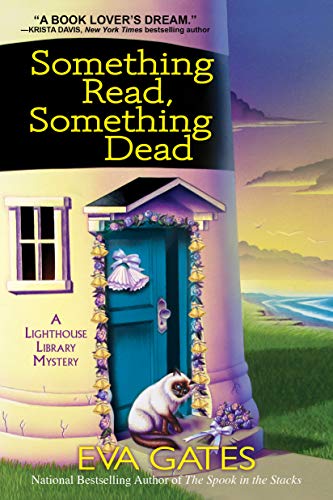
Gates, Eva. Something Read, Something Dead. New York: Crooked Lane, 2019.
The lighthouse has a crack threatening continuing library operations unless significant funds are raised. Josie's upcoming wedding brings in distant relatives from New Orleans who think she's way behind on her wedding planning and try to take over. When one of them shows up dead, Josie becomes a suspect. The state police send in their own detective since the local law enforcement know the main suspect too well. Officer Watson doesn't even try to dissuade Lucy from her investigation in his usual manner. The action takes place during winter when tourism is slow on the Outer Banks. I figured this one out much earlier than Lucy did, but it didn't stop me from enjoying my trip to the Outer Banks with the enjoyable cast of characters, including Charlie the lighthouse cat. I received an advance electronic copy from the publisher through NetGalley in exchange for an honest review.
Sunday, August 21, 2016
Genealogy Blog Picnic: North Carolina Research
When the topic for this month's blog picnic was announced, I pondered long and hard about what my favorite genealogy resource is. With so many choices, it is difficult to settle on just one. Would I select an archive or repository? I use so many of those, and it really depends on my current research as to which I find most useful at the time. I admit I probably do know which one I would select if forced to choose just one, but I decided against writing about a repository. Would it be genealogical software of some sort? I decided against that route because I'm at a stage in my research that while software is helpful it sometimes gets in the way and writing, rather than data input, helps me make more progress and stay focused. Would it be a research log or form of some sort? I confess I never even considered anything in that category as a candidate. Would it be a website or blog? I use Ancestry and FamilySearch almost daily, but once again, those are too obvious. Would it be Evidence Explained that I use on an almost daily basis? I decided it was too obvious of a selection and wanted to select something else -- something really useful, but perhaps something not quite as well known. I settled on Helen Leary's excellent book, North Carolina Research, which is available for purchase from North Carolina Genealogical Society.
This volume, edited by Helen F. M. Leary, is often referred to as the "Bible" of North Carolina research. However, its usefulness extends far beyond the borders of North Carolina. Almost every southeastern state in the United States based its legal system on common law. Leary's discussion helps researchers navigate the system.
Almost every state in which I research has some unique aspect which makes it necessary to understand the systems of conveyance. Leary explains the systems--the Lords Proprietor, headrights, Granville grants, and more.
Leary also includes some chapters on basic skills such as abstracting which are applicable to every genealogist, regardless of location being researched.
The book is on the Board for Certification of Genealogists' supplemental study list. Its chapters are included in bibliographies at major North Carolina universities and at the State Library and Archives dealing with specific types of records. Michael Hait mentions it in his post "Building a Solid Genealogy Library (Part One)."
I decided to find comments by others on the usefulness of this volume. In her 2012 blog post entitled "Finding NC Court Records," Judy Russell calls it "an absolute steal at $55" and goes on to say, "if it's not in that book, you don't need it to do research in North Carolina." On page thirteen of Research in North Carolina, Jeffrey L. Haines calls the book "the essential textbook and reference for family history in the state." Carolyn L. Barkley's post, "North Carolina Research Opportunities in Raleigh," advises readers to consult the volume before making a trip to the state archives. Her post was written prior to the 2009 NGS Conference in Raleigh, but since NGS is revisiting Raleigh in 2017, it is a timely one today. Lisa Lisson speaks of the book's usefulness, particularly in the area of methodology, in her post "A Few of My Favorite Genealogy Things {March 2016}." On the first page, the unspecified author of "Descendants of Andrew Hampton" quotes a section dealing with ages in which persons could own and sell land from Leary's book.
If a person finds a bibliography on North Carolina genealogical or local history research failing to include North Carolina Research: Genealogy and Local History, the author of the bibliography made a serious omission. It would make me question the authority of such a bibliography.
When I attended my first National Genealogical Society Conference, three speakers rose to the top of my "must hear" list quickly. Helen Leary was one of those three. Health issues forced her to retire early from the national speaking circuit. So many persons who only recently began attending conferences missed out on the opportunity to learn from Helen. Fortunately she recorded several webinars available to members of the North Carolina Genealogical Society, giving these persons a "second chance." In my opinion, it is worth joining the society to hear Helen. Even if you decide against that, be sure to purchase the book if you do not own it. Regardless of the state in which you research, you will learn many useful things about genealogical research.
BIBLIOGRAPHY
Barkley, Carolyn L. "North Carolina Research Opportunities in Raleigh," In Search of Our Common Heritage, 2 Apr 2009 (http://www.genealogyandfamilyhistory.com/north-carolina-research-opportunities-in-raleigh/ : accessed 20 Aug 2016).
Board for Certification of Genealogists. "Supplemental Study List," Board for Certification of Genealogists (http://www.bcgcertification.org/certification/studylist.html : accessed 20 Aug 2016).
"Descendants of Andrew Hampton," Moultrie County Illinois GenWeb (http://moultrie.illinoisgenweb.org/Families/Hampton_Andrew_descendants.pdf : accessed 20 Aug 2016).
Haines, Jeffrey L. Research in North Carolina. (NGS Research in the States Series). Arlington, Virginia: National Genealogical Society, 2008.
Hait, Michael. "Building a Solid Genealogy Library (Part One)." Planting the Seeds: Genealogy as a Profession, 30 June 2014 (https://michaelhait.wordpress.com/2014/06/30/building-library-1/ : accessed 20 Aug 2016).
Lisson, Lisa. "A Few of My Favorite Genealogy Things {March 2016}." Lisa Lisson: Genealogist, Blogger, Etsypreneur, 21 Mar 2016 (http://lisalisson.com/2016/03/21/a-few-of-my-favorite-genealogy-things-march-2016/ : accessed 20 Aug 2016).
Russell, Judy. "Finding NC Court Records." The Legal Genealogist, 2 Feb 2012 (http://www.legalgenealogist.com/2012/02/02/finding-nc-court-records/ : accessed 20 Aug 2016).
![]() |
| Leary, Helen F. M., ed. North Carolina Research: Genealogy and Local History. 2nd ed. Raleigh: North Carolina Genealogical Society, 1996. |
This volume, edited by Helen F. M. Leary, is often referred to as the "Bible" of North Carolina research. However, its usefulness extends far beyond the borders of North Carolina. Almost every southeastern state in the United States based its legal system on common law. Leary's discussion helps researchers navigate the system.
Almost every state in which I research has some unique aspect which makes it necessary to understand the systems of conveyance. Leary explains the systems--the Lords Proprietor, headrights, Granville grants, and more.
Leary also includes some chapters on basic skills such as abstracting which are applicable to every genealogist, regardless of location being researched.
The book is on the Board for Certification of Genealogists' supplemental study list. Its chapters are included in bibliographies at major North Carolina universities and at the State Library and Archives dealing with specific types of records. Michael Hait mentions it in his post "Building a Solid Genealogy Library (Part One)."
I decided to find comments by others on the usefulness of this volume. In her 2012 blog post entitled "Finding NC Court Records," Judy Russell calls it "an absolute steal at $55" and goes on to say, "if it's not in that book, you don't need it to do research in North Carolina." On page thirteen of Research in North Carolina, Jeffrey L. Haines calls the book "the essential textbook and reference for family history in the state." Carolyn L. Barkley's post, "North Carolina Research Opportunities in Raleigh," advises readers to consult the volume before making a trip to the state archives. Her post was written prior to the 2009 NGS Conference in Raleigh, but since NGS is revisiting Raleigh in 2017, it is a timely one today. Lisa Lisson speaks of the book's usefulness, particularly in the area of methodology, in her post "A Few of My Favorite Genealogy Things {March 2016}." On the first page, the unspecified author of "Descendants of Andrew Hampton" quotes a section dealing with ages in which persons could own and sell land from Leary's book.
If a person finds a bibliography on North Carolina genealogical or local history research failing to include North Carolina Research: Genealogy and Local History, the author of the bibliography made a serious omission. It would make me question the authority of such a bibliography.
When I attended my first National Genealogical Society Conference, three speakers rose to the top of my "must hear" list quickly. Helen Leary was one of those three. Health issues forced her to retire early from the national speaking circuit. So many persons who only recently began attending conferences missed out on the opportunity to learn from Helen. Fortunately she recorded several webinars available to members of the North Carolina Genealogical Society, giving these persons a "second chance." In my opinion, it is worth joining the society to hear Helen. Even if you decide against that, be sure to purchase the book if you do not own it. Regardless of the state in which you research, you will learn many useful things about genealogical research.
BIBLIOGRAPHY
Barkley, Carolyn L. "North Carolina Research Opportunities in Raleigh," In Search of Our Common Heritage, 2 Apr 2009 (http://www.genealogyandfamilyhistory.com/north-carolina-research-opportunities-in-raleigh/ : accessed 20 Aug 2016).
Board for Certification of Genealogists. "Supplemental Study List," Board for Certification of Genealogists (http://www.bcgcertification.org/certification/studylist.html : accessed 20 Aug 2016).
"Descendants of Andrew Hampton," Moultrie County Illinois GenWeb (http://moultrie.illinoisgenweb.org/Families/Hampton_Andrew_descendants.pdf : accessed 20 Aug 2016).
Haines, Jeffrey L. Research in North Carolina. (NGS Research in the States Series). Arlington, Virginia: National Genealogical Society, 2008.
Hait, Michael. "Building a Solid Genealogy Library (Part One)." Planting the Seeds: Genealogy as a Profession, 30 June 2014 (https://michaelhait.wordpress.com/2014/06/30/building-library-1/ : accessed 20 Aug 2016).
Lisson, Lisa. "A Few of My Favorite Genealogy Things {March 2016}." Lisa Lisson: Genealogist, Blogger, Etsypreneur, 21 Mar 2016 (http://lisalisson.com/2016/03/21/a-few-of-my-favorite-genealogy-things-march-2016/ : accessed 20 Aug 2016).
Russell, Judy. "Finding NC Court Records." The Legal Genealogist, 2 Feb 2012 (http://www.legalgenealogist.com/2012/02/02/finding-nc-court-records/ : accessed 20 Aug 2016).
Saturday, May 07, 2016
Carolina Cradle
Ramsey, Robert W. Carolina Cradle: Settlement of the Northwest Carolina Frontier, 1747-1762. Chapel Hill: University of North Carolina Press, 1964.
Have you ever put off reading a book, and you aren't exactly sure why? I love reading about history. North Carolina history is one of my favorite states in which to research. I've reads lots of books on North Carolina's history. I've known about this book for years and knew it was highly recommended. I even checked it out of my library once and didn't get around to reading it.
Last month was my "Thingaversary" on LibraryThing. It's a tradition for people to celebrate the anniversary of the date they joined LibraryThing by purchasing one book for each year a member and one to grow up. Since it was my 9th "Thingaversary," I was entitled to ten books. I'm definitely out of space on my shelves at home so I decided e-books would be the way to go this year. I decided to purchase only books that were not available at the local library fiction-wise and for the nonfiction books, I wanted books that I wanted to add to my permanent collection but for which I lacked space. My reading tastes are diverse so I decided my purchases should be also. I had a historical fiction title, a mystery, a cookbook, a Garfield book with "best of" Sunday cartoons, three religious non-fiction volumes I could use devotionally, and three North Carolina history books, including Carolina Cradle, in my purchases.
For the history reading, I decided to start with Ramsey's book. Almost from the moment I began reading it, I began scolding myself for not reading it sooner.
Ramsey examined the settlement of the Yadkin Valley area in North Carolina, especially what was early Rowan County. Rowan was formed from the northern part of Anson County in 1753. Researchers, of course, know that many counties were formed from Rowan County, so the area at one time included much of what is now known as the Piedmont area. Many of the early settlers came from Eastern Pennsylvania, especially Berks, Lancaster, and Chester Counties. A few other counties in Pennsylvania and some in Maryland also contributed to settlement of the Yadkin Valley.
Ramsey looked at records and manuscripts in Pennsylvania, Maryland, and North Carolina in his study and provided a rich treasure for family historians in doing so. While none of my researched North Carolina ancestors were included, I recognized names of associates and even some names which could be the common name ancestors I need to find time to research.
Ramsey discussed the European origins and religions of those who settled the area also.
Although Ramsey wrote the book over fifty years ago, it is still a rich treasure for historians and genealogists alike and is highly readable. My biggest regret is that I did not read this one sooner.
Sunday, May 01, 2016
Religion in North Carolina
Every once in awhile, you stumble across a collection so rich that it just begs to be shared! Such was the case last weekend when I ran across a collection on Internet Archive called "Religion in North Carolina." Partner institutions for the project are Duke University, University of North Carolina at Chapel Hill, and Wake Forest University. The collection's description states "the materials in this collection include local church histories, periodicals, clergy biographies, cookbooks, event programs, directories, and much more."
At the time I'm writing this post (in advance), there are 6,222 items in the collection. That's pretty amazing. The collection has seven collections within it. I will list each and give a few examples of materials included.
Meetings, Proceedings, and Conference Reports (2727 items)
Minutes of the Buncombe Baptist Association of Buncombe County, 1931-1940
Minutes of the United Evangelical Lutheran Synod of North America, 1930
Minutes of the Salem Presbytery
Church and Religious Body Histories (1102 items)
Henry R. Mathis. Along the Border: a History of Virgilina, Virginia and the Surrounding Area in Halifax and Mecklenburg Counties in Virginia and Person and Granville Counties in North Carolina.
Winnie Wills Broglin. Antioch United Methodist Church, Hot Springs, North Carolina: Built on Faith.
Adelaide I. Fries. Records of the Moravians in North Carolina: volume II, 1752-1775.
Newsletters, Newspapers, and Serial Publications (1520 items)
Zion's Landmark (vol. 33, 1899-1900)
American Jewish Times-Outlook (1961-1962)
The Primitive Baptist (vol. 6, 1841)
Ephemerals: Cookbooks, Event Programs, and Directories (368 items)
St. Peter's Episcopal Church (Washington, N.C.) Keys to the Kitchen
O. Norris Smith and Rebecca H. Smith. Family Burying Grounds and Abandoned Church Cemeteries in Guilford County, N.C. and Immediate Environs
Dedication Service of the First Congregational United Church of Christ, Creech Road, Raleigh, North Carolina, Sunday, August 28, 1977
Clergy Autobiographical and Biographical Materials: Journals, Testimonies, Etc. (152 items)
M. W. Williams and George W. Watkins. Who's Who Among North Carolina Negro Baptists with a Brief History of Negro Baptist Organizations
C. T. Thrift. Robert Paine. Methodist Bishop: a Great North Carolinian, Person's Greatest Son
S. C. Ray. I'm Glad I Stayed, 1949-1979
Theosophy, Philosophy, Psychology & Religion (77 items)
Claude E. Spencer. Periodicals of the Disciples of Christ and Related Religious Groups
Alva Washington Plyler. What Western North Carolina Owes
James O. Kelly. Essay on Negro-Slavery
Sermons of North Carolina (111 items)
R. H. Morrison. Funeral Sermon of the Rev. John Robinson, D.D., Late Pastor of Poplar Tent Church, Preached at Poplar Tent, February 22d, 1844
C. Daniel Crews. What It Was, Was Jesus: for the 250th Anniversary Service of the Southern Province of the Moravian Church, Wait Chapel, Wake Forest University, Sunday, November 16, 2003
W. A. Harper. The Spirit of Elon College: An Excellent Spirit
The list above is a mere drop in the bucket of what is available via this resource. I've tried to include materials from many denominations and even from Judaism.
At the time I'm writing this post (in advance), there are 6,222 items in the collection. That's pretty amazing. The collection has seven collections within it. I will list each and give a few examples of materials included.
Meetings, Proceedings, and Conference Reports (2727 items)
Minutes of the Buncombe Baptist Association of Buncombe County, 1931-1940
Minutes of the United Evangelical Lutheran Synod of North America, 1930
Minutes of the Salem Presbytery
Church and Religious Body Histories (1102 items)
Henry R. Mathis. Along the Border: a History of Virgilina, Virginia and the Surrounding Area in Halifax and Mecklenburg Counties in Virginia and Person and Granville Counties in North Carolina.
Winnie Wills Broglin. Antioch United Methodist Church, Hot Springs, North Carolina: Built on Faith.
Adelaide I. Fries. Records of the Moravians in North Carolina: volume II, 1752-1775.
Newsletters, Newspapers, and Serial Publications (1520 items)
Zion's Landmark (vol. 33, 1899-1900)
American Jewish Times-Outlook (1961-1962)
The Primitive Baptist (vol. 6, 1841)
Ephemerals: Cookbooks, Event Programs, and Directories (368 items)
St. Peter's Episcopal Church (Washington, N.C.) Keys to the Kitchen
O. Norris Smith and Rebecca H. Smith. Family Burying Grounds and Abandoned Church Cemeteries in Guilford County, N.C. and Immediate Environs
Dedication Service of the First Congregational United Church of Christ, Creech Road, Raleigh, North Carolina, Sunday, August 28, 1977
Clergy Autobiographical and Biographical Materials: Journals, Testimonies, Etc. (152 items)
M. W. Williams and George W. Watkins. Who's Who Among North Carolina Negro Baptists with a Brief History of Negro Baptist Organizations
C. T. Thrift. Robert Paine. Methodist Bishop: a Great North Carolinian, Person's Greatest Son
S. C. Ray. I'm Glad I Stayed, 1949-1979
Theosophy, Philosophy, Psychology & Religion (77 items)
Claude E. Spencer. Periodicals of the Disciples of Christ and Related Religious Groups
Alva Washington Plyler. What Western North Carolina Owes
James O. Kelly. Essay on Negro-Slavery
Sermons of North Carolina (111 items)
R. H. Morrison. Funeral Sermon of the Rev. John Robinson, D.D., Late Pastor of Poplar Tent Church, Preached at Poplar Tent, February 22d, 1844
C. Daniel Crews. What It Was, Was Jesus: for the 250th Anniversary Service of the Southern Province of the Moravian Church, Wait Chapel, Wake Forest University, Sunday, November 16, 2003
W. A. Harper. The Spirit of Elon College: An Excellent Spirit
The list above is a mere drop in the bucket of what is available via this resource. I've tried to include materials from many denominations and even from Judaism.
Wednesday, April 20, 2016
Traveling in the Tardis to Meet Thomas Duke
Elizabeth O'Neal over at Little Bites of Life has invited all genealogy bloggers to take a ride with the Doctor in the Tardis to meet one of our ancestors. It may surprise most of you that I am choosing to go back to the 19th century instead of further back in time. However, I could think of two ancestors that might be able to steer me in the right direction to continue pursuing their lines--W. Daniel Phillips and Thomas Duke. Thomas Duke is the one I chose because I know the next step will be in North Carolina, a state in which I visit the archives on a regular basis.
Who was Thomas Duke?
Thomas Duke was born 3 May 1828 1 in Virginia.2 Family tradition states that his father was Benjamin Duke and that his mother was Elisha? Parker. Much of this information is based on the fact that his daughter Berniece Estelle "Bennie" Duke was named for his father and on the fact that his son James Parker Duke's middle name came from Thomas' mother's surname. The name Elisha was passed down through daughter Martha Virginia's descendants. Thomas was orphaned. We do not know exactly when. Some of his grandchildren who never met him report stories about Thomas working on a tobacco plantation of relatives in North Carolina, leading to the inevitable family story that this was the Washington Duke family. No evidence for that connection has been located. It seems unlikely since Washington was not born until 1820 himself and did not gain his fortune until after the Civil War.3 It does, however, seem possible Thomas moved to Mississippi from North Carolina. Thomas allegedly came to Monroe County, Mississippi with a Knowles family. The only Knowles family in Monroe County in 1850 is a Benjamin G. Knowles family.4 Both Benjamin and his wife were born in Rhode Island. He was a merchant. Although no apparent connection with Thomas is evident in Monroe County records, Benjamin Knowles resided near families associated with Nancy Allred's family. He arrived by 1850 as he is enumerated twice in that census--once with the Isaac N. Rogers family in the Eastern division of the county5 and once with the Lyles J. Parchment family in the Western division.6 In 1860, he is enumerated with the B. G. Doughtry family in the Western Division of Monroe County in an area served by the Aberdeen post office.7
Thomas married Nancy Malinda Allred 15 August 1867 in Monroe County, Mississippi.8 They had five children. Berniece Estelle "Bennie" Duke was born 5 July 1868.9 Martha Virginia Duke was born 16 December 1870.10 James Parker Duke was born 12 February 1873.11 Joseph Thomas Duke was born 3 January 1876.12 Myrtis Duke was born 9 July 1883.13
Thomas and his family are enumerated in township 12 of Monroe County in an area served by the Smithville post office in 1870.14 By 1880, he and his family are residing in the Cotton Gin Port area of Monroe County.15 Thomas died 18 May 1894 at the age of 66 and is buried in the Greenbrier Cemetery in Becker, Monroe County, Mississippi.16
What Question(s) Do You Need to Ask Him?
Is There a Problem You Can Help Your Ancestor Solve?
None that would make sense to resolve in that period of time. Family tradition states he was somewhat crippled. Most thought it was due to an injury received during the Civil War. Although a William T. Duke served in Captain Berry's Company of the Mississippi Infantry Reserves in the Battle of Harrisburg (now Tupelo), Mississippi, this individual with the rank of sergeant died in the battle.17
Will You Reveal Your True Identity to Your Ancestor?
I doubt it. It would be too mind-boggling.
Will You Bring Your Ancestor to the Future to Meet His Descendants?
Why? It would not serve a useful purpose.
FOOTNOTES
1 Greenbrier Cemetery (Becker, Monroe County, Mississippi, off Old Highway 25), Thomas Duke and wife marker; read and photographed by Lori Thornton, abt. 1992.↩
2 1850 U.S. Federal Census, Monroe County, Mississippi, population schedule, Eastern Division, p. 16, dwelling 114, family 121, line 19, Thomas Duke; National Archives microfilm publication M432, roll 378. The birthplace Virginia is consistent in other census records.↩
3 Duke University. Rubenstein Library, "Washington Duke (1820-1905)," web page, (https://library.duke.edu/rubenstein/uarchives/history/articles/washington-duke: accessed 13 Apr 2016).↩
4 1850 U.S. Federal Census, Monroe Co., Miss., pop. sch., p. 16, dw. 114, fam. 121, line 19, Thomas Duke.↩
5 1850 U.S. Federal Census, Monroe Co., Miss., pop. sch., Eastern div., p. 7A (stamped), dw. 99, fam. 105, Benj'n Knowles family.↩
6 1850 U.S. Federal Census, Monroe Co., Miss., pop. sch., Western div., p. 178, dw. 361, fam. 361, line 4, Thomas Duke.↩
7 1860 U.S. Federal Census, Monroe County, Mississippi, population schedule, Western Division, Aberdeen post office, p. 470, dwelling 304, family 304, line 38, Thomas Duke; National Archives microfilm publication M653, roll 587.↩
8 Monroe County Mississippi Marriages (1821-1921), s.l.: s.n., n.d., vol. 2, p. 149; Evans Memorial Library, Aberdeen, Mississippi. Copy of marriage record from Monroe County marriage records is in possession of Lori Thornton. It appears to be on a page ending 48 in the marriage record that covers that period of time. I failed to note the marriage record and page number at the time the copy was made in the early 1990s. The bondsman was John Martin, and the license was issued 13 Aug 1867. It was performed by Franklin Finney, a Minister of the Gospel. A discussion concerning the evidence for Malinda's first name is located in my earlier blog post, "Brick Wall: Thomas Duke." ↩
9 Greenbrier Cemetery, Becker, Monroe Co., Miss., Bennie E. Duke marker.↩
10 Greenbrier Cemetery, Becker, Monroe Co., Miss., Martha V. Duke Moss and William R. Duke marker.↩
11 "U.S., World War I Draft Registration Cards, 1917-1918,"digital images, Ancestry (http://www.ancestry.com : accessed 13 Apr 2016), card for James Parker Duke, order no. 873, Local Board, Aberdeen, Monroe County, Mississippi; citing United States, Selective Service System. World War I Selective Service System Draft Registration Cards, 1917-1918, National Archives and Records Administration, publication M1509, roll not stated.↩
12 "U.S., Social Security Applications and Claims Index, 1936-2007," database, Ancestry (http://www.ancestry.com : accessed 13 Apr 2016), Joe T. Duke, no. 427-90-2724; citing Social Security Applications and Claims, 1936-2007.↩
13 Greenbrier Cemetery, Becker, Monroe Co., Miss., E.G. and Myrtis Betts marker.↩
14 1870 U.S. Federal Census, Monroe County, Mississippi, population schedule, Township 12, Smithville post office, p. 196, lines 22-24, Thomas Duke household; National Archives microfilm publication M593, roll 741.↩
16 1880 U.S. Federal Census, Monroe County, Mississippi, population schedule, Cotton Gin Port, SD 1, ED 125, p. 36A (stamped), sheet 15, dwelling 123, family 123, lines 1-6, Thomas Duke family; National Archives microfilm publication T9, roll 658.↩
16 Greenbriar Cemetery, Becker, Monroe Co., Miss., Thomas Duke and wife marker.↩
17 Jim Taylor, "Captain Berry's Company, Reserves," Jim Taylor's Home Page, web page, (http://www.datasync.com/~jtaylor/1MSRH.htm : accessed 13 Apr 2016).↩
Who was Thomas Duke?
Thomas Duke was born 3 May 1828 1 in Virginia.2 Family tradition states that his father was Benjamin Duke and that his mother was Elisha? Parker. Much of this information is based on the fact that his daughter Berniece Estelle "Bennie" Duke was named for his father and on the fact that his son James Parker Duke's middle name came from Thomas' mother's surname. The name Elisha was passed down through daughter Martha Virginia's descendants. Thomas was orphaned. We do not know exactly when. Some of his grandchildren who never met him report stories about Thomas working on a tobacco plantation of relatives in North Carolina, leading to the inevitable family story that this was the Washington Duke family. No evidence for that connection has been located. It seems unlikely since Washington was not born until 1820 himself and did not gain his fortune until after the Civil War.3 It does, however, seem possible Thomas moved to Mississippi from North Carolina. Thomas allegedly came to Monroe County, Mississippi with a Knowles family. The only Knowles family in Monroe County in 1850 is a Benjamin G. Knowles family.4 Both Benjamin and his wife were born in Rhode Island. He was a merchant. Although no apparent connection with Thomas is evident in Monroe County records, Benjamin Knowles resided near families associated with Nancy Allred's family. He arrived by 1850 as he is enumerated twice in that census--once with the Isaac N. Rogers family in the Eastern division of the county5 and once with the Lyles J. Parchment family in the Western division.6 In 1860, he is enumerated with the B. G. Doughtry family in the Western Division of Monroe County in an area served by the Aberdeen post office.7
Thomas married Nancy Malinda Allred 15 August 1867 in Monroe County, Mississippi.8 They had five children. Berniece Estelle "Bennie" Duke was born 5 July 1868.9 Martha Virginia Duke was born 16 December 1870.10 James Parker Duke was born 12 February 1873.11 Joseph Thomas Duke was born 3 January 1876.12 Myrtis Duke was born 9 July 1883.13
Thomas and his family are enumerated in township 12 of Monroe County in an area served by the Smithville post office in 1870.14 By 1880, he and his family are residing in the Cotton Gin Port area of Monroe County.15 Thomas died 18 May 1894 at the age of 66 and is buried in the Greenbrier Cemetery in Becker, Monroe County, Mississippi.16
What Question(s) Do You Need to Ask Him?
- Where in Virginia were you born?
- When did you move to North Carolina?
- When and where were you orphaned? Who were your guardians?
- Tell me about growing up -- what you did, your friends, your education, the places you lived.
- Who was your father? Where was he born? Who were his parents?
- Who was your mother? Where was she born? Who were her parents?
- Tell me any family stories you remember your parents or relatives relating to you.
- Tell me about how you came to Monroe County and any stops you made along the way.
Is There a Problem You Can Help Your Ancestor Solve?
None that would make sense to resolve in that period of time. Family tradition states he was somewhat crippled. Most thought it was due to an injury received during the Civil War. Although a William T. Duke served in Captain Berry's Company of the Mississippi Infantry Reserves in the Battle of Harrisburg (now Tupelo), Mississippi, this individual with the rank of sergeant died in the battle.17
Will You Reveal Your True Identity to Your Ancestor?
I doubt it. It would be too mind-boggling.
Will You Bring Your Ancestor to the Future to Meet His Descendants?
Why? It would not serve a useful purpose.
FOOTNOTES
1 Greenbrier Cemetery (Becker, Monroe County, Mississippi, off Old Highway 25), Thomas Duke and wife marker; read and photographed by Lori Thornton, abt. 1992.↩
2 1850 U.S. Federal Census, Monroe County, Mississippi, population schedule, Eastern Division, p. 16, dwelling 114, family 121, line 19, Thomas Duke; National Archives microfilm publication M432, roll 378. The birthplace Virginia is consistent in other census records.↩
3 Duke University. Rubenstein Library, "Washington Duke (1820-1905)," web page, (https://library.duke.edu/rubenstein/uarchives/history/articles/washington-duke: accessed 13 Apr 2016).↩
4 1850 U.S. Federal Census, Monroe Co., Miss., pop. sch., p. 16, dw. 114, fam. 121, line 19, Thomas Duke.↩
5 1850 U.S. Federal Census, Monroe Co., Miss., pop. sch., Eastern div., p. 7A (stamped), dw. 99, fam. 105, Benj'n Knowles family.↩
6 1850 U.S. Federal Census, Monroe Co., Miss., pop. sch., Western div., p. 178, dw. 361, fam. 361, line 4, Thomas Duke.↩
7 1860 U.S. Federal Census, Monroe County, Mississippi, population schedule, Western Division, Aberdeen post office, p. 470, dwelling 304, family 304, line 38, Thomas Duke; National Archives microfilm publication M653, roll 587.↩
8 Monroe County Mississippi Marriages (1821-1921), s.l.: s.n., n.d., vol. 2, p. 149; Evans Memorial Library, Aberdeen, Mississippi. Copy of marriage record from Monroe County marriage records is in possession of Lori Thornton. It appears to be on a page ending 48 in the marriage record that covers that period of time. I failed to note the marriage record and page number at the time the copy was made in the early 1990s. The bondsman was John Martin, and the license was issued 13 Aug 1867. It was performed by Franklin Finney, a Minister of the Gospel. A discussion concerning the evidence for Malinda's first name is located in my earlier blog post, "Brick Wall: Thomas Duke." ↩
9 Greenbrier Cemetery, Becker, Monroe Co., Miss., Bennie E. Duke marker.↩
10 Greenbrier Cemetery, Becker, Monroe Co., Miss., Martha V. Duke Moss and William R. Duke marker.↩
11 "U.S., World War I Draft Registration Cards, 1917-1918,"digital images, Ancestry (http://www.ancestry.com : accessed 13 Apr 2016), card for James Parker Duke, order no. 873, Local Board, Aberdeen, Monroe County, Mississippi; citing United States, Selective Service System. World War I Selective Service System Draft Registration Cards, 1917-1918, National Archives and Records Administration, publication M1509, roll not stated.↩
12 "U.S., Social Security Applications and Claims Index, 1936-2007," database, Ancestry (http://www.ancestry.com : accessed 13 Apr 2016), Joe T. Duke, no. 427-90-2724; citing Social Security Applications and Claims, 1936-2007.↩
13 Greenbrier Cemetery, Becker, Monroe Co., Miss., E.G. and Myrtis Betts marker.↩
14 1870 U.S. Federal Census, Monroe County, Mississippi, population schedule, Township 12, Smithville post office, p. 196, lines 22-24, Thomas Duke household; National Archives microfilm publication M593, roll 741.↩
16 1880 U.S. Federal Census, Monroe County, Mississippi, population schedule, Cotton Gin Port, SD 1, ED 125, p. 36A (stamped), sheet 15, dwelling 123, family 123, lines 1-6, Thomas Duke family; National Archives microfilm publication T9, roll 658.↩
16 Greenbriar Cemetery, Becker, Monroe Co., Miss., Thomas Duke and wife marker.↩
17 Jim Taylor, "Captain Berry's Company, Reserves," Jim Taylor's Home Page, web page, (http://www.datasync.com/~jtaylor/1MSRH.htm : accessed 13 Apr 2016).↩
Saturday, August 06, 2011
Carl Sandburg Home National Historic Site
What better way is there for literary friends to celebrate than to tour the home of an author? We visited the Carl Sandburg Home National Historic Site in Flat Rock, NC (south of Asheville and Hendersonville).

We had to climb a quite steel 3/10 of a mile trail to get to the home. It was pouring down rain. We are thankful for umbrellas. About halfway up, we got our first glimpse of the home.

This is a view from the front porch of Connemara.

One of the many shelves of books in the house. There are over 12,000 books in the house (although 4 bookcases in one room had been removed for dusting). We learned that Carl Sandburg liked all sorts of books except for one kind -- mysteries. How sad! That's my favorite genre. We made a comment that we were certain that we had seen some in his legacy library on LibraryThing. The guide told us they belonged to his daughter. There were some in the house.

This table had rather interesting provenance. Apparently the wood came from the Lincoln White House.

Connemara. The home was named by its previous owner, a Charleston businessman who summered in Flat Rock. He named it Connemara because it reminded him of the hills of Ireland.

The lake. It's very near the parking area.

This is a splendid mountain view from one of the windows in the upper floor of Connemara.
We had to climb a quite steel 3/10 of a mile trail to get to the home. It was pouring down rain. We are thankful for umbrellas. About halfway up, we got our first glimpse of the home.
This is a view from the front porch of Connemara.
One of the many shelves of books in the house. There are over 12,000 books in the house (although 4 bookcases in one room had been removed for dusting). We learned that Carl Sandburg liked all sorts of books except for one kind -- mysteries. How sad! That's my favorite genre. We made a comment that we were certain that we had seen some in his legacy library on LibraryThing. The guide told us they belonged to his daughter. There were some in the house.
This table had rather interesting provenance. Apparently the wood came from the Lincoln White House.
Connemara. The home was named by its previous owner, a Charleston businessman who summered in Flat Rock. He named it Connemara because it reminded him of the hills of Ireland.
The lake. It's very near the parking area.
This is a splendid mountain view from one of the windows in the upper floor of Connemara.
Tupelo Honey Cafe in Asheville
Enjoyed lunch today at the Tupelo Honey Cafe in Asheville, North Carolina.

This was their wonderful Charleston Chicken Sandwich that comes with a cranberry mayonnaise on it!

Of course, we had to take a photo of the official jar of Tupelo honey. One person in our party ordered the rosemary peach lemonade. She said it was very good.

They brought biscuits to everyone (along with honey and some preserves).

Three LibraryThing friends meet up at the Tupelo Honey Cafe.
This was their wonderful Charleston Chicken Sandwich that comes with a cranberry mayonnaise on it!
Of course, we had to take a photo of the official jar of Tupelo honey. One person in our party ordered the rosemary peach lemonade. She said it was very good.
They brought biscuits to everyone (along with honey and some preserves).
Three LibraryThing friends meet up at the Tupelo Honey Cafe.
Wednesday, February 24, 2010
North Carolina Bible Records
The State Library of North Carolina and State Archives have been busy adding records to North Carolina Family Records Online. They have added 249 new records this week, bringing the total number of records in the project to 731.
Tuesday, February 16, 2010
All of U.S. History Will Be Taught in NC High Schools
I'm really glad to see that the state of North Carolina changed its mind because of folks who complained. All of U.S. history will be taught in North Carolina high schools, not just 1877 to the present.
Monday, February 15, 2010
U.S. History in High Schools
Apparently there is a proposal in North Carolina to cut pre-1877 United States history from the high school curriculum. As a genealogist, I find this distubring.
Thursday, December 31, 2009
My Genealogical Christmas Present to Myself
I love receiving packages. Right before Christmas, the North Carolina Historical Publications Shop had a sale on many of their titles. I decided that I couldn't go wrong by purchasing their publications in light of how much North Carolina research in which I'm now involved -- either for others or for myself.
Here are the titles I ordered:
William P. Cumming - Mapping the North Carolina Coast: Sixteenth-Century Cartography and the Roanoke Voyages
Russell S. Koonts - North Carolina Petitions for Presidential Pardon, 1865-1868: (An Index)
Alan D. Watson - Bath: The First Town in North Carolina
Alan D. Watson - An Index to North Carolina Newspapers, 1784-1789
A. R. Newsome - Records of Emigrants from England and Scotland to North Carolina, 1774-1775
Marcus B. Simpson, Jr. & Sallie W. Simpson - Whaling on the North Carolina Coast
Catherine W. Bishir - The "Unpainted Aristocracy": The Beach Cottages of Old Nags Head
Alan D. Watson - Bertie County: A Brief History
Edward W. Phifer, Jr. - Burke County: A Brief History
David Stick - Dare County: A Brief History
James W. Wall - Davie County: A Brief History
S. Kent Schwarzkopf - A History of Mt. Mitchell and the Black Mountains: Exploration, Development, and Preservation
Lawrence Lee - New Hanover County: A Brief History
Alan D. Watson - Onslow County: A Brief History
Joe A. Mobley - Palmico County: A Brief History
Lindley S. Butler - Rockingham County: A Brief History
Roy Parker, Jr. - Cumberland County: A Brief History
I'm very happy with my genealogical Christmas present to myself. As I was adding them into LibraryThing, I discovered that the author Diana Gabaldon had the title about emigrants from England and Scotland as well as a book on North Carolina county formation. I was excited to see that such a popular fiction author had "genealogy" books in her library!
Here are the titles I ordered:
William P. Cumming - Mapping the North Carolina Coast: Sixteenth-Century Cartography and the Roanoke Voyages
Russell S. Koonts - North Carolina Petitions for Presidential Pardon, 1865-1868: (An Index)
Alan D. Watson - Bath: The First Town in North Carolina
Alan D. Watson - An Index to North Carolina Newspapers, 1784-1789
A. R. Newsome - Records of Emigrants from England and Scotland to North Carolina, 1774-1775
Marcus B. Simpson, Jr. & Sallie W. Simpson - Whaling on the North Carolina Coast
Catherine W. Bishir - The "Unpainted Aristocracy": The Beach Cottages of Old Nags Head
Alan D. Watson - Bertie County: A Brief History
Edward W. Phifer, Jr. - Burke County: A Brief History
David Stick - Dare County: A Brief History
James W. Wall - Davie County: A Brief History
S. Kent Schwarzkopf - A History of Mt. Mitchell and the Black Mountains: Exploration, Development, and Preservation
Lawrence Lee - New Hanover County: A Brief History
Alan D. Watson - Onslow County: A Brief History
Joe A. Mobley - Palmico County: A Brief History
Lindley S. Butler - Rockingham County: A Brief History
Roy Parker, Jr. - Cumberland County: A Brief History
I'm very happy with my genealogical Christmas present to myself. As I was adding them into LibraryThing, I discovered that the author Diana Gabaldon had the title about emigrants from England and Scotland as well as a book on North Carolina county formation. I was excited to see that such a popular fiction author had "genealogy" books in her library!
Thursday, March 05, 2009
Old Records Unavailable to Researchers
Researchers expecting to find historic materials at UNC's Wilson Library may be in for a surprise. Apparently much of the building is inaccessible due to fire laws. With the current economic crisis and cuts in funding, the outlook for getting the building reopened in the near future appears grim.
Monday, January 05, 2009
Fun in the N.C. State Archives
I went to both the North Carolina State Archives and the North Carolina State Library on my trip to Raleigh this past week. I had a listing of documents that I needed to get from the archives and files at the Archives. As I began to look, I was having a time finding one document as it was cited. It was getting near the end of the time I was spending there that day, so I decided to run to the library and double-check the citation before returning to the archives the next morning. I discovered that I had not really written down anything incorrectly so I went back upstairs and began looking around the microfilm room again. Those numbers for the film just didn't seem to correspond to anything in the room. I finally went up to the desk. They immediately recognized that number as an "old" number. Apparently someone had gone through and renumbered that portion of the archives at some point since the book had been published. One of the ladies who had worked in the archives a long time ago was able to find the originals which had the new number as well as the old on it. They also had a note saying they were too fragile to use and that the microfilm should be used. When they checked their finding aids, the number that was listed corresponded to something else. I'll make a long story short at this point and say that we finally located the film about an hour after I'd begun looking that morning. I was able to get my copies of the records I was seeking and several other colonial period items that I was seeking. After discovering that it took the archivists that long to find that item, I didn't feel so badly that I'd had trouble finding it! I suspect there are other who have stories about difficulties finding items after finding aids have been published when archives renumber items. I recall hearing about archives being renumbered a time or two when I've been in sessions at some of the national conferences. It would be nice if they made some sort of note to stick in the front of the published books in the state library so that those using those records will know the new classification the archives is using for the items instead of spending all that time trying to track them down!
Tuesday, October 28, 2008
Subscribe to:
Posts (Atom)