Musings on family history, regional history, book reviews, and miscellaneous observations and comments by a genealogist and librarian living near the Great Smoky Mountains in East Tennessee.
Wednesday, October 02, 2019
Women and the Law
Tuesday, June 25, 2019
Grow Your Own Herbs
Belsinger, Susan. Grow Your Own Herbs: The 40 Best Culinary Varieties for Home Gardens. Portland, Oregon: Timber Press, 2019.
This book discusses growing one's own herbs. It discusses not only how to grow them but also how to use them fresh or to preserve them for later use. The illustrations are lovely. Some aspects of the narrative may be more detailed than the average lay person wants, but those with strong interest in herbal gardening will find it useful. I received an electronic review copy through NetGalley in exchange for an honest review.
Tuesday, September 18, 2018
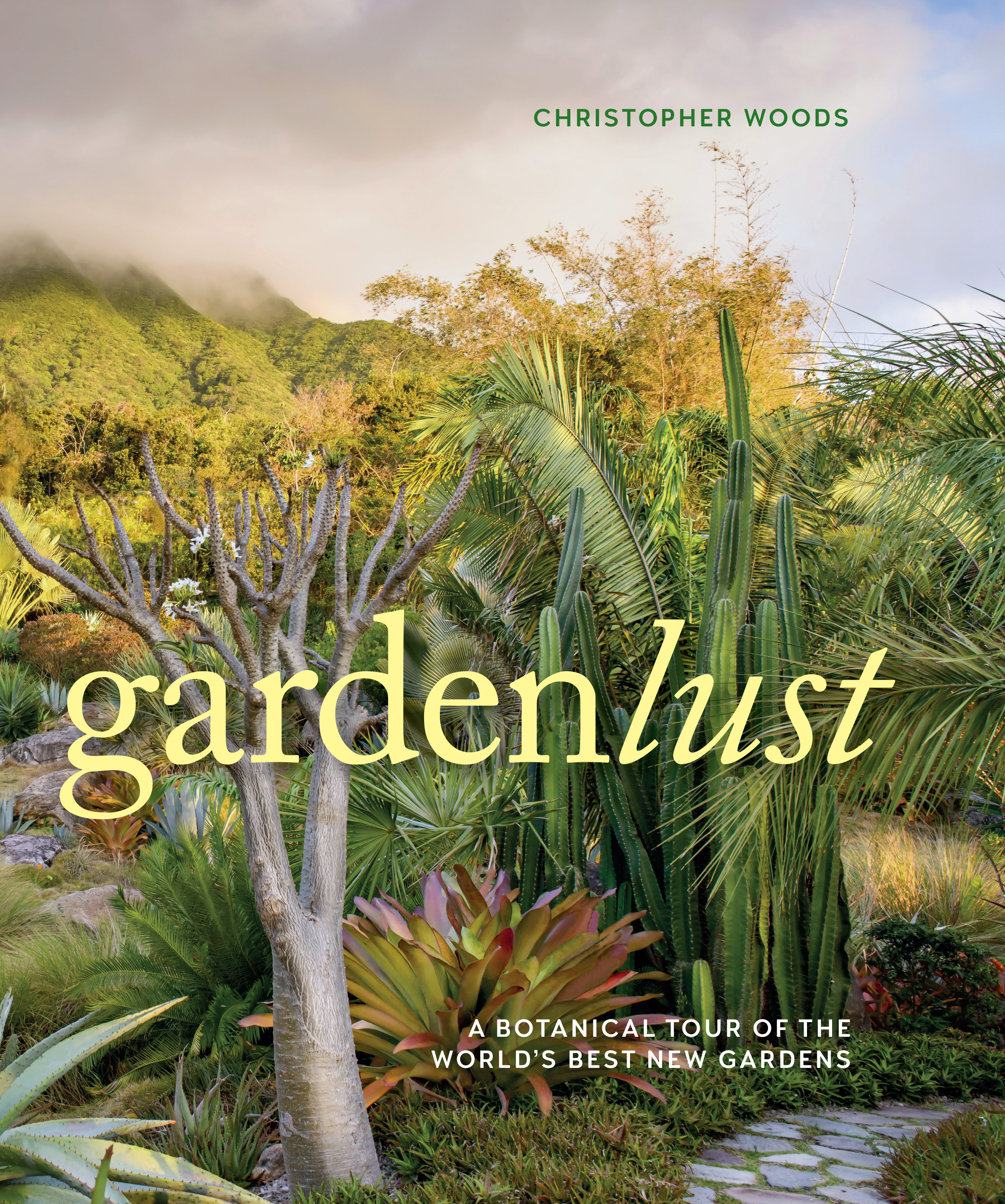
Gardenlust
Woods, Christopher. Gardenlust: A Botanical Tour of the World's Best New Gardens. Portland, Oregon: Timber Press, 2018.
Readers of this volume encounter a wonderful armchair tour of some of the world's more recent but wonderful gardens. Each entry includes a little about the garden and its creator in narrative form as well as photos. Some gardens received more extensive treatment than others. On the list:
North America: Sunnylands Center and Gardens, Rancho Mirage, California; The Garden of Flowing Fragrance, Huntington Botanical Garden, San Marino, California; The Park, Las Vegas, Nevada; Chihuly Gardens and Glass, Seattle, Washington; Mordecai Children's Garden, Denver Botanical Garden, Denver, Colorado; Federal Twist, Stockton, New Jersey; Junto Farm, Hudson Valley, New York; Naples Botanical Garden, Naples, Florida; Vallarta Botanical Garden, Puerto Vallarta, Mexico.
Central America and the Caribbean: Los Elementos, Dominical, Costa Rica; Golden Rock Inn, Nevis, West Indies.
South America: Jardin de Salvias, Mar del Plata, Argentina; Juan Grimm Gardens, Chile, Uruguay, and Argentina; Parque Explorador Quilapilun, Colina, Chile.
Europe: Iuri Chagas Gardens, The Algarve, Portugal; Quinta da Granja, Miranda do Corvo, Portugal; Jardins de la Rambla de Sants, Barcelona, Spain; Parc Clichy-Batignolles/Martin Luther King, Paris, France; Camel Quarry House, Cornwall, United Kingdom; Crossrail Station Roof Garden, London, United Kingdom; Queen Elizabeth Olympic Park, London, United Kingdom; Orpheus, at Boughton House, Northamptonshire, United Kingdom; The Alnwick Garden, Northumberland, United Kingdom; Carrie Preston's Gardens, The Netherlands; The Tree Museum, Rapperswil, Switzerland; Landschaftspark, Duisburg-Nord, Germany; Peter Korn's Garden, Eskilsby, Sweden.
Africa and the Arabian Peninsula: A Garden of Shape and Light, Marrakech, Morocco; The Aloe Farm, Hartbeespoort, South Africa; The Miracle Garden, Dubai, United Arab Emirates; Al Barari, Dubai, United Arab Emirates; Oman Botanic Garden, Al Khoud, Oman.
India and Southeast Asia: The Garden of Five Senses, Said-ul-Azaib, Delhi, India; 137 Pillars House, Chiang Mai, Thailand; Gardens by the Bay and Parkroyal Hotel, Singapore; Pha Tad Ke Botanical Garden, Luang Prabang, Laos; Made Wijaya's Gardens, Bali, Indonesia.
Asia: Xi'an Expo Park, Xi'an, China; Chenshan Botanical Garden, Shanghai, China; Ichigaya Forest, Tokyo, Japan; Tokachi Millennium Forest, Hokkaido, Japan.
Australia and New Zealand: Geelong Botanic Gardens, Geelong, Victoria, Australia; The Australian Garden, Royal Botanic Gardens, Cranbourne, Victoria, Australia; One Central Park, Sydney, Australia; Barangaroo Headland Park, Sydney, Australia; Rose Bay, Sydney, Australia; Gibbs Farm, Makarau, North Island, New Zealand; Paripuma, Blenheim, South Island, New Zealand; Fishermans Bay Garden, Long Bay, South Island, New Zealand.
I visited Chihuly Gardens when I visited Seattle a couple of summers ago. I realistically might make it to no more than a handful of the remaining ones in my lifetime. I really loved both gardens on South Island in New Zealand as they sported gorgeous ocean views. One of the South American gardens did also. While I thought a few of the gardens were not that pretty, the majority were captivating. Woods' choices omitted far too many countries. For example, why was no garden from Canada included? Italy? Russia? I'm not up on the latest and greatest in world gardens, but I'm sure each of these countries had something to offer.
I enjoyed my armchair tour and look forward to possible future visits to a few of these. I received an advance review electronic copy of the book from NetGalley with the expectation of an honest review.
Tuesday, June 06, 2017
50 Essential Books for My Home Genealogy Library
I pondered what would be included if this were a genealogical library. I realized immediately that each genealogist would come up with a different list because of research specialties or where ancestors lived. What follows is a list of fifty that works for my own research interests. I invite others to come up with their own list of fifty.
1) Evidence Explained: Citing History Sources from Artifacts to Cyberspace by Elizabeth Shown Mills. (Yes. We need to cite those sources!)
2) North Carolina Research: Genealogy and Local History by Helen F. M. Leary. (Everyone needs this one regardless of whether or not one has North Carolina ancestry.)
3) Genealogy Standards by Board for Certification of Genealogists.
4) Mastering Genealogical Proof by Thomas W. Jones.
5) Genealogical Proof Standard: Building a Solid Case by Christine Rose.
6) A Law Dictionary: Adapted to the Constitution and Laws of the United States of America and of the Several States of the American Union by John Bouvier. (This one is online in multiple places and works really well for those of us researching in Southern States. Black's Law Dictionary, 4th edition, will also fulfill this requirement.)
7) Professional Genealogy: A Manual for Researchers, Writers, Editors, Lecturers, and Librarians edited by Elizabeth Shown Mills.
8) Evidence!: Citation and Analysis for the Family Historian by Elizabeth Shown Mills. (I still use those first two chapters.)
9) Rand McNally Road Atlas by Rand McNally Corporation. (Any good road atlas with lots of small towns will work.)
10) The Family Tree Guide to DNA Testing and Genetic Genealogy by Blaine T. Bettinger.
11) Genetic Genealogy in Practice by Blaine T. Bettinger and Debbie Parker Wayne.
12) Numbering Your Genealogy: Basic Systems, Complex Families, and International Kin by Joan Ferris Curran, Madilyn Coen Crane, and John H. Wray.
13) Land & Property Research in the United States by E. Wade Hone.
14) The Source: A Guidebook of American Genealogy by Ancestry.com.
15) The Handybook for Genealogists by George B. Everton.
16) The Amish in America by David Luthy. (I love this one because of the sketches of the Amish communities.)
17) Map Guide to the U.S. Federal Censuses by William Thorndale and William Dollarhide.
18) The Formation of North Carolina Counties, 1663-1943 by David Leroy Corbitt.
19) The Genealogist's Guide to Researching Tax Records by Carol Cook Darrow.
20) Understanding and Using Baptismal Records by John T. Humphrey.
21) They Came in Ships: A Guide to Finding Your Immigrant Ancestor's Arrival Record by John Philip Colletta.
22) Inheritance in Colonial Virginia by Barbara Vines Little.
23) Tracing Your Mississippi Ancestors by Anne S. Lipscomb and Kathleen S. Hutchison
24) North Carolina Wills: A Testator Index by Thornton W. Mitchell.
25) Courthouse Research for Family Historians: Your Guide to Genealogical Treasures by Christine Rose.
26) Military Pension Laws, 1776-1858: From the Journals of the Continental Congress and the United States Statutes-at-Large by Christine Rose.
27) Military Bounty Land, 1776-1855 by Christine Rose.
28) History for Genealogists: Using Chronological Time Lines to Find and Understand Your Ancestor by Judy Jacobson.
29) Pitfalls in Genealogical Research by Milton Rubincam.
30) Virginia Genealogy: Sources & Resources by Carol McGinnis.
31) Tracing Your Alabama Past by Robert Scott Davis.
32) Locating Your Roots: Discover Your Ancestors Using Land Records by Patricia Law Hatcher.
33) Georgia Research: A Handbook for Genealogists, Historians, Archivists, Lawyers, Librarians, and Other Researchers by Robert Scott Davis.
34) Genealogy and the Law: A Guide to Legal Sources for the Family Historian by Kay Haviland Freilich and William B. Freilich.
35) The Chicago Manual of Style. (16th edition.)
36) Revolutionary War Bounty Land Grants: Awarded by State Governments by Lloyd DeWitt Bockstruck.
37) American Settlers and Migrations: A Primer for Genealogists and Family Historians by Lloyd DeWitt Bockstruck.
38) Guide to County Records and Genealogical Resources in Tennessee by Richard Carlton Fulcher.
39) North Carolina Taxpayers, 1701-1786 by Clarence E. Ratcliff.
40) North Carolina Taxpapers, 1679-1790 by Clarence E. Ratcliff.
41) Forever Dixie: A Field Guide to Southern Cemeteries and Their Residents by Douglas Keister. (Gives some great info on the symbols on tombstones.)
42) Researching African American Genealogy in Alabama: A Resource Guide by Frazine K. Taylor.
43) Genealogical Research in Ohio by Kip Sperry.
44) Estate Inventories: How to Use Them by Kenneth L. Smith.
45) Tracing Your Irish Ancestors: The Complete Guide by John Grenham.
46) Guide to County Records in the North Carolina State Archives.
47) The Family Tree German Genealogy Guide: How to Trace Your Germanic Ancestry in Europe by James M. Beidler.f
48) American Naturalization Records, 1790-1990: What They Are and How to Use Them by John J. Newman.
49) New England Court Records: A Research Guide for Genealogists and Historians by Diane Rapaport.
50) Genealogist's Handbook for New England Research by Michael J. LeClerc.
Many of the next fifty slots would go to National Genealogical Society's Research in the States series. A few of them could easily have been included in this list, but I opted to include none without including the others I frequently use. I also find DeLorme's Atlas & Gazetteer series for individual states quite useful. I use my Mississippi, North Carolina, and Tennessee ones frequently.
I'm certain I left out something I should have included. It is not necessarily in order of importance. It's just my feeble effort to come up with a top 50 list when there are so many great resources out there from which to choose.
Friday, September 30, 2011
Review: Lit! A Christian Guide to Reading by Tony Reinke
Sunday, May 01, 2011
Among the Departed by Vicki Delany
Wednesday, April 06, 2011
Crowdsourcing the Summer Reading List
So, here are the rules, if you choose to participate. I will post my own response as I
- Books on the list should have been published in 2008 or later. (If they are older than that, they should already be on our radar.)
- Books can be fiction or non-fiction. They do not necessarily have to be genealogy-related or history-related, but that is always a bonus.
- Leave a comment here with no more than 5 books listed in the thread. (We want only the cream of the crop.) If you choose to post your response on your own blog, please leave a comment with a link to your blog here so I don't miss your response! With so many great blogs out there now, I can only follow a few. I wouldn't want to miss yours.
- Deadline for submissions is April 30, 2011. I will post a summary of the results before I leave for the NGS Conference.
Monday, March 28, 2011
Catching Mistranscriptions While You Read
The entry was for a "Mrs. C. L. Lubb." This would have been Mrs. Carlos Lovol Tubb whose maiden name was Verlie Cordelia Ritter. Her parents were Thomas Halon Ritter and Viola Louise Towery. I have six children recorded for the marriage of Carlos and Verlie. Her husband's parents were Alphonso "Fonzy" Tubb and Mary Virginia Flynt.
This particular family is not related to me by blood, but I have information on them because of the interconnectedness of the Tubb family with one of my families.
Tuesday, February 15, 2011
Writings on American History
Condict, Lewis. "Journey of a Trip to Kentucky in 1795," New Jersey Historical Society Proceedings, n.s. vol. 4 (1919): 108-127. - Described as a "journal of a horseback trip from Morristown, N.J., to Kentucky."
Dow, George Francis, ed. "Topsfield Selectmen's Records, 1704-1730," Topsfield Historical Society Collections, vol. 24 (1919): 90-112.
Kenny, Laurence J. "The Gallipolis Colony," Catholic Historical Review, vol. 4 (Jan. 1919): 415-451. - Described as "an account of this French colony on the Ohio, as the first successful western Catholic colony."
Bradwell, I. G. "Battle of Cedar Creek, Va.," Confederate Veteran, vol. 27 (Nov 1919): 411-412.
Hough, Frances L. "History of Pulaski County Episcopal Church," Illinois Historical Society Journal, vol. 11, no. 3 (Oct 1918): 418-421.
Thompson, Joseph J. "The Irish in Early Illinois," Illinois Catholic Historical Review, vol. 2 (Oct 1919): 223-238.
Hull, John T. "The Old Eastern Cemetery in Portland, Maine," Sprague's Journal of Maine History, vol. 7 (Aug 1919): 79-80.
Goodwin, Cardinal. "The Movement of American Settlers into Wisconsin and Minnesota," Iowa Journal of History and Politics, vol. 17 (Jul 1919): 406-428.
Reynolds, Louise Wilson. "Tax List of Greene County, State of Tennessee, for the Year 1783," D.A.R. Magazine, vol. 53 (Apr 1919): 196-203.
Bowman, George Ernest. "Capt. Peter Bennett's Will (1749) and the Estate of His Wife Priscilla," Mayflower Descendant, vol. 21 (Oct 1919): 171-175.
Perkins, Emily Ritchie. "The Perkins Family: A Sketch of Intercolonial Migration," Genealogical Society of Pennsylvania Publications, vol. 7, no. 2 (Mar 1919): 163-178.
"Marriage Licenses of the District of Columbia, 1801-1820," National Genealogical Society Quarterly, vol. 8 (Apr 1919): 27-31.
Conger, John L. "South Carolina and the Early Tariffs," Mississippi Valley Historical Review, vol. 5 (Mar 1919): 415-433.
As you can see, this publication holds a wealth of information that is useful to genealogists. I'm looking forward to seeing what gems I can find that will help me in my personal research and to making notes of articles that may be useful to me in the future.
Sunday, January 16, 2011
White Nights by Ann Cleeves
A local artist Bella Sinclair is hosting a joint exhibition at her home, the Manse, in Biddista, Shetland Islands. A mysterious man shows up at the Manse and when Jimmy Perez, the local policeman, speaks to him, the man is acting rather confused, claiming a case of amnesia. The next morning Jimmy is called to investigate a body that has been found. It turns out to be the man no one claims to know, holding a mask in his hand. Roy Turner from Inverness comes in to help with the investigation. They must determine who the man is and why someone in Biddista would want the man dead. It's an interesting case. There were plenty of options as to whom the murderer might be. I had not completely settled on a suspect in my own mind when the outcome was revealed. I did enjoy this second installment, although I believe I enjoyed the first one slightly more. This review is based on an Advance Readers Copy loaned to me by a friend. 4 stars.
Monday, January 10, 2011
Behind as Usual, Snow, and a Book Review
We're having an unusually snowy winter in East Tennessee. We had so much snow and ice at the close of last semester that some of us began to dub it "the semester that never ends." This is the 3rd snow event in about 4 or 5 days for us, and we have another on the way. A friend of mine said he was sending snow our way, and I replied that he could keep it because I'd already shoveled more than my quota for the year!
I participated in a read-a-thon over the weekend. One of the books I read was Francis J. Bremer's Puritanism: A Very Short Introduction. (New York: Oxford University Press, 2009). I ordered the book from NEHGS recently when the item was on sale. I want to share my review of it with you all because I suspect many of us have early New England ancestors.
Author Francis J. Bremer delivers exactly what is promised by the title of this book -- a brief introduction on Puritan thought. There are a few quotes, mostly in shaded sidebars. While one could tell the author was familiar with primary source writings, she utilized quite a few secondary sources in this overview of the Puritan movement. There are no footnotes, but there are bibliographies which accompany each chapter, leading the reader who wishes to explore the topics more fully to good sources. We learn a bit about the history and theology of the movement, how the Puritan interacted in society, and about personal lifestyle. The weakness of the book is in describing the decline of Puritanism and describing the genealogy of present-day groups claiming some level of origin with the Puritans. This book, however, is well-suited to persons who just want an introductory level of knowledge about Puritan history and theology. 3.5 stars.
Tuesday, December 14, 2010
A Simple Christmas by Mike Huckabee

Huckabee, Mike. A Simple Christmas: Twelve Stories That Celebrate the True Holiday Spirit. New York: Sentinel, 2009.
I really enjoyed this collection of stories from Governor Huckabee's life that remind us that sometimes simple is better. They also show us the depth of his faith in Jesus Christ. They challenge us to remember the true meaning of Christmas. One of my favorite portions of the book was the introduction. I would have enjoyed hearing him preach that message! Throughout the book, the Governor made reference to many members of his family. As a genealogist, I wanted to go hunting for his ancestors as most of his information on the distant generations appears to have been passed down through oral tradition rather than having been properly documented. I still loved the stories of his family and of himself. One of the most touching stories involved the last days of a family member who died to cancer. Having lost my mother to cancer in the last year, I found myself in tears in that section. While I doubt liberal Democrats would enjoy the book, I do think there are many other classes of persons to whom this book would appeal. The stories are touching. It's a great Christmas read! (4 stars)
Monday, December 13, 2010
The Piano Teacher by Lynn York
York, Lynn. The Piano Teacher. New York: Penguin, 2004.Miss Wilma is a small town piano teacher in North Carolina. Her daughter Sarah and granddaughter Starling arrive for an unexpected visit. Her son-in-law Harper and Jonah Branch turn up just as the body of an officer is found -- just in time for Jonah to be accused of the murder. Sarah, her mother, and her mother's friend are convinced of Jonah's innocence and must work to prove it before Jonah lands behind bars for good. I really wanted to like this book, but it just didn't grip me. I liked Miss Wilma's character well enough, but the story line just didn't hold me. There was also a thread early in the novel about a piano student auditioning that just kind of fizzled out in the midst of the book with absolutely no resolution. I was more interested in this thread about the promising piano student than about the murder investigation so it left me unsatisfied. (3 stars)
Tuesday, September 21, 2010
Another Book Has Arrived

I'm excited about this book because it's published by a press known for good literary works. This is definitely a history of the Hammill Family who came from Scotland. It is divided into five parts:
Part I: The Hammill Family in Scotland and Ireland
Part II: Charles County, Maryland, 1725-1778
Part III: Prince William County, Virginia, 1778-1845
Part IV: Prince William County, Virginia, 1845-1896
Part V: The Hammill Family in the Far Northwest, 1880-1928
I'm really looking forward to reading this book. The "blurb" on the dust jacket is a sentiment that many of us share about our own families that we have researched:
Matthews combines meticulous research and deft storytelling to show how the Scots-Irish Hammills--millers, wagon makers, and blacksmiths--lived out their lives against a backdrop of the American Revolution, the Civil War, and westward expansion. Readers will come away with a newfound respect for the ordinary families who helped shape this country and managed to hold their own through turbulent times.
Friday, September 17, 2010
The UPS Man Arriveth
Rohrer, S. Scott. Wandering Souls: Protestant Migrations in America, 1630-1865. Chapel Hill: University of North Carolina Press, 2010.
The book addresses migrations of several religious groups over the period of time mentioned in the title. The first chapter deals with the Puritans. The second with the Anglicans of Virginia. The third with the Scots-Irish Presbyterians. [The author of the book called them Scotch-Irish. I remember being told that Scotch is something you drink or a brand of tape. People from Scotland are Scots. However, most of us realize that we have to live with both spellings for this ethnic group.] The fourth chapter deals with Pietists (such as the Moravians). The fifth chapter deals with Methodists, specifically in the area that became Ohio. The sixth chapter deals with Baptists and Congregationalists. The sixth chapter deals with the Amana Colony in Iowa. The seventh chapter deals with the Mormons. I'm really looking forward to using this volume as I research my ancestors and the ancestors of others. I'm really glad that I stumbled across a reference to it the other day in a book review that crossed my desk at work.
Thursday, August 12, 2010
Booking Through Thursday: Evolving Reading Tastes
Have your reading choices changed over the years? Or pretty much stayed the same?
They are not talking about differences between childhood and adulthood, but the reading choices that you make in adulthood. I do plan to comment a bit on my reading choices in my later elementary, middle, and high school years and how they evolved into some of my adult choices and then how my tastes have (or have not) changed.
In my later elementary years, I was hooked on the Hardy Boys series. I loved to follow Joe and Frank and all their sleuthing adventures. I basically loved any other book that involved a nice light mystery, although I never really read Nancy Drew. My brothers had owned some of the Hardy Boys series so I started with them and never really switched to Nancy. In fact, one of my classmates (who died earlier this week) was collecting the Hardy Boys books and often loaned his copies to me to read. As an adult, this love for the light mystery developed into a love of the cozy mystery. It's still one of my favorite genres -- but only if it is well-written. There are so many new cozy series that are developing right now that just are not that interesting or well-written. I guess that you could say that I'm more discriminating in series and know that I can't possibly read them all so I only read the ones which really appeal to me.
Beginning in middle school and lasting throughout high school, I developed a strong love for the "romantic suspense" genre. Some were marketed as "Gothic" novels, but the ones I really liked did not have (or at least I didn't notice) connections to the Occult. Most involved a woman who ended up at a country estate (or larger somewhat historic home). There would be something strange and life-endangering and the heroine would be both attracted to and frightened of a man whom she thought might be the one behind the problem. The first book I read in this genre was Phyllis Whitney's Window on the Square. I believe I was in about the fifth grade when I stumbled upon this book. I began reading other books by Whitney. Then I discovered Victoria Holt and others who wrote similar books. I checked them all out of our public library. This was back in the days when you signed the book cards. I used to looks for certain names on the cards to know if I might like the book. This genre has almost disappeared (or at least I only see a handful of books in the review sources). In my adulthood, I think this particular taste evolved into books (especially mysteries) that were set in English country estates and even into books that evoked English village life. (I think I enjoyed the setting the most about the romantic suspense books.)
During high school, especially during the summer months, I received huge quantities of Harlequin and Silhouette romances that had their covers removed. I know now that these had been reported as being destroyed, but I was a voracious reader, and it kept me occupied. I would often read two a day. I never was a huge fan of the romance, but I loved the settings -- Greek Islands, coastal locations in the U.S., Hawaii, etc. As an adult, I rarely read the romance. I'm not even a huge fan of "chick lit." What I do enjoy is a good travel narrative! I also enjoy reading books set in a variety of places.
Now, let's take a look at some of my reading tastes as an adult. In my early adult years, I read a vast amount of Christian fiction. It was a fairly new genre at the time, because prior to that most Christian fiction was a somewhat fictionalized biography of some Biblical character. I guess that I had read Eugenia Price books in high school, but I really think the birth of Christian fiction as a genre occurred with the publishing of Janette Oke's books. I used to read lots of Christian fiction books, but I got tired of them. It was the same formula over and over, and for many of them, the incorporation of the plan of salvation at the end of the book seemed rather forced. I won't say that I've entirely given up the genre, because there is an occasional Christian writer who writes well. If a plot sounds like something I would enjoy, I might give the author a try, but I'm not likely to give them a second chance if the writing does not measure up. It's just not a genre that I frequently read.
As far as mysteries go, I am much more diverse in my reading. I still don't really like hard-boiled novels, but I do like police procedurals as much as the cozy featuring the amateur sleuth. In recent years, I've begun to really enjoy some of the Scandinavian mysteries that are increasing in popularity with American readers. British ones are among my favorites.
I've always had a love for history. As an adult that love has increased. I read far more true histories now than historical novels as I did several years ago. I guess I'd rather make sure that the facts are there and properly documented!
I've also become more adventurous in my reading. Part of this is because a friend and I regularly exchange books. She has introduced me to some wonderful authors, and I've introduced her to some as well. The two of us decided to participate in some of the LibraryThing challenges. To complete some of the challenges, we are stretching our boundaries and discovering books that we otherwise would never have discovered. We both discovered a wonderful Canadian book called Mrs. Mike that is reminiscent of some of the prairie romances that are set in America. We've discovered other Canadian authors that we would not have discovered otherwise. The Europe Endless challenge encourages us to find a book set in every European country. We're really stretching in the boundaries here! Do you know how difficult it is to find books set in some of the smaller countries? The 1010 challenge encouraged us to read 10 books in 10 different categories for 2010. I have enjoyed this challenge and the discoveries of new authors. One of my categories is "Caribbean." I've read or will read books by authors such as Michelle Cliff, Jamaica Kincaid, and Andrea Levy that I otherwise might not have discovered.
I've discovered that I like diversity in my reading. I've got a huge to be read pile of to-be-read books with Asian (including some of the Asian Middle Eastern countries). I'm making Asia one of my categories in 2011. I had gotten turned off by mysteries featuring archaeologists a few years ago. (It was probably the presence of one snake too many. I really don't even remember now.) However, I've rediscovered these, and I have a lot of catching up to do. Many of these are some of the better-written mysteries out there.
So, yes, my reading has evolved over the years, but it has also stayed the same. I just have a more mature reading pattern that involves books written at more mature levels as well as those that are more "fluff."
Wednesday, August 04, 2010
Books Featuring Genealogy
I think that seeing this blurb really made me miss the Rett MacPherson cozy mystery series featuring Torie O'Shea. It's been a couple of years since Rett came out with a new novel in the series. I always eagerly awaited the next installment. When I noticed there were no forthcoming installments of the series on either the publisher's site or the author's site, I emailed the author awhile back. Her response indicated that she was spending her time on other things and not writing a novel at the present time. I was very sad. I keep hoping that she'll resume the series, but as the time passes so does the likelihood of that happening.
Over the years, there have been a number of short series featuring genealogists and several stand-alone or individual novels in a series featuring persons on a quest for their family's story. There are a number of sites online which list many of these titles although some are becoming slightly dated. I just wish that we had a current cozy mystery series that provided some escapist reading for those of us who enjoy family history. I hope someone will undertake the challenge of writing such a series. In the meantime, I will just have to enjoy books such as Danielle Steel's upcoming mystery (which I hope is well-done) to get my "fix" on genealogical escapism!
Thursday, March 04, 2010
Random Book Musing
Today I ran across one entitled How to Live 365 Days a Year. I had a couple of thoughts. First of all, I thought that it would be better to live than to not live. The second thought was "What about leap year? Do we only have to live 365 of the 366 days that year?"
I'll let you make the judgment call on my random thoughts.
Thursday, December 31, 2009
My Genealogical Christmas Present to Myself
Here are the titles I ordered:
William P. Cumming - Mapping the North Carolina Coast: Sixteenth-Century Cartography and the Roanoke Voyages
Russell S. Koonts - North Carolina Petitions for Presidential Pardon, 1865-1868: (An Index)
Alan D. Watson - Bath: The First Town in North Carolina
Alan D. Watson - An Index to North Carolina Newspapers, 1784-1789
A. R. Newsome - Records of Emigrants from England and Scotland to North Carolina, 1774-1775
Marcus B. Simpson, Jr. & Sallie W. Simpson - Whaling on the North Carolina Coast
Catherine W. Bishir - The "Unpainted Aristocracy": The Beach Cottages of Old Nags Head
Alan D. Watson - Bertie County: A Brief History
Edward W. Phifer, Jr. - Burke County: A Brief History
David Stick - Dare County: A Brief History
James W. Wall - Davie County: A Brief History
S. Kent Schwarzkopf - A History of Mt. Mitchell and the Black Mountains: Exploration, Development, and Preservation
Lawrence Lee - New Hanover County: A Brief History
Alan D. Watson - Onslow County: A Brief History
Joe A. Mobley - Palmico County: A Brief History
Lindley S. Butler - Rockingham County: A Brief History
Roy Parker, Jr. - Cumberland County: A Brief History
I'm very happy with my genealogical Christmas present to myself. As I was adding them into LibraryThing, I discovered that the author Diana Gabaldon had the title about emigrants from England and Scotland as well as a book on North Carolina county formation. I was excited to see that such a popular fiction author had "genealogy" books in her library!
Friday, July 03, 2009
ABC Book Meme
For this meme, you list a favorite book that starts with each letter of the alphabet. If you don't have a book for a letter (such as Z or X) than you can substitute a favorite book that simply has that letter in the title (ex. The Lost City of Z or Hot Six by Janet Evanovich). However, you can only do this a maximum of 3 times. (Z, X, and Q. But not Z, X, Q, and V.) Books can be of any genre from fiction to non-fiction to poetry to textbooks. (via Boston Bibliophile)
I decided to try to do mine with all genealogy and history titles. It was actually difficult to try to stop with just one title per letter in many cases! I was glad that I had my books cataloged in LibraryThing where I could sort by title. I only had to take advantage of the substitution rule for the letters X and Z. (I did have a book in my library that began with a Z, but it was a children's book called Zoo Book and did not fit with my genealogy/history theme.)
A: Ancestry’s Red Book: American State, County, and Town Sources by Alice Eichholz
B: BCG Genealogical Standards Manual by Board of Certification for Genealogists
C: Cavaliers and Pioneers: Abstracts of Virginia Land Grants and Patents by Nell Marion Nugent
D: DNA and Genealogy by Colleen Fitzpatrick
E: Evidence Explained: Citing History Sources from Artifacts to Cyberspace by Elizabeth Shown Mills
F: First Alabama Cavalry USA: Homage to Patriotism by Glenda McWhirter Todd
G: Genealogical Proof Standard: Building a Solid Case by Christine Rose
H: Handybook for Genealogists by George B. Everton
I: Inheritance in Colonial Virginia by Barbara Vines Little
J: John A. Quitman: Old South Crusader by Robert E. May
K: King Phillip’s War: The History and Legacy of America’s Forgotten Conflict by Eric B. Schultz
L: Library of Congress: A Guide to Genealogical and Historical Research by James C. Neagles
M: Map Guide to the U. S. Federal Censuses, 1790-1920 by William Thorndale and William Dollarhide
N: North Carolina Research: Genealogy and Local History by Helen F. M. Leary
O: Obituaries in American Culture by Janice Hume
P: Professional Genealogy: A Manual for Researchers, Writers, Editors, Lecturers and Librarians by Elizabeth Shown Mills
Q: Quest for Power: The Lower Houses of Assembly in the Southern Royal Colonies, 1689-1776 by Jack P. Greene
R: Researcher’s Guide to American Genealogy by Val D. Greenwood
S: Seeds of Discontent: The Deep Roots of the American Revolution, 1650-1750 by J. Revell Carr
T: They Came in Ships: A Guide to Finding Your Immigrant Ancestor’s Arrival Record by John Philip Colletta
U: Understanding and Using Baptismal Records by John T. Humphrey
V: Vital Records of Hampton, New Hampshire: To the End of the Year 1900 by George Freeman Sanborn
W: War of 1812: A Forgotten Conflict by Donald R. Hickey
*X: Essex County Deeds, 1639-1678, Abstracts of Volumes 1-4 by Essex Society of Genealogists
Y: Ye Heart of a Man: The Domestic Life of Men in Colonial New England by Lisa Wilson
*Z: Lantz Family Record: Being a Brief Account of the Lantz Family in the United States of America by Jacob W. Lantz


