Tuesday, April 03, 2018

Death by the Sea


Bridge, Kathleen. Death by the Sea. New York: Lyrical Underground, Kensington, 2018.

Liz Holt returns to Indialantic, Florida where her father runs the Indialantic by the Sea Hotel. We meet an odd assortment of characters who appear to find little to do other than drop names of old movies. (How many old titles can be fit into the book? Hundreds, it seemed.) Robbery appears to be the motive when a wealthy guest turns up dead about 40% of the way into the book. This installment failed to make me care about the amateur sleuth, detective, or any other character. I felt the author simply tried to show off her knowledge of old movies. I looked forward to a mystery set in this locale but came away disappointed. Other readers may find it more appealing. I will skip future installments. I received an advance reader's copy through NetGalley with the expectation an honest review would be written.

Portrait of a Murderer


Meredith, Anne. Portrait of a Murderer. Scottsdale, Arizona: Poisoned Pen Press, 2018.

This really wasn't much of a mystery. It's more of a charcter study. The father dies. One of his children committed the murder. We know which one it was and how it was done. He's just trying to hide it from his siblings. I really disliked the entire family. It simply did not resonate well with me; however, persons who like to see character drive the story may enjoy it. It's labeled as Christmas crime. Just because the murder happened at Christmas when the family gathered does not make it a "Christmas" story. This one could occur at a family reunion any other time of the year. This is based on an electronic galley provided by the publisher through NetGalley with the expectation of an honest review.

Tuesday, March 27, 2018

Murder, She Knit


Ehrhart, Peggy. Murder, She Knit. New York: Kensington Books, 2018.

In this promising start to a new series, widowed Pamela Paterson invites her husband's former colleague Amy Morgan who recently took a job with a local college to her home for the weekly knitting group meeting. When Amy doesn't show up, Pamela assumes something came up at the university. Later that evening while looking for the cat's bowl, she discovers her friend's body in the shrubbery with a knitting needle poking out of her body. The needle seems to point to someone in the group, but Amy made some controversial decisions during her short time chairing the department, supplying suspects outside the frame of the needlework circle. Pamela doesn't think police always ask the right questions and begins to investigate with the help of neighbor and fellow knitter Bettina.

The conclusion of this one caught me a bit by surprise although I confess to coming up with no solution of my own. The clues were present, but not obvious. I'm a bit baffled why the police did not interact with Pamela more and warn her about sleuthing. I loved the cat who adopted Pamela and look forward to Catrina's becoming more comfortable around her pet human. The main characters and setting were well-developed. I look forward to the next installment of the series and to seeing how the characters develop over the course of the series. I received an advance electronic galley from the publisher through NetGalley with the expectation of an honest review.

Tuesday, March 20, 2018

From Jerusalem to Timbuktu


Stiller, Brian C. From Jerusalem to Timbuktu: A World Tour of the Spread of Christianity. Downers Grove, Illinois: IVP, 2018.


When the subtitle discussed "the spread of Christianity," I expected the title to be more focused on a history of missions. Instead this book organizes itself around topics and then highlights a few places around the world under each. It is specifically focused on Pentecostal missions with the Nazarene tradition being emphasized. This limits the audience for the book. I disagree with the author's interpretation on several theological points. While the book does contain some historic content, the non-chronological arrangement makes it unhelpful as a history of missions. The content organization reminded me of sermons with specific points with illustrations drawn from specific missionaries or global settings used to engage the audience. This book is probably most useful in an introduction to missions course, a Pentecostal church missions group study, or in a theology of missions course in a Nazarene institution. This review is based on an electronic galley received by the publisher through NetGalley with the expectation of a review.

Death Comes in through the Kitchen


Dovalpage, Teresa. Death Comes in through the Kitchen. New York: Soho Crime, 2018.

Stupid San Diego journalist gets involved in a virtual relationship with a Cuban food blogger and thinks he is going to marry her. He arrives in Cuba with a wedding dress. She doesn't meet him at the airport, and when he arrives at her place, she's dead. The story goes downhill from there. The Cuban authorities think he's a government spy. He discovers his beloved is also seeing another man. He has no rights because he's in Cuba during a time before the United States resumed relations with the country. The dead girl is not who she appeared to be. The book falls flat, fails to engage the reader, and wastes paper or bandwidth. I received an advance reader's copy through NetGalley in exchange for an honest review, and that is the only reason I kept reading it.

Tuesday, March 06, 2018

Foreign Bodies


Edwards, Martin, editor. Foreign Bodies. Scottsdale, Arizona: Poisoned Pen Press, 2018.

Martin Edwards offers short stories in translation in this volume. Normally I'll discover one or two real duds among a few gems and mostly mediocre to slightly above average offerings. Nothing really hit me as being a "dud" or even below average in this collection.  "The Kennel" by Maurice Level became the first "standout story." I enjoyed the twist at the end. The introduction compared his work to Guy de Maupassant and Edgar Allan Poe. Perhaps that is why it resonated so well with me. I usually enjoy short stories by both of those authors. Told in the form of letters, "The Stage Box Murder" by Paul Rosenhayn provides the story of a murderer who lacks the cleverness he thinks he possesses. Although I guessed it, I still loved it. "The Mystery of the Green Room" by Pierre Very makes a statement about reading's importance, drawing heavily from The Mystery of the Yellow Room throughout. The author also mentions Poe's "The Purloined Letter." I received an advance copy from the publisher through NetGalley with the expectation of an honest review.

Tuesday, February 06, 2018

Seven Dead


Farjeon, J. Jefferson. Seven Dead. (British Library Crime Classics). Scottsdale, Arizona: Poisoned Pen Press, 2018.

A petty thief gets a scare when he chooses Haven House for his first household robbery. He discovers the bodies of seven persons in the house. He runs, slowly losing the silverware he picked up. He's pursued by a free-lance journalist, Thomas Hazeldean, as well as a member of the local law enforcement. Haven House was entrusted to the uncle of a young girl to manage until she is able to inherit. Both are missing from the house but were seen at the home during the day. Inspector Kendall is put on the case which leads him and Hazeldean to France and ultimately to the South Atlantic in pursuit of the criminals. This is an early work from the golden age of detective fiction as the genre developed. It's plot, while still engaging, is more simplistic than some. Hazeldean's character needed further development. Most cozies and police procedurals stick with one jurisdiction, but this one takes the reader to different locales, similar to what a thriller might do. It's an enjoyable read. These remarks are based on an electronic advance review copy provided by the author through NetGalley with the expectation an honest review would be written.

Tuesday, January 09, 2018

The Toad Who Loved Tea


Kermani, Faiz. The Toad Who Loved Tea. Kibworth Beauchamp, Leicestershire: Matador, 2018.

Tungtang the Toad sets off from Muddy River to town where she discovers a tea shop and discovers she loves it and can't get enough of it. However, the tea shop receives complaints because of muddy tables, missing tea, and missing pastries. Will the owners figure out what is happening? Will the toad continue to enjoy tea? You'll need to read this delightful book for children to find out. I received an advance electronic copy from the publisher through NetGalley with expectations of an honest review in exchange.

Tuesday, January 02, 2018

Winterhouse


Guterson, Ben. Winterhouse. Illustrated by Chloe Bristol. New York: Holt Books for Young Readers, 2018.

Orphan Elizabeth Somers stays lives with her impoverished aunt and uncle. She loves books and puzzles, especially word puzzles. When they announce vacation plans for themselves and a stay at a grand house called Winterhouse for her, she wonders who paid for it. On the train she meets some creepy people who get off at the same stop and go to the same house. They cause problems from the moment they set foot in the door. Elizabeth soon meets the owner of the home who welcomes her. Elizabeth loves puzzles and helps a couple of men place a piece in what must be one of the largest and most challenging jigsaws of all time. She possesses a "magic touch" where when things "seem right" she feels it. She meets a boy about her age who has come alone to Winterhouse for several years and works on a scientific project for the owner. She loves books and libraries and finds a very interesting book in the reference collection she takes to her room for further study, even though she knows she should not. The house contains many puzzles begging for solution. This book will entertain readers in upper elementary to early middle school grades. Readers will want a few word puzzles of their own so parents (and teachers) should prepare for this outcome. The book creates a springboard to discuss good versus evil. I received an advance electronic copy of the book through NetGalley with the expectation of writing an unbiased review.

Wednesday, December 13, 2017

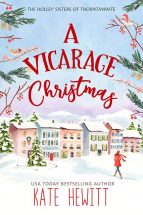
A Vicarage Christmas


Hewitt, Kate. A Vicarage Christmas. (The Holley Sisters of Thornthwaite.) n.p.: Tule Publishing, 2017.

Anna returns home to the vicarage in Thornthwaite, a Cumbrian village, for Christmas. She avoided coming home for many years, but her mother's insistence along with the promise of an important announcement drew her there. On her first night back in town, she bares her soul to a stranger at a pub whom she later discovers is her father's new curate. The two seem drawn to one another. The book is more or less an introduction to a series featuring Anna and her sisters. It presents spiritual truth about brokenness in a non-preachy manner. While a lot of threads are unresolved, future series installments may address these. I received an electronic copy through Smashwords from the publisher through LibraryThing's Early Reviewer program in exchange for an honest review.

Tuesday, December 12, 2017

A Murder for the Books


Gilbert, Victoria. A Murder for the Books. New York: Crooked Lane Books, 2017.

A messy break-up prompted Amy Webber to leave her job at a university library, accepting the position as director of a small town library where her aunt resides. The missing Doris Virts turns up dead in the library's archives. Amy meets dance instructor Richard Muir who purchased the home next to hers. The two begin researching his home's history. A lot of old family skeletons begin to rattle. This first installment felt more like a romance novel than a mystery. Some characters, such as Brad,the lead official investigator, needed more development--and needed to be utilized more in the novel. There were some issues with the plot. For example, a cell phone was confiscated by a "bad person" but in a scene shortly afterwards, the owner was using it once again without an opportunity to get it back. Still the book showed some promise. Those likely to be recurring characters are mostly likeable. One character still has a mystery about him which could become fodder for a future plot. As is the case with most cozy mysteries, readers need to suspend believability for some parts of the narrative. Fun read with a likeable setting. The review is based on an advance electronic copy provided by the publisher through NetGalley in exchange for an honest review.

Tuesday, December 05, 2017

Somebody at the Door


Postgate, Raymond. Somebody at the Door. Scottsdale, Arizona: Poisoned Pen Press, 2017.

Henry Grayling's dies in his own home a short time after returning home on the train. Mustard gas caused his death. Some of the man's belongings are found along the road, but the payroll he transported was missing. The vicar provides Inspector Holly with a list of persons aboard the train. As he investigates them, he discovers motives for many of them. The solution may be obvious to the reader carefully paying attention to details; however, others may be left guessing until the revelation.This classic crime will appeal to those who enjoy police procedurals. My remarks are based on advance e-galley provided by the publisher through NetGalley with the expectation of an honest review.

Monday, December 04, 2017

The Country House Library


Purcell, Mark. The Country House Library. London ; New York: Yale University Press, 2017.

A well-researched volume featuring essays tracing the history of English country house libraries. Much of the information on contents of these libraries is derived from estate inventories and published catalogues. One essay discusses its counter-part, the town house library, specifically in the context of those who owned both homes in places such as London as well as in the country. The book was interesting but probably bogs down a bit for the average reader due to its academic nature. The book, however, will  interest  persons passionate about the history of books and libraries. The book contains a number of illustrations featuring country house libraries and their features. The review is based on an advance review copy received from the publisher through NetGalley with the expectation of an honest review.

Sunday, December 03, 2017

Your Guide to the Apocalypse


Hagee, Matt. Your Guide to the Apocalypse: What You Should Know Before the World Comes to an End. Colorado Springs: WaterBrook, 2017.

While Hagee begins with a discussion of modern-day events and parallels to passages of Scripture, the latter part of the book is a study of the seven churches in Revelation and their parallels to the seven ages of the church. He concludes we are living in Laodicea--a phrase which brings back memories of an old contemporary Christian song (1983) by Steve Camp. I enjoyed the author's illustrations based on his own family history. This is a readable book encouraging believers in the midst of spiritual darkness. I received an electronic galley from the publisher via NetGalley with expectations for an honest review to be published and shared.

Friday, December 01, 2017

Reading Samplers


As I browsed the magazines at the store this afternoon, the top line "Sampler Sleuth: Mystery of Missing Letters" caught my attention on the December 2017 issue of Just Cross Stitch. The article discusses omission of letters, dropped stitches, and more. If you are interested in a brief history of samplers, you might wish to pick up an issue while it is still available on newstands. They usually sell remaining issues online.

The article is:

Jennett, Vickie LoPicollo. "Reading Samplers: Not as Easy as A, B, C, 1, 2, 3." Just Cross Stitch 35, no. 7 (December 2017): 42.

Tuesday, November 28, 2017

It's All Relative


Jacobs, A. J. It's All Relative: Adventures Up and Down the World's Family Tree. New York: Simon & Schuster, 2017.

Journalist A.J. Jacobs immersed himself in the genealogical community for his latest adventure. He embarks on a quest to host the world's largest family reunion which he called "Global Family Reunion." He befriends many genealogists and enlists celebrities to promote the event and perform or speak at it. I was disappointed in the book. It was more about the global family reunion than it was about genealogical research.While occasional references to genealogical research are made, few persons are going to learn to research their ancestry in a correct manner by reading it. The author promotes the one world trees such as Geni.com far too much rather than emphasizing evidence analysis and reasonably exhaustive research. Reliance on these trees often leads to erroneous conclusions which propogate. The author's casual writing style does not work well for me either. The book employs the hidden footnote system which I detest. How is the reader supposed to know something is cited when no indication is made a footnote is available? This is completely unacceptable in a field such as genealogy where evidence is so important. While I'm happy to see a book about genealogical research published by a major publisher, I would have preferred one which encouraged proper methodology rather than emphasizing online trees. Not recommended.

Monday, November 20, 2017

Using Ancestry's Public Records Collections

I noticed a "shaky leaf" hint on my own entry in my Ancestry tree when I looked today. I wondered about the content of this new record with my personal information. It belonged to Ancestry's "U.S. Public Records Index, Volume 2" collection. I find this collection frustrating because it lacks record dates, a feature that volume 1 generally includes. According to the hint I resided at an address where I never officially lived. My parents moved to that house after I graduated college. In fact my graduate course work neared completion by the time they resided in that home.

So how did this collection decide I lived there? I decided either banking or insurance records must be some of the records in the collection. My parents added me to their bank accounts during my college years, and as they aged, they kept me on the accounts so I could take care of emergencies as they traveled the country in their RV or as their needs dictated. Dad purchased life insurance policies on all his children when we were young, and until near his death, the mailings for those policies continued to go to his home with our names on them.

For most persons, the addresses in these public records collections are places they've actually resided. However, mine was an exception, and I occasionally note other discrepancies in addresses, particularly in young adult years, where children seem to be with their parents but in another location at the same time. In my case, no record date was given, but since I never lived there, it doesn't matter. For others whose parents did not move, they may truly not be "back home" but still out on their own while addresses for some activities continue to remain at their parents' home.


Saturday, November 18, 2017

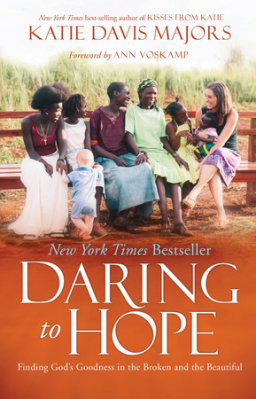
Daring to Hope


Majors, Katie Davis. Daring to Hope: Finding God's Goodness in the Broken and the Beautiful. Colorado Springs: Multnomah, 2017.

Katie tells the story of her call to Uganda where she became mother to a baker's dozen of girls. Her faith sees her through many circumstances including the loss of a neighbor, a boy's surgeries, and more. After an especially trying time in her life, God provided her with a husband who loves God as well. This is not a deep theological discussion but more of an inspirational title which is likely to be enjoyed more by women than by men. Katie's story is one which demonstrates reliance upon God to meet one's needs. This review is based on an advance reader's copy provided by the publisher via NetGalley with the expectation of an honest review.

Thursday, November 16, 2017

The Family Tree Cemetery Field Guide


Neighbors, Joy. The Family Tree Cemetery Field Guide: How to Find, Record & Preserve Your Ancestors' Graves. Cincinnati: Family Tree Books, 2017.

Journalist Joy Neighbors turns her attention to cemeteries for this title. Neighbors provides rudimentary information on abbreviations and symbols often depicted on markers. She discusses the materials from which markers are made. She provides tips to prepare for a graveyard visit and for photographing stones. These tips include cautions about ways genealogists and others tried to make stones more legible in the past and their harmfulness. She included information on Billion Graves and Find A Grave. The book's organization did not work well for me. Some topics seemed to be treated in sections scattered throughout the book. She introduced topics and then said, "We'll talk about that later." It is unfortunate the book went to press when it did instead of waiting just a few more months. She included information on locating cemetery deeds and types of cemeteries as well. The content is already dated due to Find A Grave's web site redesign. She included multiple screenshots which bear little resemblance to what users are now seeing. A note about the pending redesign was included, and she mentioned the "beta" site was now available. It seems screen shots should have been captured from the beta rather than the "old" version. Sentences felt "choppy" to me. At times I felt the author was "talking down" to readers. In an effort to make her content fill more pages, the author added related content such as death certificates, funeral home records, and obituaries. However, she didn't stop there but went on to include a section on basic genealogical research with checklists. This information, while possibly helpful to a beginner, was unnecessary to meet the book's purpose and wastes paper and the consumer's money, since the purchaser pays for those extra pages. She omitted grave markers made from pottery in her discussion of marker types. These are popular in some parts of the South. They tend to break at the base, but they remain quite readable. Many of the checklists and forms in the book are useful to genealogists, but a similar form can usually be found freely available on the internet. While the book is useful to some beginning researchers, most intermediate and experienced researchers would be better served by purchasing  Douglas Keister's Stories in Stones or Forever Dixie and picking up information on preservation and other topics via articles in Family Tree Magazine, Your Genealogy Today, or on a blog post. The publisher provided an electronic galley of the book through NetGalley in exchange for an honest review.

Tuesday, November 07, 2017

The Unquiet Grave


McCrumb, Sharyn. The Unquiet Grave. New York: Simon & Schuster, 2017.

McCrumb fictionalizes the story of the "Greenbrier ghost," a true murder story set in Greenbrier County, West Virginia in which the testimony of a ghost was at least partially responsible for a conviction. The cast of characters is an interesting mix of Appalachian mountain folks, scoundrels, African-Americans not that far removed from slavery, and more. Part of the story is narrated by an African-American lawyer who was second on the defense team. His story is told to one of his doctors at the colored asylum. McCrumb's book tour brought her through my city where I heard her discuss the research done on the book. The book's dedication was to a friend and fellow local genealogist who assisted her in the research. She also spoke about her role and finds that day. I knew most of the plot before I read it, but I still really enjoyed the way the story unraveled. Some people commented it took the story awhile to get going. Since I knew what was to come, that was not a problem for me. This book is the all-conference read for the conference at which I'm speaking later in the week, set in the very county where the book is set. The venue for the conference is at the Greenbrier, referred to as the "White Hotel" in the book. The story is a well-done Appalachian story, blending a real life murder trial with Appalachian life and lore. Fans of historical fiction and Appalachian fiction will find much to like in this story.