Showing posts with label libraries. Show all posts

Monday, December 04, 2017

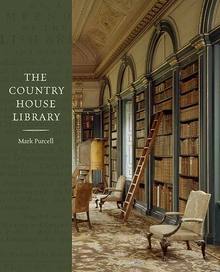
The Country House Library


Purcell, Mark. The Country House Library. London ; New York: Yale University Press, 2017.

A well-researched volume featuring essays tracing the history of English country house libraries. Much of the information on contents of these libraries is derived from estate inventories and published catalogues. One essay discusses its counter-part, the town house library, specifically in the context of those who owned both homes in places such as London as well as in the country. The book was interesting but probably bogs down a bit for the average reader due to its academic nature. The book, however, will  interest  persons passionate about the history of books and libraries. The book contains a number of illustrations featuring country house libraries and their features. The review is based on an advance review copy received from the publisher through NetGalley with the expectation of an honest review.

Tuesday, October 10, 2017

Death Overdue


Brook, Allison. Death Overdue. (Haunted Library Mystery ; 1). New York: Crooked Lane, 2017.

Carrie, a floating librarian at a Connecticut public library, decided it was time to move on when opportunity knocked on her door. While her uncle, a member of the library board was partially responsible for the opportunity, library director Sally offers her a permanent position in programs and events. After a brief consideration, she decides to accept the job and begins looking for a home. At the first event, set up by the librarian who moved away, the detective who failed to solve a case years before and suddenly claims to have solved it dies. A cookie unlike any purchased for the event bore the poison. Carrie and the son of the woman murdered years before set out to solve the crime. Carrie soon discovers the ghost of a former library director resides in the library. Only a few people see her. The ghost proves helpful to Carrie on a number of occasions. While I really don't like paranormal elements such as ghosts, this one is beneficent. I think it's a cute Halloween installment, but I'm not sure it will work long-term as a plot device. I fingered the murderer pretty early, but the author crafted several red herrings. I'll probably read the next installment. I received an advance uncorrected e-galley from the publisher through NetGalley with the expectation of an honest review.

Sunday, October 02, 2011

Main Street Public Library by Wayne A. Wiegand

Wiegand provides histories of four upper midwestern libraries and then devotes a chapter to analyzing the catalogs of these libraries up to about 1970. The libraries studied are The Bryant Library in Sauk Centre, Minnesota, The Sage Library of Osage, Iowa, The Charles H. Moore Library of Lexington, Michigan, and the Rhinelander Public Library in Rhinelander, Wisconsin. The study is interesting as it shows the development of these small town libraries through the ages. Today's libraries scorn censorship, but it was not a problem for most of these libraries in their early days. They scorned some of the dime novels of the day. Book selection was usually made by committee in the early days and later became a responsibility of the librarian. One thing that really surprised me were the late hours many of the libraries kept. Libraries often did not open until mid-afternoon and were open until as late as 10 p.m., closing during the supper hour. The bibliography is fairly extensive, providing an excellent starting point for those interested in further research. Wiegand has done a good job researching the literary history of these communities. My only criticism is that the text becomes mired down with details that make for tedious reading in places. This book, however, is intended for a more scholarly audience, and persons interested in these communities as well as persons interested in literary or library history will find it fascinating. This review is based on a advanced readers galley received through NetGalley for review. 4 stars.

Wednesday, July 28, 2010

Is Your Organization at Risk of Losing Its Tax-Exempt Status?

I saw an article on one of the local television station web sites that was encouraging people to check the IRS list of organizations at risk of losing their tax-exempt status to make sure that theirs was not listed. I'm not sure what types of organizations that I expected to see on the list as I clicked one state, but I was alarmed at what I did see. There are many historical societies, Friends of the Library organizations, cemetery associations, fraaternal organizations, and DAR chapters among those in danger. According to the IRS site, "Tax-exempt organizations that do not satisfy annual filing requirements for three consecutive years automatically lose their tax-exempt status. The IRS is providing one-time relief for such organizations that have filing due dates on or after May 17 and before October 15, 2010. The list includes organizations for which the IRS does not have a record of a required annual filing for 2007 and 2008, and whose 2009 return, due on or after May 17 and before October 15, 2010, has not yet been received." PLEASE CHECK to make sure that organizations with which you are affiliated are not included on the list. There is a PDF or Excel file available for each state.

Monday, January 25, 2010

Haiti's Libraries

A librarian friend of mine had family members who were missionaries to Haiti. They have been evacuated from the country, but they have received some news of the situation with the libraries in the country.

The oldest library in Port au Prince collapsed. This is the Bibliothèque Haïtienne des Pères du Saint Esprit. This is located in Saint Martial College.

At least a portion of Haiti's national library has also collapsed.
Many university libraries have collapsed.

The St. Louis de Gonzague Library is weakened structurally but still standing.

This is somewhat bad news for those researching their Haitian roots! The earthquake will rewrite the chapter on doing Haitian genealogical research for generations to come. Let's hope that someone comes up with the funding to digitally preserve what remains of records of interest to future generations of genealogists.

Monday, January 04, 2010

Thoughts on Libraries and Genealogy

Many persons blogging about genealogy are taking part of a 52 week meme. I may occasionally post a response to one of the weekly themes, but I'm not able to participate in this week's challenge because of my mom's surgery and the fact that I'm nowhere close to home. I could use the Tennessee State Library & Archives catalog feature which allows one to search most of the public libraries in the state of Tennessee, but I can already tell you what the results would be. The challenge is to locate books that would help one become a better genealogist. I can tell you that my personal library is better than the holdings at the Morristown-Hamblen County Public Library or Jefferson City Public Library in neighboring Jefferson County. I would have to go into Knoxville to the McClung Historical Collection to find a better library and then I would not be able to check out any of the materials. The college library where I work has a number of genealogy books, but most of our methodology titles are becoming very dated. In fact, I own more recent editions of several of the titles. There are a number of other types of books or e-books which would be useful in getting background information to add dimensions to an ancestor's story. It is a shame that so many libraries (especially public libraries) do not offer circulating collections of genealogical titles. Some do have a few beginner's books in their circulating collections, but advanced researchers are left out. That's why I have my own genealogical library. I have books on methodology, record groups and their uses, research in various states and countries, standards, etc. I also have many published abstracts, indexes, and other tools. I have many histories of areas in which I do a great deal of research for myself or others. I'm not going to list a few books here because I don't want to pick and choose at this time. I can state that I'll be utilizing many of these books in the upcoming months. I can also state that my collection will continue to grow (even though I really need additional shelving). I also want to state that I often learn more about becoming a better genealogist by reading publications such as National Genealogical Society Quarterly. I enjoy discussing the cases with other professional genealogists who have read them when I have an opportunity. I keep hoping that Tennessee will eventually have its own APG chapter. A few of us discussed the possibility at the FGS conference in Little Rock this fall.

Thursday, June 25, 2009

Thursday's Picks

Here's a round-up of some finds:

I got a chuckle out of the opening sentences in this article in the News-Observer: Maybe North Carolina Gov. Beverly Perdue should consider joining South Carolina Gov. Mark Sanford in Argentina. Her polling numbers have already headed south.

Duke basketball note: Prayers for the family of Elliot Williams. We hate to see him go.

Book note: Lesa reviewed Driftwood Summer. A bookstore in a 200-year-old cottage. The setting alone has me sold!

Summer reading lists: Rebecca Blood, one of the earliest bloggers and author of The Weblog Handbook: Practical Advice on Creating and Maintaining Your Blog, has a round-up of summer reading lists. By the way, I still use some content from this book when teaching about blogs and blogging. See this excerpt on Weblog ethics from her book. Speaking of the reading lists Rebecca highlighted, I found a few interesting books on them. Nancy Pearl's list included Narrow Dog to Indian River which is about a couple of folks who are in the 70s who took a narrowboat down the Intercoastal Waterway. Their adventures sound exciting enough that I might try to get this from a library. Summer House by Nancy Thayer made the list by Buzz Sugar. It sounds like it involves family relationships and involves a house on Nantucket that has been in the family for a long time. I'm not usually a big fan of "chick lit," but the family angle gives this one an appeal.

One more reading list: For those going to FGS/AGS in Little Rock who wish to read some fiction set in Little Rock, the FGS blog has a list. I have a friend who has begun a themed approach to reading. She likes to read books about places she is going to visit during that month or the month before the visit. Some of you may wish to read about Arkansas during August!

As I was driving back from Jackson on Tuesday, I heard a debate over the pronunciation of Cuyahoga River. Some pronounce it with a short o as in the word "hog." Others pronounce it with a long o as in the word "hoagie." I will have to admit that until I heard some of the NPR folks pronouncing it with the short o on Monday afternoon as I was driving from Jackson to Hattiesburg that I'd never heard it pronounced that way. They were commenting on the river fire in 1969. I lived in Cincinnati for a total of 12 years, and I think that all the news folks there pronounced it with a long o. Apparently they did an informal survey, calling several government offices and the libraries and historical societies in the Cleveland area on Tuesday and came up with a fairly even split on the pronunciation. When I saw this post on the pronunciation of Appalachian, I was reminded of the other debate. Needless to say, this post was created in reference to the pronunciation of the trail that the South Carolina governor had led his staffers to believe he was hiking. I have heard it pronounced both ways, but since I live in Appalachia now, most of locals pronounce it with a short a, so I believe that is the correct pronunciation.

Great Appalachian photo: I love this fog picture.

Another book note: I had seen Dr. Kessler's book, The End of Overeating: Taking Control of the Insatiable American Appetite, among some book notices received at the library. This extended review and summary in the New York Times is interesting.

Ohio Libraries: Amy alerts us to a threat to public library funding in Ohio. As someone who resided in Cincinnati for twelve years, I'm very concerned about this issue. I was a heavy user of the Public Library of Cincinnati and Hamilton County in those years. I hate to think how their wonderful genealogical collection would be impacted by such a drastic cut in funding. I loved having a great regional branch near my home as well as a couple of other branches where I could pick up fiction to read. Many of the titles were available at only one or two branches in the system, but I could have them delivered to one of the branches nearer my home. One of the things I have missed most about Ohio was the wonderful public library! I remember my first visit to Morristown's public library. It was so woefully inadequate for my tastes in reading. I knew very quickly that I would have to begin purchasing books. In fact, I regret having disposed of many books in my personal fiction collection before moving. The public library in Ohio met all my needs, but I was short-sighted in thinking that Tennessee's public libraries would compare. The Cincinnati Enquirer reports that up to half of Cincinnati's branches may close if the governor gets his way. As Amy says, "Save Ohio's public libraries." Lesa also mentions the situation in Ohio. (Actually, Lesa's first post on the subject is here.)

A Taste of Summer: Nicole's strawberry pie is making me hungry!

Bookshelves: I think I'll pass on the upside down approach.

More book notes: Maggie has reviewed The Heretic's Daughter which is on my to-be-read list. Since my 8th great grand-aunt Mary Perkins Bradbury is one of the accused witches, I have read a lot more about this period of history, both fiction and non-fiction. Sage has a post at "Musings" about The Cape Fear by Malcolm Ross. Sounds like an interesting read for those with North Carolina roots. Ann Arbor District Library alerts us to a couple of new books on herb gardening. I no longer live in the Midwest so one would be limited in its usefulness to me, but the other one sounds promising. I usually keep a few herbs growing in a container garden.

Chris alerts us to a free month's trial of Images of America. This is an Alexander Street database based on the popular series of photographic books by Arcadia Publishing. I love this series of books and own several of them!

18th and 19th century gardening: J. L. Bell alerted me to a wonderful blog on 18th and 19th century gardens. Check out the other blogs J. L. mentioned via the link on his name. Several are worth a look!

Louisiana obituaries online: Paula alerts us to the availability of a new database of Louisiana obituaries from New Orleans Public Library.

Historic House workshop in Alabama: Birmingham Public Library and Jefferson County Historical Commission are teaming up to offer a workshop on researching historic dwellings. It will be held July 18, 2009, and it is free. You don't even have to register! If I lived a little closer, I would definitely attend this one!

Furniture: I'm always in need of more bookshelves. Kim found an interesting sofa that appears to be a great way of adding a few extra shelves!
Saturday, June 13, 2009

Odds & Ends

The Library of Congress has a new photostream at Flickr to highlight some of the newspaper supplements in their Chronicling America collection. Chronicling America has digital images of newspaper pages from eleven states plus the District of Columbia for the years 1880-1910. They also have a directory which includes newspapers published from 1690 to the present.

Nicole Engard found a Today Show video about the importance of libraries in these tough economic times.

Europeana is in beta. There are 4 million items in the collection. It contains images, sounds, text, and video. A search for "genealogy" does return hits. Check it out.

I've been adding to this post all day so it's time to post it!

Saturday, April 19, 2008

National Library Week Tribute #7: The Historical Society Library

I know all of you have been wondering which library I would choose for my 7th. The truth is that there are just too many libraries out there. I hated to name one historical society library without mentioning them all because they are such great depositories of regional information. I'm going to name a few examples here, but all historical society libraries are included in this seventh tribute.


First of all, I want to mention the Itawamba Historical Society's Library in Mantachie, Mississippi. They are located in the Poteet History Center. If you are researching ancestors in Itawamba County, their library is a "must visit." They have a tremendous collection of family histories from the area. You can purchase back issues of Itawamba Settlers to complete your collection. They also have an ongoing book sale there. You can browse and find a few titles of interest for your personal library.


Another society's library I want to mention is McLean County (Illinois) Historical Society. They have microfilms of many of the older courthouse records there which you can photocopy much more cheaply than you can at the nearby courthouse. I found city directories that were extremely helpful to me which covered even small towns like Carlock where my ancestors lived. I was only able to be there for a short time, but the staff was most helpful to me during my brief visit. (I'd spent too much time tromping about the cemetery earlier! You know how that goes with genealogists.)


Then there is the "ultimate" historical society--the New England Historic Genealogical Society. I'm looking forward to another visit there this summer. The photo below was made after FGS conference in 2006. They have all kinds of wonderful resources there! You can't ignore them if you have New England ancestry. The society is located in the Back Bay area on the very trendy Newbury Street. It's not far from the Boston Public Garden and Boston Common. You can even do lunch "where everybody knows your name" or at many other great restaurants in the area. This library is also within walking distance of another great library, the Boston Public Library. Well, I must go and prepare for my visit to the NEHGS Library!


Friday, April 18, 2008

National Library Week Tribute #6: Stephens-Burnett Memorial Library

As I write this, I'm sitting in my office at the Stephens-Burnett Memorial Library of Carson-Newman College getting ready for our "after hours" movie night. It's one of our National Library Week activities. Some people don't think of using academic libraries when researching one's genealogy. While you probably won't be able to check out a book that might circulate to a professor or student, you will be able to use most of the resources on the premises. Our library has a great collection of Jefferson County research materials. We collect materials for about 22 East Tennessee counties. In our archives are copies of church records and minutes for many East Tennessee churches since we are charged by the Tennessee Baptist Convention with the job of maintaining archives for our part of the state. We also have an emphasis on Appalachia that extends across disciplines. The materials we have in this area bring a lot of context to the environment in which one's Appalachian ancestor lived. We have a pretty good collection of Baptist materials even beyond our immediate area.

Thursday, April 17, 2008

National Library Week Tribute #5: McClung Collection, Knox County Public Library

The Calvin M. McClung Historical Collection of the Knox County Public Library System is the best historical and genealogical collection in the East Tennessee area. It is housed in the same building with the East Tennessee Historical Society and the Knox County Archives. In recent years, the facility has expanded beyond the old customs house in which it was archived. They have renovated the older facilities as well. While I don't get there as often as I would like, I enjoy using their collection. Their materials for east Tennessee, Virginia, and North Carolina are quite good.

Wednesday, April 16, 2008

National Library Week Tribute #4: Evans Memorial Library

Evans Memorial Library in Aberdeen is a small library with a very good genealogical collection. The collection was developed over the years by W. A. Evans and by former librarian Lucille Peacock. The genealogical collection contains not only materials relating to the northeast Mississippi-northwest Alabama area, but also information on areas from which persons migrated to the area. There are a large number of family histories on the shelves as well as filing cabinets full of folders relating to the area's families. One of the most interesting collections at Evans Memorial Library is the McKnight Photo Collection. F. S. McKnight was a photographer in the area from about 1894 to 1930. I am very fortunate to have several family photographs done by this photographer among the photos handed down through the family. An index to this collection is available at Monroe County MSGenWeb. There are many unidentified photographs as well. The collection at Evans Memorial Library provides proof that a small library can build a genealogy collection that people will want to visit!

Tuesday, April 15, 2008

National Library Week Tribute #3: Amory Municipal Library

Amory Municipal Library is where I first developed a thirst for books beyond those I had at home. Mrs. Elizabeth Wamble was the head librarian back in the days I was small. Mrs. Linda Reich was the children's librarian. I loved browsing the children's books there. I remember participating in the summer reading program and being one of the top readers. I had read so many books that it was hard to find a book in which my name wasn't on the card. Somehow I pretty much completely skipped the books written for middle schoolers and teens when I was growing up. I remember all of us becoming intrigued with Lois Duncan's Down a Dark Hall. I also remember using some of the non-fiction books for school assignments. I enjoyed the Hardy Boys books, but I borrowed those from a friend instead of the library (at least the ones that had not been handed down to me by my brothers). Around 6th grade, I discovered Phyllis Whitney. I purchased a paperback of Window on the Square at a bookstore in Alabama when my sister-in-law was in the hospital. When I got back to Amory, I went to the library where I began checking out other books by her. When I finished those, I found books with similar covers. (I know they say you can't judge a book by its cover, but I could find those Gothic romance books that way.) I had discovered that my neighbor's mother had checked out a lot of the same books that I was reading. I began looking for her signature on the cards as a means of "readers' advisory." (Remember this was back in the days before the ALA was as concerned about the confidentiality of patron records. A lot of folks looked to see who else had checked something out back in those days. People knew what each other liked to read and could often tell whether or not they wanted to read it by who else had checked it out. I miss the days of cards with signatures sometimes, but as a librarian I have it ingrained in me now that patron records should be kept confidential.) I continued to read all throughout high school. I never went into my high school library except for club meetings. Amory Municipal Library met most of my needs. When we had to do term papers, most of us learned to hit the library at a university when we were on campus to copy a few things. The Mississippi Room at the Amory Municipal Library is the place I visit most there now when I'm in town. That is where the local history materials and microfilm of older papers are kept. My high school history teacher's wife is the head librarian now. My English teacher from my senior year of high school works there some too! There are other familiar faces in the library there who have been there many years! It's a very welcoming environment.

Monday, April 14, 2008

National Library Week Tribute #2: An Amish Library in Holmes County

Many of you know that I have Amish lines that lived in Holmes and Wayne Counties in Ohio in the 19th century. On one of my trips to that area, I spent quite a bit of time in the courthouses and in the cemeteries of the area. I had gone to visit with an "English cousin" who lives in the area and has quite a bit of interaction with the Amish. She told me about an Amish library that was in Berlin in Holmes County. She made the necessary arrangements so that we could visit it. It is in the basement of a barn beside the Keim lumber yard there. Most of the books and periodicals related to the history of the Amish. It was a quite extensive collection although I'd already utilized many of the resources at other libraries. I was so surprised to find the library. I was even more surprised that they had a photocopier. It was, of course, powered by a generator rather than electricity. My cousin and I made copies of several articles. This library was a pleasant surprise on my research trip!

Sunday, April 13, 2008

National Library Week Tribute #1: Public Library of Cincinnati and Hamilton County

This is National Library Week. I want to offer a tribute this week to several libraries that have been a part of my life. I am not going to feature them in the order of my first encounter with them. In fact, the order will be entirely random.

I chose the Public Library of Cincinnati and Hamilton County as my first library simply because it was the library of greatest importance to me when I first became serious about genealogy. I was living in the Queen City. I had heard wonderful things about the library's genealogy collection. My mom had expressed an interest in exploring the family history but she didn't really know much about doing it. I knew I had the research skills as a librarian to begin the project. I spent many hours there researching my family history. I was able to tour some of the closed stacks there with a group of librarians more than once. I would always marvel at all the items that were held by the library. I spent many hours in front of their microfilm readers reading soundex and census records. I used their collection of ship's passenger lists. That library is usually listed as one of the top ten libraries for genealogists, and I was fortunate to live there at that time in my life.

I usually used the main library because of my genealogical interests. Their fiction collection was also wonderful. I discovered many wonderful authors during my time in Cincinnati. Their non-fiction collection matched my diverse interests.

If I was spending the day at the main library, I'd usually walk down a couple of blocks to Skyline Chili for lunch. If there was a big festival downtown, I'd often go on down to where the vendors were set up and enjoy brats or other street fare. I'd always end up back at the library to finish up my day's research and to select a few books to take home to read.

I occasionally went to one of the branch libraries for a fiction book that wasn't in stock at the main library. If a book I wanted was not at one of the branches close to work or home, I'd usually use their branch delivery service to have the book delivered to a branch nearby.

The Public Library of Cincinnati and Hamilton County is one of the city's true treasures.

Saturday, April 12, 2008

National Library Week Challenge

The 50th annual National Library Week is April 13-19. Most of you know that I'm a librarian, so I'd like to challenge all bloggers to do at least one blog post as a tribute to libraries during the week. I'm sure we'll have a very diverse group of posts from all of the creative bloggers out there! You don't have to be a geneablogger to participate. (All bloggers welcome.) If you don't blog, feel free to leave a comment here as a tribute to libraries.

Wednesday, March 05, 2008

The Vacationing Genealogist

What do genealogists do on vacations? I'd never really given it much thought until I saw a message to a mailing list by a genealogist today who stated that he was going on vacation. He specified that there would be "no libraries, no courthouses, and no cemeteries." That got me to thinking. When is the last time I took a vacation that met all three of those criteria? I think the answer is "before I started researching the family history."

First of all, I'm a librarian. I love books, and I love to see what other libraries look like. I also like to go in and browse the history and genealogy shelves. If I haven't taken my laptop along on a trip, I may go in to use a computer to check email. (I'll admit that I haven't done this much since wireless has become widely available, but I have done it in the past.)

Courthouses. While I'm slightly less likely to visit a courthouse than a library or cemetery, I have visited courthouses either along the way or near my destination on probably 75% of my vacations of recent years.

Cemeteries. I honestly cannot think of a single vacation that I've been on where I haven't gone to at least one cemetery and probably more than one. They are like magnets. I like to go to them even if I know of no relations buried there. You can sometimes find unusual markers. If I've got a few minutes to spare, you're likely to find me stopping to check out the cemetery. I know a well-known genealogist who was speaking at the FGS conference in Boston in 2006. He had no New England ancestors of his own. While he was out walking around Boston, he found a stone in a cemetery he visited which interested him. (I think it was in Old Copps, but I don't remember for sure.) He went back and researched that individual and her family. I'm not the only genealogist who can't resist a cemetery visit!


In a couple of months, I'll be headed to the Bahamas for a few days. While I don't really have anything that I need to research while there (and my niece who is accompanying me would definitely not want to spend time researching since she's not into family history), I've already read about an historic cemetery that I want to visit. If we happen to see a library, I'm likely to go in just to say I was there and to see what the similarities and differences are between that country's libraries and ours.


In short, I just can't imagine a vacation void of libraries, courthouses, and cemeteries--at least not since I began researching the family history. Of course, those of us who work full-time, welcome the opportunity to use our vacations to further our research.

What about you? Do you visit libraries, courthouses, and cemeteries when you vacation?

Thursday, January 03, 2008

Forerunner of the Bookmobile

. . . the pack-horse library. If you ever wanted to know how remote areas of Appalachia had access to reading materials before the bookmobile, this is a story you'll want to read. I remember hearing about these libraries in the History of Libraries course I took in graduate school.

Tuesday, June 26, 2007

Amy . . . on Libraries

I loved Amy's post about libraries and wanted to share it with all my librarian friends who read this blog!

Tuesday, June 19, 2007

ACL 2007 Workshops

LibraryThing was down when the workshops for it were scheduled. I felt sorry for the presenter who had to rely on PowerPoint backup, but at least he had that! They were having a bookcover pile contest while it was down. We considered having a pile of librarians who were trying to access librarians while it was down and submitting that, but we didn't!

One of my colleagues and myself have talked several times about the workshop that showed how one library is using Facebook to reach its students where they are. I believe that we'll all be talking about how we can utilize Web 2.0 technologies to reach students in the coming academic year.

Another very interesting workshop was the one on customized toolbars which allow one to search things such as the library's online catalog, databases, and citation style guides. I'm already trying to figure out what we would need to include on one for our students. The presenters did tell us that it took time to develop them because of the code involved, but it is so useful that it will be worth the time.

I went to two cataloging workshops--one on authority control and one on metadata. I was very pleased with the direction the authority control presenter took. She approached it from the how it is changing and is likely to change perspective rather than it being a "how to" workshop. I know there were some in attendance who were looking for something a bit more hands-on, but having experience in the area, I was grateful for a more futuristic approach. The metadata was a good review for me of some of the skills that I'd been taught at a workshop back in about 2000. I really had not utilized this except in one digitization project since that time, and it was helpful to see the core elements of metadata for libraries once again.

The picture book update was great! This is the workshop where we get to pass around a lot of picture books which came out in the previous year. It's always interesting.