Musings on family history, regional history, book reviews, and miscellaneous observations and comments by a genealogist and librarian living near the Great Smoky Mountains in East Tennessee.
Friday, November 15, 2019
Knot on Your Life
Hechtman, Betty. Knot on Your Life. n.p.: Beyond the Page, 2019.
Casey continues to host yarn retreats at the resort across from the home she inherited from a relative. In this installment she finds herself hosting a group of women all acquainted with one another. A Silicon Valley entrepreneurial group on a mindfulness treat also booked the resort. The entrepreneurs are a bit jealous of the extra perks the women receive and ask for knitting lessons which one man thinks would be more "mindful" than the activities the resort's owner planned for them. Casey discovers one of the women dying near the dangerous rocks. A former Chicago private investigator, Casey remains one step ahead of the police investigator. Although not a complex mystery, it was enjoyable. The only other book in the series I read was the first. I received an advance review copy in exchange for an honest review.
Sunday, November 10, 2019
The Manor House Murder
Martin, Faith. The Manor House Murder. London: Joffe Books, 2019.
Monica and husband Vicar Graham attend a clerics conference at a manor house. A cleric who mentioned a nut allergy dies after eating a dessert infused with peanuts. The chef is appalled someone tampered with his dessert. Monica, convinced Chief Inspector Jason is on the wrong track, begins her own investigation. We see more of Jason's investigation than Monica's. Too many characters and dull writing make this a struggle to read. A few places showed promise but the narrative's flatness returned too quickly. I did not read previous installments in the series so it's possible that affected my enjoyment as well. I received an advance review copy through NetGalley in exchange for an honest review.
Tuesday, November 05, 2019
Christian Education
Cardoza, Freddy, editor. Christian Education: A Guide to the Foundations of Ministry. Grand Rapids: Baker Academic, 2019.
Christian education has changed quite a bit over the years, but it has also remained the same. The discipline itself has expanded to include many new ministries, and many of us witnessed the development of these ministries. Designed to serve as an introductory textbook for Christian education courses in Christian universities, this book demonstrates the hybrid nature of Christian education today. It draws from philosophy, psychology, business, religion, sociology, and other disciplines to emphasize the importance of ministering to all persons. With chapters by leading Evangelical Christian educators, the book emphasizes personal evangelism in spreading the Gospel and encourages training all believers to share their faith. Some writers developed their topic better than others who seemed to give only superficial treatment to the topic. With more topics to cover than textbooks of forty years ago, the editor's challenge in creating a volume suitable for a foundation course is understandable, but the coverage given some topics which used to garner more attention in courses of this nature is disappointing. This book should serve well as an introductory text for years to come when supplemented by additional content addressing weaker portions of the text. I received this advance review copy through NetGalley with the expectation of an honest review. Although I worked as a seminary librarian when some of the chapter authors attended my institution, I did not allow my friendship with the authors to influence my review.
Death Has Deep Roots
Gilbert, Michael. Death Has Deep Roots. Naperville, Illinois: Poisoned Pen Press, 2019.
Victoria Lamartine faces a charge of murder. Her alleged lover Major Thoseby's murder made her the most logical suspect. Attorney Nap Rumbold becomes a late replacement for the defense. Can he save his client from the gallows? Much of the book consists of hearings at the Old Bailey. Some shows Rumbold's activities in trying to clear his client. Lamartine participated in the French Resistance during World War II, and the mystery takes us back to that time to absolve her. Although I enjoyed Perry Mason mysteries during my junior high years, my love of the courtroom mystery did not continue into adulthood. I requested it based on the World War II connection and because of its British Library Crime Classics series designation. I enjoyed it more than I thought I would after discovering it was a courtroom setting. I consider it an average mystery. I received an advance electronic copy through NetGalley with the expectation of an honest review.
Friday, November 01, 2019
Hampton, New Hampshire, in Poem
Bill West created the Great Genealogy Poetry Challenge. The challenge now in its eleventh year asks participants to blog a poem about a region where an ancestor resided and to tell how it relates to the ancestor.
This poem mentions my ancestor Rev. Stephen Bachiler as "Father Bachiler." His Puritan-leaning teachings led to his arrival in Boston in 1632. He pastored in Saugus (now Lynn) and Newbury before helping establish the town of Hampton. He returned to England in 1653 and died near London in 1656.1
The poem lacks historical accuracy. The actual wreck mentioned in this poem occurred in the autumn, rather than summer, of 1657, after Bachiler's return to England and death.2 Goody Cole, also mentioned in the poem, was imprisoned in 1656.3 While the poem does not report the number aboard the vessel, Joseph Dow's town history reports the deaths of eight Hampton residents in the disaster.4
The Wreck of Rivermouth
by John Greenleaf Whittier
Rivermouth Rocks are fair to see,
By dawn or sunset shone across,
When the ebb of the sea has left them free,
To dry their fringes of gold-green moss
For there the river comes winding down,
From salt sea-meadows and uplands brown,
And waves on the outer rocks afoam
Shout to its waters, "Welcome home!"
And fair are the sunny isles in view
East of the grisly Head of the Boar,
And Agamenticus lifts its blue
Disk of a cloud the woodlands o'er;
And southerly, when the tide is down,
'Twixt white sea-waves and sand-hills brown,
The beach-birds dance and the gray gulls wheel
Over a floor of burnished steel.
Once, in the old Colonial days,
Two hundred years ago and more,
A boat sailed down through the winding ways
Of Hampton River to that low shore,
Full of a goodly company
Sailing out on the summer sea,
Veering to catch the land-breeze light,
With the Boar to left and the Rocks to right.
In Hampton meadows, where mowers laid
Their scythes to the swaths of salted grass,
"Ah, well-a-day! our hay must be made!"
A young man sighed, who saw them pass.
Loud laughed his fellows to see him stand
Whetting his scythe with a listless hand,
Hearing a voice in a far-off song,
Watching a white hand beckoning long.
"Fie on the witch!" cried a merry girl,
As they rounded the point where Goody Cole
Sat by her door with her wheel atwirl,
A bent and blear-eyed poor old soul.
"Oho!" she muttered, "ye 're brave to-day!
But I hear the little waves laugh and say,
'The broth will be cold that waits at home;
For it 's one to go, but another to come!'"
"She's cursed," said the skipper; "speak her fair:
I'm scary always to see her shake
Her wicked head, with its wild gray hair,
And nose like a hawk, and eyes like a snake."
But merrily still, with laugh and shout,
From Hampton River the boat sailed out,
Till the huts and the flakes on Star seemed nigh,
And they lost the scent of the pines of Rye.
They dropped their lines in the lazy tide,
Drawing up haddock and mottled cod;
They saw not the Shadow that walked beside,
They heard not the feet with silence shod.
But thicker and thicker a hot mist grew,
Shot by the lightnings through and through;
And muffled growls, like the growl of a beast,
Ran along the sky from west to east.
Then the skipper looked from the darkening sea
Up to the dimmed and wading sun;
But he spake like a brave man cheerily,
"Yet there is time for our homeward run."
Veering and tacking, they backward wore;
And just as a breath-from the woods ashore
Blew out to whisper of danger past,
The wrath of the storm came down at last!
The skipper hauled at the heavy sail
"God be our help!" he only cried,
As the roaring gale, like the stroke of a flail,
Smote the boat on its starboard side.
The Shoalsmen looked, but saw alone
Dark films of rain-cloud slantwise blown,
Wild rocks lit up by the lightning's glare,
The strife and torment of sea and air.
Goody Cole looked out from her door
The Isles of Shoals were drowned and gone,
Scarcely she saw the Head of the Boar
Toss the foam from tusks of stone.
She clasped her hands with a grip of pain,
The tear on her cheek was not of rain
"They are lost," she muttered, "boat and crew!
Lord, forgive me! my words were true!"
Suddenly seaward swept the squall;
The low sun smote through cloudy rack;
The Shoals stood clear in the light, and all
The trend of the coast lay hard and black.
But far and wide as eye could reach,
No life was seen upon wave or beach;
The boat that went out at morning never
Sailed back again into Hampton River.
O mower, lean on thy bended snath,
Look from the meadows green and low
The wind of the sea is a waft of death,
The waves are singing a song of woe!
By silent river, by moaning sea,
Long and vain shall thy watching be
Never again shall the sweet voice call,
Never the white hand rise and fall!
O Rivermouth Rocks, how sad a sight
Ye saw in the light of breaking day
Dead faces looking up cold and white
From sand and seaweed where they lay.
The mad old witch-wife wailed and wept,
And cursed the tide as it backward crept
"Crawl back, crawl back, blue water-snake
Leave your dead for the hearts that break!"
Solemn it was in that old day
In Hampton town and its log-built church,
Where side by side the coffins lay
And the mourners stood in aisle and porch.
In the singing-seats young eyes were dim,
The voices faltered that raised the hymn,
And Father Dalton, grave and stern,
Sobbed through his prayer and wept in turn.
But his ancient colleague did not pray;
Under the weight of his fourscore years
He stood apart with the iron-gray
Of his strong brows knitted to hide his tears;
And a fair-faced woman of doubtful fame,
Linking her own with his honored name,
Subtle as sin, at his side withstood
The felt reproach of her neighborhood.
Apart with them, like them forbid,
Old Goody Cole looked drearily round,
As, two by two, with their faces hid,
The mourners walked to the burying-ground.
She let the staff from her clasped hands fall
"Lord, forgive us! we're sinners all!"
And the voice of the old man answered her
"Amen!" said Father Bachiler.
So, as I sat upon Appledore
In the calm of a closing summer day,
And the broken lines of Hampton shore
In purple mist of cloudland lay,
The Rivermouth Rocks their story told;
And waves aglow with sunset gold,
Rising and breaking in steady chime,
Beat the rhythm and kept the time.
And the sunset paled, and warmed once more
With a softer, tenderer after-glow;
In the east was moon-rise, with boats off-shore
And sails in the distance drifting slow.
The beacon glimmered from Portsmouth bar,
The White Isle kindled its great red star;
And life and death in my old-time lay
Mingled in peace like the night and day!5
1 “Stephen Bachiler,” Wikipedia (https://en.wikipedia.org/wiki/Stephen_Bachiler : accessed 1 November 2019).↩
2 Joseph Dow, History of the Town of Hampton, New Hampshire: From Its Settlement in 1638, to the Autumn of 1892 (Salem, Massachusetts: Salem Press, 1894), 1:57; Internet Archive (https://archive.org/details/historyoftownofh00dowj/ : accessed 1 November 2019.↩
3 Dow, History of the Town of Hampton, New Hampshire, 1:54.↩
4 Joseph Dow, History of the Town of Hampton, New Hampshire, 1:57.↩
5 John Greenleaf Whittier, The Complete Poetical Works of John Greenleaf Whittier (Boston: Houghton Mifflin, 1894), 245-247.↩
This poem mentions my ancestor Rev. Stephen Bachiler as "Father Bachiler." His Puritan-leaning teachings led to his arrival in Boston in 1632. He pastored in Saugus (now Lynn) and Newbury before helping establish the town of Hampton. He returned to England in 1653 and died near London in 1656.1
The poem lacks historical accuracy. The actual wreck mentioned in this poem occurred in the autumn, rather than summer, of 1657, after Bachiler's return to England and death.2 Goody Cole, also mentioned in the poem, was imprisoned in 1656.3 While the poem does not report the number aboard the vessel, Joseph Dow's town history reports the deaths of eight Hampton residents in the disaster.4
The Wreck of Rivermouth
by John Greenleaf Whittier
Rivermouth Rocks are fair to see,
By dawn or sunset shone across,
When the ebb of the sea has left them free,
To dry their fringes of gold-green moss
For there the river comes winding down,
From salt sea-meadows and uplands brown,
And waves on the outer rocks afoam
Shout to its waters, "Welcome home!"
And fair are the sunny isles in view
East of the grisly Head of the Boar,
And Agamenticus lifts its blue
Disk of a cloud the woodlands o'er;
And southerly, when the tide is down,
'Twixt white sea-waves and sand-hills brown,
The beach-birds dance and the gray gulls wheel
Over a floor of burnished steel.
Once, in the old Colonial days,
Two hundred years ago and more,
A boat sailed down through the winding ways
Of Hampton River to that low shore,
Full of a goodly company
Sailing out on the summer sea,
Veering to catch the land-breeze light,
With the Boar to left and the Rocks to right.
In Hampton meadows, where mowers laid
Their scythes to the swaths of salted grass,
"Ah, well-a-day! our hay must be made!"
A young man sighed, who saw them pass.
Loud laughed his fellows to see him stand
Whetting his scythe with a listless hand,
Hearing a voice in a far-off song,
Watching a white hand beckoning long.
"Fie on the witch!" cried a merry girl,
As they rounded the point where Goody Cole
Sat by her door with her wheel atwirl,
A bent and blear-eyed poor old soul.
"Oho!" she muttered, "ye 're brave to-day!
But I hear the little waves laugh and say,
'The broth will be cold that waits at home;
For it 's one to go, but another to come!'"
"She's cursed," said the skipper; "speak her fair:
I'm scary always to see her shake
Her wicked head, with its wild gray hair,
And nose like a hawk, and eyes like a snake."
But merrily still, with laugh and shout,
From Hampton River the boat sailed out,
Till the huts and the flakes on Star seemed nigh,
And they lost the scent of the pines of Rye.
They dropped their lines in the lazy tide,
Drawing up haddock and mottled cod;
They saw not the Shadow that walked beside,
They heard not the feet with silence shod.
But thicker and thicker a hot mist grew,
Shot by the lightnings through and through;
And muffled growls, like the growl of a beast,
Ran along the sky from west to east.
Then the skipper looked from the darkening sea
Up to the dimmed and wading sun;
But he spake like a brave man cheerily,
"Yet there is time for our homeward run."
Veering and tacking, they backward wore;
And just as a breath-from the woods ashore
Blew out to whisper of danger past,
The wrath of the storm came down at last!
The skipper hauled at the heavy sail
"God be our help!" he only cried,
As the roaring gale, like the stroke of a flail,
Smote the boat on its starboard side.
The Shoalsmen looked, but saw alone
Dark films of rain-cloud slantwise blown,
Wild rocks lit up by the lightning's glare,
The strife and torment of sea and air.
Goody Cole looked out from her door
The Isles of Shoals were drowned and gone,
Scarcely she saw the Head of the Boar
Toss the foam from tusks of stone.
She clasped her hands with a grip of pain,
The tear on her cheek was not of rain
"They are lost," she muttered, "boat and crew!
Lord, forgive me! my words were true!"
Suddenly seaward swept the squall;
The low sun smote through cloudy rack;
The Shoals stood clear in the light, and all
The trend of the coast lay hard and black.
But far and wide as eye could reach,
No life was seen upon wave or beach;
The boat that went out at morning never
Sailed back again into Hampton River.
O mower, lean on thy bended snath,
Look from the meadows green and low
The wind of the sea is a waft of death,
The waves are singing a song of woe!
By silent river, by moaning sea,
Long and vain shall thy watching be
Never again shall the sweet voice call,
Never the white hand rise and fall!
O Rivermouth Rocks, how sad a sight
Ye saw in the light of breaking day
Dead faces looking up cold and white
From sand and seaweed where they lay.
The mad old witch-wife wailed and wept,
And cursed the tide as it backward crept
"Crawl back, crawl back, blue water-snake
Leave your dead for the hearts that break!"
Solemn it was in that old day
In Hampton town and its log-built church,
Where side by side the coffins lay
And the mourners stood in aisle and porch.
In the singing-seats young eyes were dim,
The voices faltered that raised the hymn,
And Father Dalton, grave and stern,
Sobbed through his prayer and wept in turn.
But his ancient colleague did not pray;
Under the weight of his fourscore years
He stood apart with the iron-gray
Of his strong brows knitted to hide his tears;
And a fair-faced woman of doubtful fame,
Linking her own with his honored name,
Subtle as sin, at his side withstood
The felt reproach of her neighborhood.
Apart with them, like them forbid,
Old Goody Cole looked drearily round,
As, two by two, with their faces hid,
The mourners walked to the burying-ground.
She let the staff from her clasped hands fall
"Lord, forgive us! we're sinners all!"
And the voice of the old man answered her
"Amen!" said Father Bachiler.
So, as I sat upon Appledore
In the calm of a closing summer day,
And the broken lines of Hampton shore
In purple mist of cloudland lay,
The Rivermouth Rocks their story told;
And waves aglow with sunset gold,
Rising and breaking in steady chime,
Beat the rhythm and kept the time.
And the sunset paled, and warmed once more
With a softer, tenderer after-glow;
In the east was moon-rise, with boats off-shore
And sails in the distance drifting slow.
The beacon glimmered from Portsmouth bar,
The White Isle kindled its great red star;
And life and death in my old-time lay
Mingled in peace like the night and day!5
1 “Stephen Bachiler,” Wikipedia (https://en.wikipedia.org/wiki/Stephen_Bachiler : accessed 1 November 2019).↩
2 Joseph Dow, History of the Town of Hampton, New Hampshire: From Its Settlement in 1638, to the Autumn of 1892 (Salem, Massachusetts: Salem Press, 1894), 1:57; Internet Archive (https://archive.org/details/historyoftownofh00dowj/ : accessed 1 November 2019.↩
3 Dow, History of the Town of Hampton, New Hampshire, 1:54.↩
4 Joseph Dow, History of the Town of Hampton, New Hampshire, 1:57.↩
5 John Greenleaf Whittier, The Complete Poetical Works of John Greenleaf Whittier (Boston: Houghton Mifflin, 1894), 245-247.↩
Wednesday, October 30, 2019
Tracing Your Ancestors in Lunatic Asylums
Higgs, Michelle. Tracing Your Ancestors in Lunatic Asylums: A Guide for Family Historians. Barnsley: Pen & Sword Family History, 2019.
Higgs provides a highly readable discussion on the institutionalization of British Isles persons suffering from a variety of mental disorders.The majority of institutions discussed are in England, Scotland, or Wales. Higgs shows how attitudes toward the mentally ill evolved over time. The narrative includes several case studies of individuals, providing a list of sources used in each sketch. Near the end she discusses record availability, providing a few examples. As a genealogist, I wish this section had been expanded to include additional record images. Genealogists with family members spending time in an asylum in the United Kingdom will find this book helpful to their research. This review is based on an advance review copy provided through NetGalley with the expectation of an honest review.
Tuesday, October 29, 2019
Can't Judge a Book by Its Murder
Lillard, Amy. Can't Judge a Book by Its Murder. Naperville, Illinois: Poisoned Pen Press, 2019.
A man falls from atop the bookstore to the sidewalk below. The investigating officer initially believes the man committed suicide, but the autopsy reveals poison in his system, confirming the suspicions of those who knew he was unlikely to commit suicide. When Chloe ends up in jail, Arlo begins her own investigation to get her friend freed. Some of the action stretches the imagination. The solution was fairly obvious. Still I enjoyed this mystery set in extreme northern Mississippi. Farmington is the only community in Alcorn County large enough to be a candidate for the fictitious Sugar Springs, but its description doesn't seem to fit the actual city. I read an advance electronic review copy provided through NetGalley in exchange for an honest review.
A Garden Miscellany
Staubach, Suzanne. A Garden Miscellany: An Illustrated Guide to the Elements of the Garden. Portland, Oregon: Timber Press, 2019.
This book is a dictionary of types of gardens, design considerations, and features found in gardens. While it does not provide in-depth information on each, enough is present to satisfy most readers. A bibliography listing additional resources appears in the back, providing opportunities for those interest to gain further knowledge. The illustrations by Julia Yellow provide whimsy and delight for readers and perfectly accompany the book. I received an advance electronic copy through NetGalley with the expectation of an honest review.
Friday, October 25, 2019
Christmas in Newfoundland
Martin, Mike. Christmas in Newfoundland: Memories and Mysteries. Ottawa: Ottawa Press and Publishing, 2019.
Sgt. Windflower remembers Christmases past in this volume. It seemed rather disjointed to me. The author overused "be" verbs, and no editor assisted him in cleaning up the sloppy and dull writing. This was my first and probably last venture into this series. The setting intrigued me, but its brevity is the only reason I did not abandon the read. I received an electronic copy through NetGalley with the expectation of an honest review.
Saturday, October 19, 2019
Early Alabama
Bunn, Mike. Early Alabama: An Illustrated Guide to the Formative Years, 1798-1826. Tuscaloosa: University of Alabama Press, 2019.
The author uses photos, paintings, and maps, mostly color, to illustrate his brief history covering the history of Alabama from the separation of the Mississippi Territory from Georgia until its capital moved to Tuscaloosa in 1826. It spent 1798 to 1816 as part of the Mississippi Territory. I felt some points received better treatment than others. For example, settlement of rural areas received brief mention while coverage of large centers often received more attention tied to an historical figure, such as John Hunt's settlement of Huntsville. The work's bibliography provides readers opportunities to locate works which may provide better treatment in their area of interest in the state's history. The author closes with a historical sites tour which included several sites in Mississippi as well as those in Alabama. The book's illustrations make it interesting, but those seeking a more comprehensive approach to the topic will want to look elsewhere.
Thursday, October 17, 2019
Graze
Dowling, Paul. Graze: Healthy Graze Craze Recipes to Kickstart Your Metabolism. s.l.: s.n., 2019.
Grazing involves eating 6 small meals per day rather than 3 larger ones. Cookbook uses the same ingredients over and over. I'd be completely bored with food if I ate only from recipes in this recipe for a couple weeks. The author uses oatmeal, granolas, quinoa, etc. in abundance. Many recipes are influenced by Hispanic cultures. Recommended for persons seeking this type diet or cookbook, but it's not one for me. I love my Southern foods too much! I received an advance review copy through NetGalley with the expectation of an honest review.
Wednesday, October 16, 2019
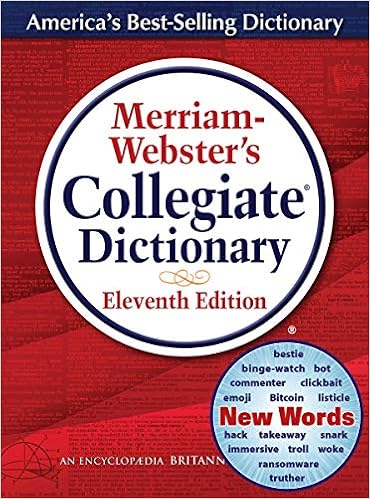
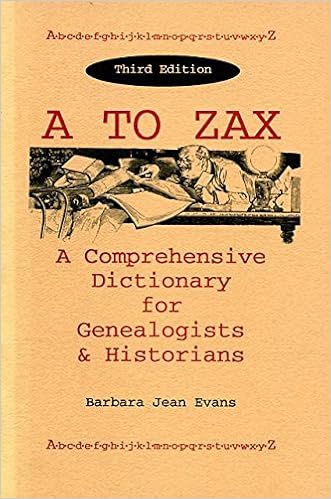
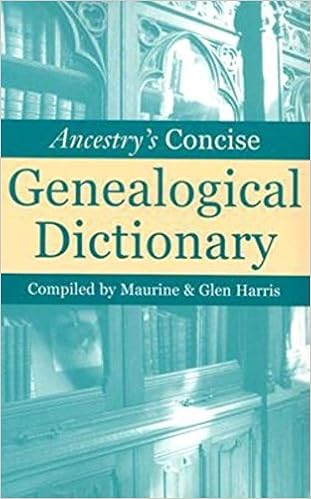
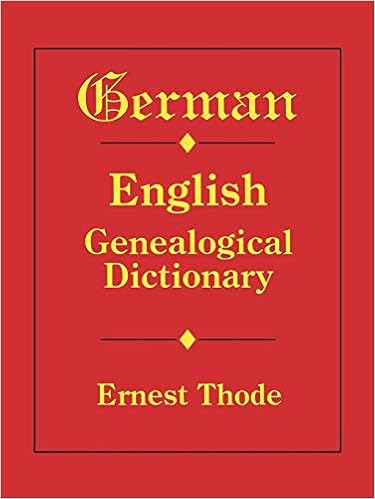
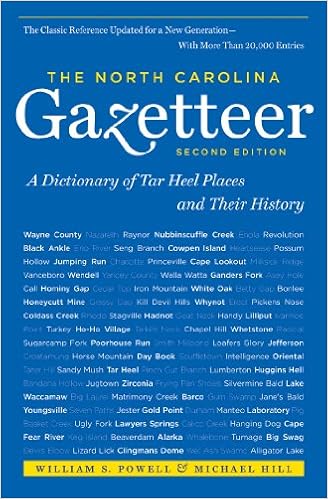
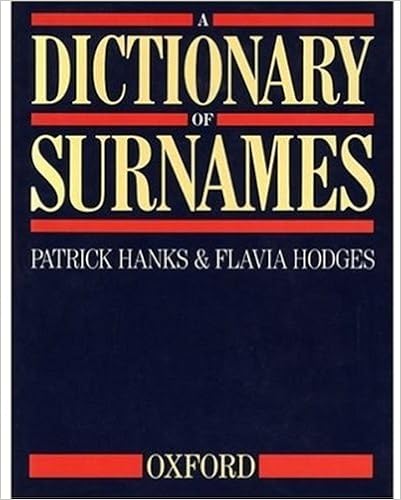
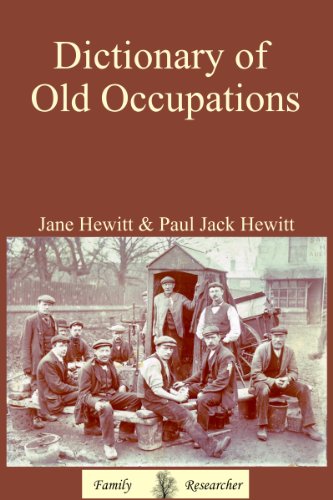
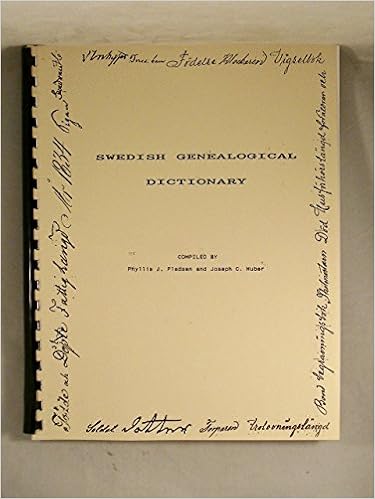
National Dictionary Day
October 16 is National Dictionary Day. Here's a tribute to a few dictionaries genealogists use:
These few examples represent the "tip of the iceberg" when it comes to useful dictionaries for genealogical research.
All images from Amazon.
Tuesday, October 15, 2019
Read and Buried
Gates, Eva. Read and Buried. New York: Crooked Lane, 2019.
When the crew working to stabilize the lighthouse discovers a metal box with a diary enclosed, they call the library's director down to the construction hole. Unwilling to go herself, she sends assistant director Lucy Richardson down. When they examine it with gloves and tweezers, they find a couple of pieces of paper tucked inside. One is a map. The other appears to be a coded message. Several persons were present when the discovery was made. When Lucy returns to the lighthouse library after an evening out with Connor, they discover the door has been smashed and find a historical society member no one likes murdered. The diary itself remains in Bertie's desk, but the two pieces of paper disappeared. The deceased man provided funding for the historical society including the upcoming Settlers' Day festivities. Lucy, of course, becomes involved even though she tries to stay out of the investigation. Suspects and motives abound. With a fun setting, fascinating historical angle, and better-than-average writing, this series continues to impress me. I hope the publisher's proofreaders and editors catch the missing words, double periods, and other proof-reading errors before its release. The review is based on an electronic advance copy obtained through NetGalley with the expectation of an honest review.
Monday, October 14, 2019
national lowercase day
october 14 is "national lowercase day."
a public domain poem by e. e. cummings seems appropriate to honor the day:
songs (ii)
when life is quite through with
and leaves say alas,
much is to do
for the swallow,that closes
a flight in the blue;
when love's had his tears out,
perhaps shall pass
a million years
(while a bee dozes
on the poppies,the dears;
when all's done and said,and
under the grass
lies her head
by oaks and roses
deliberated.)
a public domain poem by e. e. cummings seems appropriate to honor the day:
songs (ii)
when life is quite through with
and leaves say alas,
much is to do
for the swallow,that closes
a flight in the blue;
when love's had his tears out,
perhaps shall pass
a million years
(while a bee dozes
on the poppies,the dears;
when all's done and said,and
under the grass
lies her head
by oaks and roses
deliberated.)
Tuesday, October 08, 2019
The Bodies in the Library
Wingate, Marty. The Bodies in the Library. New York: Berkley Prime Crime, 2019.
Hayley Burke, curator of a library devoted to the golden age of mysteries, has never read a mystery in her life. The compensation and benefit of living on the premises attract her to this dream job. Mrs. Woolgar, secretary to the library's founder Lady Georgiana Fowling, lives in the building also. Hayley tries to find ways to improve the library's visibility and invites a group of mystery writers to meet there. When a group member's body appears in the library after hours and after the group left, Hayley inserts herself into the police investigation to mitigate damage to the library and the writers' group. I never warmed to Hayley--perhaps because of her lack of affection for the mystery genre. I found the book easy to put down. The plot seemed convoluted. More insights into the police investigation and less of the amateur sleuth's attempts would improve the book.The library's cat Bunter was my favorite character. I received an advance review copy through GoodReads. While a review is encouraged, it was not required.
Sunday, October 06, 2019
Mad Hatter Day
![]() |
| Original illustration (1865), by John Tenniel (February 28, 1820 - February 25, 1914), of Lewis Carroll's novel, Alice in Wonderland. |
Sounds like a good excuse for a tea party!
Thursday, October 03, 2019
Along the Tapajós
Vilela, Fernando. Along the Tapajós. Translated by Daniel Hahn. s.l.: Amazon Crossing, 2019.
I enjoyed this story about persons living along the Tapajós River system who must move when the rainy season arrives each winter. In this story, they forget their pet turtle, and the children sneak out one night to retrieve the turtle from the now flooded village. They encounter an anaconda. The illustrations were okay but not outstanding.
Wednesday, October 02, 2019
Women and the Law
In my library-related work, I often run across books potentially useful to genealogists. One such book is Women and the Law: The Unfinished Revolution by Leo Kanowitz. It was published by the University of New Mexico Press in 1969. Chapter two which talks about coverture and married women's property rights especially appear useful.
Tuesday, October 01, 2019
National Homemade Cookies Day
Apparently October 1 is "National Homemade Cookie Day." I don't bake a lot of cookies for myself, but I occasionally make a batch for something at church or work. A batch simply provides too much temptation when kept at home.
Since my mother worked when I was young, we rarely had homemade cookies at the house. Oh, she'd occasionally make some, but she'd usually make pie or cake instead.
When I was in middle school, we learned to make M & M cookies like those pictured above in our home ec class. I took the recipe home with me, and I began to bake an occasional batch of cookies.
My Aunt Rae kept homemade cookies on hand at her house--mainly because Uncle Bud loved them so much.
The Christmas Card Crime and Other Stories
Edwards, Martin, editor. The Christmas Card Crime and Other Stories. Scottsdale, Arizona: Poisoned Pen Press, 2019.
As in most collections, some stories are better than others.
"A Christmas Tragedy" by Baroness Orczy
Although occurring at Christmas, the story is not Christmas-y. It’s a rather boring story in which Lady Molly identifies the killer of Major Ceely. Suspicion fell to his daughter’s secret boyfriend who maintained his innocence.
"By the Sword" by Selwyn Jepson
I didn’t like this one. I was distracted while reading it, but I didn’t like it well enough to go back and read the rest of it.
"The Christmas Card Crime" by Donald Stuart
Interesting story involving passengers on a train impeded by snow with the focus being on a girl with a partial Christmas card.
"The Motive" by Ronald Knox
Westmacott waits for Robinson to board the train. Although Robinson had not shown up, Westmacott boards after receiving a message when seems to ease his mind. Robinson boards near departure time. The two men share adjoining compartments. Robinson asks for a “wake up” call. When it is time for him to leave the train, he is not there. What happened to him?
"Blind Man’s Hood" by Carter Dickson
Rodney and Muriel Hunter arrive late at “Clearlawns,” and their hosts are out. However, a woman tells them the story of an unsolved murder that occurred years ago at the castle while they await their hosts to return from a church function.
"Paul Temple’s White Christmas" by Francis Durbridge
Kind of resembles a very short spy story. Other than the references to snow and Christmas, it could have been set any time.
"Sister Bessie or Your Old Leech" by Cyril Hare
Rather boring and not much mystery to this tale. Bessie feigns death, and Timothy rifles through her things in search of the letter before being confronted by Bessie herself. He kills Bessie but then learns a lesson.
"A Bit of Wire-Pulling" by E. C. R. Lorac
An inspector recalls an account of a man who was shot while he was in the room. The solution was obvious from the moment the inspector told his observations of that night.
"Pattern of Revenge" by John Bude
The wrong man is sent to prison for a murder. The evidence pointed to him because of his peg leg, but three years later another man confesses to the crime on his death bed.
"Crime at Lark Cottage" by John Bingham
John Bradley stops at a home near Skandale where a woman and her daughter reside. It is nearing Christmas as they are decorating the Christmas tree. The woman seems frightened. Bradley sees a wedding photo of the woman and a report of her husband’s escape from jail. As noises are heard, the woman becomes more frightened, and Bradley suggests he should go on to town.
"‘Twixt the Cup and the Lip" by Julian Symons
Thieves plan a heist of Russian jewels, but it doesn’t go exactly according to their plans.
Best story: "The Christmas Card Crime" by Donald Stuart
Worst story: "By the Sword" by Selwyn Jepson
Subscribe to:
Posts (Atom)