Tuesday, March 19, 2019

The Family Tree Problem Solver (3rd edition)


Rising, Marsha Hoffman. The Family Tree Problem Solver: Tried-and-True Tactics for Tracing Elusive Ancestors. 3rd edition. Cincinnati: Family Tree Books, 2019.

This review applies to the 3rd edition (2019) of the book. Marsha Hoffman Rising's [The Family Tree Problem Solver] inspired many genealogists to move beyond basic ancestral searches to more meaningful research which meets the genealogical proof standard. Marsha died in 2010, so I was curious why a third edition bearing her name alone was being released. Although it is obvious someone edited the original work to include website addresses and even information about the FamilySearch Wiki and other resources which did not exist during Marsha's lifetime, no one takes credit for these revisions. A chapter about "tree hints" was added by Sunny Morton, a well-known popular press genealogical author, and a chapter on using DNA was written by Diahan Southard, a well-regarded genealogical DNA lecturer. Neither of these chapters lives up to the standards the original author set, weakening the overall book. While care was taken to include web addresses and resources, references to Everton's Genealogical Helper and to the censuses on CD-ROM illustrate a problem in the new edition's editing. Everton's Genealogical Helper suspended operations years ago. While a person might find a clue about someone who researched an individual or family in the past, the contact information, if the query submitter remains alive, may be dated. While a few of us still own some of those CD-ROMs, very few use them. Ancestry, FamilySearch, and other online databases provide the access we need to the censuses. The book needed to be edited more thoroughly, and someone needed to take credit for their editing and revision role with an added author. The chapter on "tree hints" just does not fit the nature of the book. It is too basic of a topic. It remains at the "search" level described by Rising rather than the "research" one. While I appreciated Diahan Southard's comments when she talked about researching specific families, the chapter did not adequately demonstrate using DNA as evidence. Also missing from the chapter was a bibliography of published case studies demonstrating how to use DNA, which Rising would have provided if she were alive. The content originally written by Rising remains valuable although researchers may need to discover resources current researchers use in place of some of those no longer available. This review is based on an advance electronic copy provided by the publisher through NetGalley with expectations of an honest review.

A Beautiful Day in the Neighborhood


Rogers, Fred and Josie Carey. A Beautiful Day in the Neighborhood: The Poetry of Mister Rogers. Philadelphia: Quirk Books, 2019.

Fans of Mister Rogers' Neighborhood will love this collection of song lyrics from the show. Fred Rogers wrote many of them, although Josie Carey contributed lyrics for several. Fred Rogers earned a degree in music composition and lent his skills to the accompanying music, which is not included in this collection focusing on the lyrics. The art work by Luke Flowers seems to fit the lyrics although the illustrations reflect the twenty-first century rather than the era of the show. For example, one illustration shows a modern flat screen computer monitor in a doctor's office. As I read the book and looked at the accompanying illustrations, I often thought, "We need Mister Rogers' influence on today's children." I received an electronic copy from the publisher through NetGalley with expectation of an honest review.

Murder Once Removed


Perkins, S. C. Murder Once Removed. New York: Minotaur Books, 2019.

Lucy Lancaster, a professional genealogist, researches the family of Gus Halloran, uncovering a mystery surrounding the mid-19th century death of Seth Halloran. A photographer's journal states he was murdered by C.A. and then the scene was tampered to make it look as though he were trampled by horses. Lucy finds two candidates for C.A., but since enmity runs deep between the Applewhite and Halloran families, Gus focuses on that solution when he tells his family's story in a press conference. A page, possibly revealing the identity of C.A., was missing from the journal. As Lucy investigates, she runs into an FBI agent moonlighting as a history professor and into danger. I enjoyed the historic mystery; however, several things bothered me about the book. Lucy discusses research several times in very vague terms, making me wonder how familiar the author was with genealogical research. At one point Lucy tells another character about her flat rate package for researching "first family" Texas ancestry. Very few professional genealogists offer flat rate packages these days because it is nearly impossible to predict how long it will take to make a genealogically sound connection to a qualifying individual. Those who do offer such a package generally work for a larger firm rather than for themselves. Most charge an hourly rate plus expenses with a retainer collected up front. The balance is usually due before the final report is sent. The biggest error concerned census research. Lucy found results in the 1890 census. That census was mostly destroyed by fire. For the state in question, fragments of three enumeration districts in two counties exist as well as the Union Veterans schedule, which was small in a Confederate state. In the extent schedules, six families appear in one county; in the other county, four families appear in one enumeration district fragment and ninety-two families in the other district. Nowhere did Lucy mention the county to which the family moved and nowhere did she mention luck at finding the family. In fact the two counties were unlikely places for the family to reside based on comments about the family's life in the state. While widows of Union veterans were sometimes heads of household in these schedules, the information supposedly gleaned from the census makes it impossible the veterans schedule was what she consulted. While the mystery held great potential, the author's unfamiliarity with genealogical research hampered its effectiveness. If the series continues, I hope the author gets a professional genealogist to read the book to find errors in record availability and in practice. The other irritating flaw in the book was the author's unprofessional conduct in several instances. No instance's activity served to advance the plot in a way that could not be achieved through ethical means. The author needs to read Genealogy Standards by the Board for Certification of Genealogists and the Association of Professional Genealogist's Code of Ethics before writing additional installments. This review reflects the text appearing in an advance electronic copy provided by the publisher through NetGalley with the expectation of an honest review.

The Shortest History of Germany


Hawes, James. The Shortest History of Germany. New York: The Experiment, 2019.

When I saw this book, I saw it as an opportunity to learn more about the history of Germany. Disappointment set in almost from the moment I opened the book. Non-existent documentation, an overly familiar writing style, and blatant political bias plagued the account. In a small book such as this, one expects superficial treatment; however, the author's biases seem to drive what he glosses over and what he treats more in-depth. The author needs to return to writing fiction and refrain from non-fiction unless he plans to document his work and ignore his own biases. I received an advance electronic copy through NetGalley with the expectation of an honest review. The book's index was not included in the version I read.

Wednesday, March 13, 2019

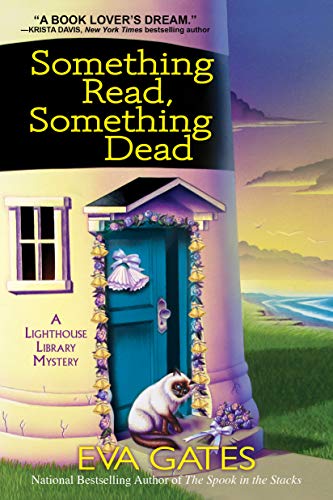
Something Read, Something Dead


Gates, Eva. Something Read, Something Dead. New York: Crooked Lane, 2019.

The lighthouse has a crack threatening continuing library operations unless significant funds are raised. Josie's upcoming wedding brings in distant relatives from New Orleans who think she's way behind on her wedding planning and try to take over. When one of them shows up dead, Josie becomes a suspect. The state police send in their own detective since the local law enforcement know the main suspect too well. Officer Watson doesn't even try to dissuade Lucy from her investigation in his usual manner. The action takes place during winter when tourism is slow on the Outer Banks. I figured this one out much earlier than Lucy did, but it didn't stop me from enjoying my trip to the Outer Banks with the enjoyable cast of characters, including Charlie the lighthouse cat. I received an advance electronic copy from the publisher through NetGalley in exchange for an honest review.

Tuesday, March 05, 2019

Broken Bone China


Childs, Laura. Broken Bone China. New York: Berkley Prime Crime, 2019.

Theodosia and Drayton witness a drone intentionally taking out a nearby hot air balloon as they soar above Charleston. The three person aboard were killed in the explosion. Then an employee of one of murdered men reports the theft of a valuable historic flag. Theodosia's detective boyfriend is attending a conference out of town  most of the book. Tidwell is the main investigator. Needless to say, Theodosia does a little detecting. Readers always wish they could visit the tea shop on their trips to Charleston. I wanted to attend all the themed teas she did in this installment, especially the Nancy Drew one! It's a satisfying installment in a long-running series. I received an advance electronic copy from the publisher through NetGalley with the expecation of an honest review.

Friday, March 01, 2019

The Taco Stand


Vasquez, Tim S. The Taco Stand. Illustrated by  Linda Kay Ost. Gilbert, Arizona: Toodaloo Publishing Company, 2019.

Isabel enjoys preparing food for her family. She even makes extra tacos her children can sell to passers-by on the street. One day a man in a business suit visits the taco stand, making Isabel a business proposal. Will she take him up on the offer or choose to spend time with her family? I loved the message the book conveyed. Money cannot buy happiness. The illustrations were colorful, fitting the book. The book contains a glossary of Mexican food terms. I received an electronic copy from the publisher through NetGalley with the expectation of an honest review.

Monday, February 18, 2019

Whimsical Cross-Stitch


Buziak, Cari. Whimsical Cross-Stitch: More than 130 Designs from Trendy to Traditional. Mineola, New York: Dover Publications, 2019.

Most projects in this collection can be completed in a short amount of time. Many designs are similar to freebies found on various manufacturer, designer, and shop sites on the Internet. I found only a handful of patterns that interested me enough to stitch. The best audience for this may be a child just learning to stitch as several designs are quick to stitch, colorful, don't require a lot of fabric, and can provide a quick sense of accomplishment. For the nearly $20 purchase price, I will not be purchasing a copy for myself. Stitchers probably want to browse a copy in a bookstore or cross stitch shop before purchasing it to make sure it interests them enough. This review is based on an electronic copy provided by the publisher through NetGalley with expectations of an honest review.

The Cornish in the Caribbean


Appleby, Sue. The Cornish in the Caribbean: From the 17th to the 19th Centuries. Kibworth Beauchamp, Leicestershire: Matador, 2019.

This well-documented historical work focuses on the Cornish immigration to the Caribbean in the seventeenth to nineteenth centuries. Appleby provides insight into conditions drawing men to the islands. Mining became the chief occupation of those who settled. Because of Methodism's prevalence in Cornwall, missionaries populated the islands reaching out to the English and native inhabitants. The main text presents the lives of the men residing in the islands while the appendices provide brief histories of the islands and of Methodism's rise in Cornwall. With over 750 endnotes and an extensive bibliography, Appleby provides readers with resources for further research. I received an electronic copy from the publisher through NetGalley with expectations of an honest review. In the protected ePub version I downloaded, the illustrations were distorted. It was especially annoying with maps and elongated single portraits/sketches of individuals. I do not know if the problem extends to the Kindle version and certainly hope the problem was not in the print edition.

Tuesday, January 15, 2019

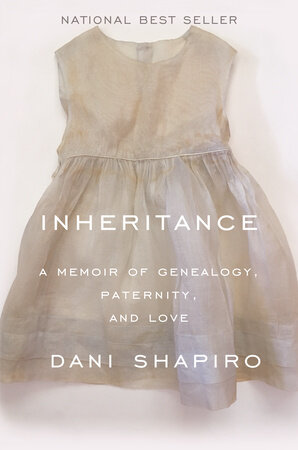
Inheritance


Shapiro, Dani. Inheritance: A Memoir of Genealogy, Paternity, and Love. New York: Alfred A. Knopf, 2019.

Dani Shapiro took a DNA test. The man she believed to be her biological father was not. She discovered her parents difficult conceiving a child led them to a clinic where her mother was artificially inseminated not with her father's sperm but with that of a young doctor. A first cousin match led to the man's identity. Correspondence between Shapiro and her biological father took place. The eventually met. While I enjoyed the DNA story, the publication of the memoir revealing the man's identity appears to be a violation of genetic genealogy ethics, particularly when she continually voiced the man's concern for privacy. I received an advance electronic copy of the book from the publisher through NetGalley in exchange for an honest review. I hope the final version includes her biological father's consent to be named.

Tuesday, January 08, 2019

The Belting Inheritance


Symons, Julian. The Belting Inheritance. Scottsdale, Arizona: Poisoned Pen Press, 2019.

A woman who bore four sons expects to die soon. Two of the sons were declared dead in the war. The other two live. A man claiming to be her son David shows up. Is he who he states he is? The woman believes he is. The two sons do not.  Will the sons be able to prove he's an impostor before she dies--or will the alleged son inherit with a changed will? It's a pleasant way to spend a few hours. I either read this book previously or one with a very similar plot because the plot seemed familiar all the way along to the ending. I received an advance copy from the publisher through NetGalley with the expectation of an honest review.
Tuesday, January 01, 2019

Book Love


Tung, Debbie. Book Love. Kansas City, Missouri: Andrews McMeel, 2019.

Cartoonist Debbie Tung's book will be adored by bibliophiles everywhere. It's not really a graphic novel. It's more of a collection of thoughts on books and reading with some of them serialized over several pages. It makes a perfect gift for the book lover. I received an electronic copy of the book from the publisher through NetGalley with the expectation of an honest review.

Sunday, December 09, 2018

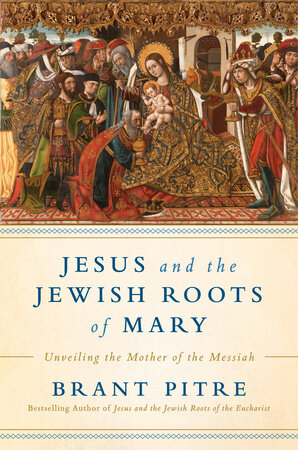
Jesus and the Jewish Roots of Mary


Pitre, Brant. Jesus and the Jewish Roots of Mary: Understanding the Mother of the Messiah. New York: Image, 2018.

Before I begin this review, I want to mention that I'm a Protestant and a seminary graduate. The review is written from my theological perspective. I know some will disagree with my thoughts on the book. That's okay. We can just agree to disagree. Now for the review: I looked forward to a book on the Jewishness of Scripture; however, this book fails because of flawed theology. It venerates the Virgin Mary rather than glorifying God and Christ.  I'm thankful to attend a church where the pastor rightly divides the Word of God and brings out the Jewish context of the Scriptures while emphasizing the One who is worthy of worship -- and it's not Mary. This review is based on an advance electronic copy provided by the publisher through NetGalley with the expectation of an honest review.

Tuesday, December 04, 2018

The Division Bell Mystery


Wilkinson, Ellen. The Division Bell Mystery. Scottsdale, Arizona: Poisoned Pen Press, 2018.

A gun's discharge disturbs those dining in a parliamentary dining room. They find an American capitalist who is a Parliamentary member's guest dead. At first glance, it appears a suicide, but a robbery attempt in his rooms, further investigation, and his granddaughter's insistence he would not end his own life make them suspect homicide. With no one else in the room and no way for someone to leave without being seen by the member of parliament discovering the corpse, how did the murderer get away? The room is sealed. Jenks, who had been assigned to the businessman, turns up dead in the robbery attempt. A notebook written in cipher by the American was among his effects. How did he gain possession of it? It's an interesting whodunit from the golden age of mysteries. The author, a parliamentary member, provided glimpses into the life of a member of the House of Commons. I received an advance electronic copy from the publisher through NetGalley with the expectation of an honest review.

The Arsenal Stadium Mystery


Gribble, Leonard. The Arsenal Stadium Mystery. Scottsdale, Arizona: Poisoned Pen Press, 2018.

When a soccer player collapses and dies at a London stadium, it is up to Inspector Slade to catch the killer. He always gets his man. With little cooperation from those most likely to know anything useful, it is challenging. The man was not popular, and motives or potential motives abound. Slade suspects the murder is connected to the death of a girl a few years ago. He just needs to make the puzzle pieces fit . . . and he finally does. I enjoyed this Golden Age mystery and would love to read more books with Inspector Slade. I received an advance electronic copy from the publisher through NetGalley with the expectation of an honest review.

Murder at the Mill


Shaw, M. B. Murder at the Mill. New York: Minotaur Books, 2018.

Iris, an artist, arrives to paint a portrait of Dom Weatherby, and finds him dead following a party on Christmas day. At first the local officers presume it to be suicide but when the toxicology report shows chloroform, she knows her hunch it was murder is correct. What follows is a rather convoluted plot. Although the book improves as it goes along, I failed to connect with the amateur sleuth and the official investigators seemed too far removed from the investigation. Another thread follows an older case which was determined to be suicide but provides motive for the current one. Iris also determines a wrong conclusion in that case, finding the guilty party. The similar circumstances make the plot too unrealistic. I received an advance electronic copy from the publisher through NetGalley in exchange for an honest review.

Sunday, December 02, 2018

The Forbidden Place


Jansson, Susanne. The Forbidden Place. Translated by Rachel Willson-Broyles. New York: Grand Central Publishing, 2018.

Nathalie, a biology major, returned to her Swedish hometown where her parents died in what was believed to be a murder-suicide. She's come to study the plant life in the bog. Things change when she finds a friend seriously injured and left for dead in the bog. Soon bodies are discovered in the bog. I was disappointed in this book. The solution was pretty obvious. While the police are present in the investigation, I never got a real feel for their work on the case. The novel seemed too focused on other aspects. While the author tried to provide a dark atmosphere, she never really achieved it. If you are looking for good "dark" Scandicrime, look elsewhere. I received an electronic copy through NetGalley with the expectation of an honest review.


Thursday, November 29, 2018

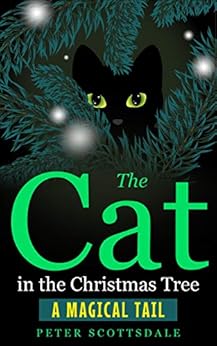
The Cat in the Christmas Tree


Scottsdale, Peter. The Cat in the Christmas Tree: A Magical Tail. n.p.: n.p., 2018.

This chapter books shares the story of a mischievous black kitten named Shadow. Shadow keeps getting in trouble with Nathan's parents Justen and Sara. They threaten to send him back to the SPCA after Christmas. Fortunately the magical tree intervenes. The story itself was okay, but I was disappointed in the illustrations. Chapter books don't contain as many illustrations nor the illustration quality of picture books, but this one's would not please children at all. They all look pretty much like public domain .gif files. I love cats -- and I love cats in Christmas trees, but this book simply fails to capture the magic. I received an electronic copy through NetGalley with the expectation of an honest review.


Sunday, November 25, 2018

The Monkhood of All Believers


Peters, Greg. The Monkhood of All Believers: The Monastic Foundation of Christian Spirituality. Grand Rapids: Baker Academic, 2018.

Greg Peters, an Evangelical turned Anglican, believes the principles behind monasticism apply to all believers, not just to those who choose a cloistered life. Written for an academic audience, rather than a lay audience, the author includes illustrations from many fathers of the church. He uses Martin Luther from the Reformation period. The book includes nearly 800 endnotes and an extensive bibliography. Although published by a traditional Evangelical publisher, the book is more likely to resonate with a more moderate audience. I suspect a similar book aimed at a lay audience would sell well. I received an advance electronic copy from the publisher through NetGalley in exchange for an honest review.

Tuesday, November 20, 2018

The Christmas Forest


Boxall, Rebecca. The Christmas Forest. Seattle: Lake Union Publishing, 2018.

Abandoned book. Enid suffers with Asperger's Syndrome and is invited to spend Christmas in Australia with Fred. Her sister Bess encourages her to leave her comfort zone and accompany him. Will she do it? The book's premise was strong, but the narrative lacked continuity. About 60% into the book, I finally called it quits. I received an electronic copy of the book from the publisher through NetGalley in exchange for an honest review.